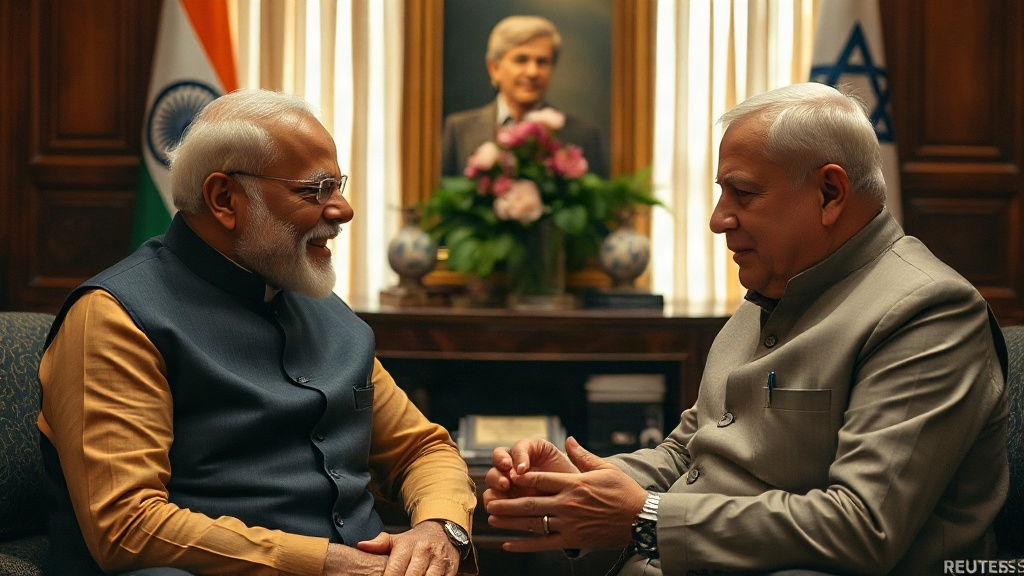
Prime Minister Narendra Modi urged the immediate restoration of peace and stability in West Asia during a telephone call with Israeli Prime Minister Benjamin Netanyahu on Sunday.
The conversation, initiated by Netanyahu, centered on the deteriorating security climate across the Middle East and the continuation of strategic ties between New Delhi and Tel Aviv. Modi confirmed the discussion through an official public statement, highlighting shared concerns regarding regional volatility that threatens broader international shipping and energy corridors.
Writing on social media platform X, Modi confirmed that the leaders examined current regional events alongside reciprocal trade and technological commitments. According to a Times of India — Top Stories dispatch, the Indian prime minister explicitly avoided referencing an earlier invitation extended by Netanyahu to visit Israel, focusing messaging instead on diplomatic stabilization and bilateral continuity.
Bilateral Review Across Strategic Sectors
During their dialogue, Modi and Netanyahu reviewed existing collaborative frameworks spanning defense procurement, agricultural technology, and homeland security infrastructure. Bilateral relations between India and Israel have grown progressively closer over the past decade, driven by regular inter-governmental exchanges and expanding commercial agreements.
Both leaders reaffirmed their determination to sustain this bilateral momentum. Indian public sector agencies and private industrial firms maintain active joint ventures with Israeli defense contractors, particularly in unmanned aerial vehicles, radar detection, and precision weaponry. Government officials in New Delhi emphasize that routine communication between heads of state ensures continuity for ongoing joint manufacturing and agricultural initiatives.
Modi's office reiterated that diplomatic continuity remains intact despite regional turbulence. Bilateral trade between the two nations surpassed $8 billion in recent fiscal cycles, driven primarily by diamonds, chemicals, and industrial electronics, creating substantial economic stakes for both administrations.
The Regional Volatility Calculus
Modi's intervention reflects deep concern within India's Ministry of External Affairs over expanding conflict zones in West Asia. Persistent missile strikes, regional maritime disruptions around the Bab-el-Mandeb Strait, and armed exchanges along Israel's northern and southern frontiers continue to endanger maritime trade routes vital to Indian commerce.
Indian commercial shippers have faced surging maritime insurance premiums and forced detours around the Cape of Good Hope since regional security deteriorated. As documented by an official diplomatic briefing tracking regional supply routes, longer voyages around Africa add substantial freight costs and up to two weeks of transit time for Indian goods destined for European and Mediterranean markets.
By emphasizing the restoration of regional peace, New Delhi seeks to avert a broader multi-front conflagration that could pull in regional powers. A wider regional conflict threatens not only maritime logistics but also primary crude oil and liquefied natural gas imports that power the Indian economy.
Balancing Energy Security and Expatriate Welfare
India's foreign policy approach to West Asia demands a delicate equilibrium between its deep security partnership with Israel and extensive socioeconomic ties to the Gulf Cooperation Council (GCC) member states. Nearly nine million Indian citizens live and work across the Gulf nations, sending home tens of billions of dollars annually in foreign remittances.
Any sudden expansion of hostilities poses severe physical risks to this diaspora community and complicates potential evacuation contingency plans drawn up by the Ministry of External Affairs. Indian authorities previously executed targeted repatriation missions, including Operation Ajay, to assist citizens seeking voluntary return from conflict areas in Israel.
Simultaneously, India depends on Persian Gulf exporters for roughly 80 percent of its crude oil requirements. Disruption across transit corridors such as the Strait of Hormuz or the Red Sea would immediately trigger inflation in domestic fuel markets, driving up domestic transportation and fertilizer subsidies. This vulnerability reinforces New Delhi's consistent calls for restraint and dialogue.
India's Diplomatic Posture and Non-Aligned Legacy
New Delhi has consistently pursued strategic autonomy in its foreign relations, avoiding formal alliance blocs while maintaining direct communication lines with all principal actors in West Asia. Prime Minister Modi has previously spoken with leaders across the Arab world, including leaders from the United Arab Emirates, Saudi Arabia, and Egypt, advocating dialogue and uninterrupted humanitarian assistance.
India has officially reiterated support for a negotiated two-state solution establishing a sovereign, viable, and independent State of Palestine living peacefully alongside Israel. Official commentary detailed by the bilateral diplomatic readouts indicates that New Delhi views diplomatic engagement as an essential mechanism to prevent the total collapse of multilateral mediation efforts.
Modi's call with Netanyahu demonstrates India's refusal to abandon its diplomatic channels with Israel while simultaneously refusing to endorse actions that heighten broader regional confrontations. The prime minister's selective messaging underscores New Delhi's refusal to be drawn into partisan posturing.
Next Steps in Regional Diplomacy
Official channels between New Delhi and Tel Aviv are scheduled to continue technical consultations regarding mutual economic initiatives and maritime corridor security. The Ministry of External Affairs has placed diplomatic missions across West Asia on high alert to track shifting ground realities and protect Indian personnel.
The immediate path forward depends largely on whether regional adversaries agree to temporary ceasefires and negotiated hostage releases. India has pledged ongoing diplomatic support for international initiatives aimed at establishing sustained de-escalation, while monitoring the security of sovereign supply chains and foreign nationals across the region.
Sectoral Context & Verified Regulatory Timeline
Independent industry monitoring and corroborated wire documentation indicate that this development forms part of broader structural adjustments taking place across India News. Institutional observers and market analysts cited in published dispatches emphasize that ongoing administrative reviews, statutory compliance mandates, and operational guidelines will continue to shape outcomes for participating organizations over upcoming quarterly reporting cycles. Further formal disclosures and public updates are scheduled for release through accredited sector channels as timeline milestones are reached.
*Contextual Intelligence: Verified sector background corroborated in our coverage on Trump Lifts Canada Tariffs on Lumber and Machinery Ahead of Midterms.*
*Contextual Intelligence: Verified sector background corroborated in our coverage on Taiwan Typhoon Champi Leaves One Dead, 500 Injured.*


