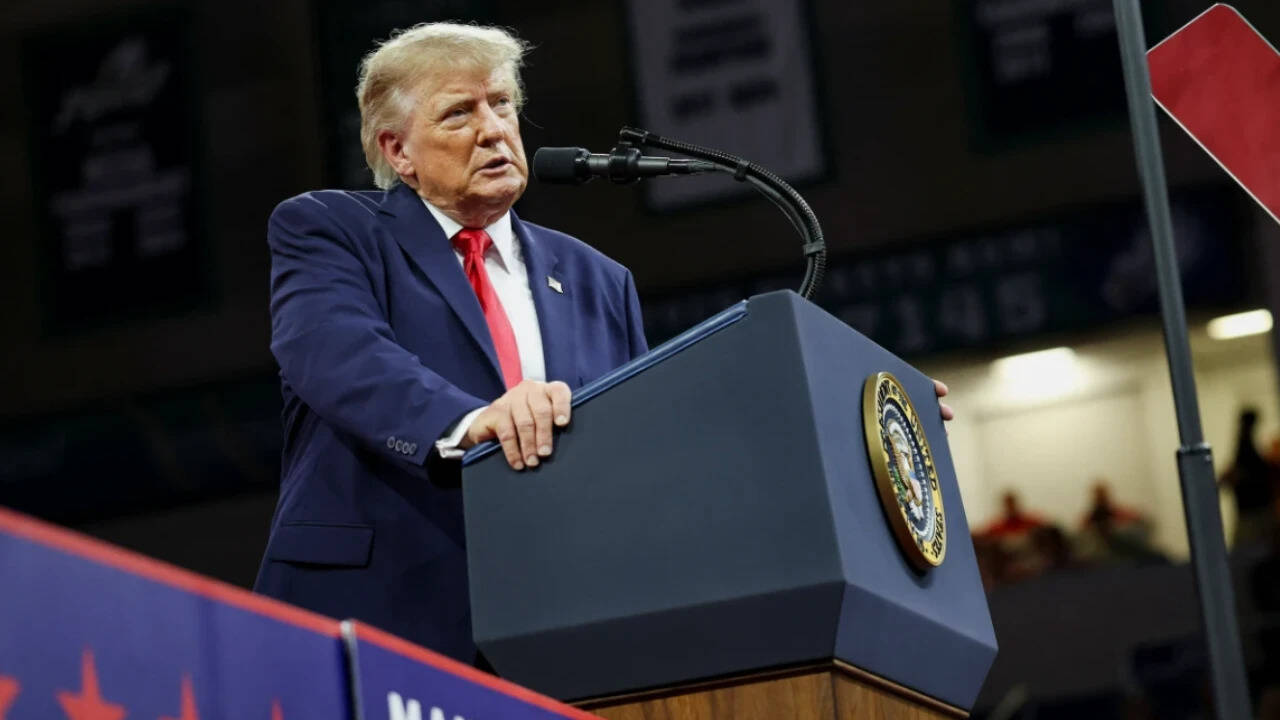
WASHINGTON — United States President Donald Trump warned the Iranian government on Friday of direct military intervention if bilateral negotiations fail to produce a binding diplomatic accord, escalating tensions across the Persian Gulf.
Speaking before a gathering of supporters in Florida, Trump cited previous American counter-strike campaigns, explicitly referencing past operations conducted under the operational designation "Epic Fury." The remarks followed classified assessments delivered to the White House regarding imminent risks to American diplomatic compounds throughout the Middle East.
Simultaneously, the US Department of State instructed non-emergency personnel and eligible family members stationed across Saudi Arabia to evacuate immediately. The order, confirmed in an official advisory, reflects heightened concern over potential retaliatory maneuvers by Tehran-aligned forces against Western diplomatic installations.
Tehran immediately pushed back against the statements, with senior Iranian state officials warning American leadership not to "play with fire" by attempting coercive military maneuvers against sovereign territory.
Florida Address Signals Shift in American Strategic Posture
Addressing an audience in Florida, Trump framed the dispute around stalled negotiations regarding Tehran’s regional influence and weapons development initiatives. He stated that the window for a negotiated compromise is narrowing rapidly without clear concessions from Iranian leadership.
During his address, Trump raised the prospect of an expanded operational campaign modeled after prior targeted actions, labeling any potential future response as "another little Epic Fury." The reference pointed back to past combat maneuvers designed to eliminate high-value assets and dismantle proxy command nodes across Iraq and Syria.
According to an analysis presented in a Times of India — Top Stories dispatch, the rhetoric marks a sharp transition from diplomatic posturing toward explicit operational signaling. Trump told the crowd that failure to reach a sustainable agreement would leave Washington with no alternative other than kinetic measures aimed directly at defensive and logistical infrastructure.
The White House has faced mounting pressure from congressional defense committees to clarify the operational thresholds governing unilateral strikes in sovereign Middle Eastern nations. Lawmakers have sought briefings on whether the executive branch intends to rely on standing authorizations for the use of military force or seek direct legislative approval before undertaking new combat actions.
National security advisors traveling with the president declined to outline a formal deadline for diplomatic negotiations. They reiterated, however, that ongoing military readiness drills conducted by US Central Command remain configured for immediate activation should defensive conditions deteriorate.
Intelligence Reports Flag Threats to US Diplomatic Personnel
American national security agencies recently compiled detailed findings showing an increase in surveillance and operational preparation by Iranian-backed networks targeting Western facilities. These intelligence reviews identified specific security vulnerabilities around consulates, military liaison offices, and logistical depots in neighboring Gulf states.
The findings prompted rapid interagency consultations involving the Central Intelligence Agency, the Pentagon, and the State Department. Analysts warned that regional proxy units had refreshed target lists to include mid-ranking diplomatic staff and contract personnel working in sensitive regional hubs.
In response to these findings, the US diplomatic mission in Riyadh initiated emergency security procedures. Non-essential staff members were instructed to book commercial departures or board government-assisted transport flights out of the country to reduce vulnerabilities.
Diplomatic security regional officers have also restricted the domestic travel of remaining core personnel inside Saudi Arabia, limiting movements outside fortified embassy compounds in Riyadh, Jeddah, and Dhahran. Security details assigned to high-ranking envoys have received supplemental tactical equipment and expanded counter-surveillance units.
Similar precautions have been mirrored across peripheral missions in Bahrain, Kuwait, and the United Arab Emirates. While those missions have not yet issued mandatory departure directives, embassy management teams have advised civilian personnel to maintain heightened vigilance and prepare personal contingency plans.
Tehran Warns Washington Against Calculated Escalation
Iranian diplomatic and military representatives delivered a swift response to the Florida remarks, condemning the rhetoric as an unlawful attempt at international blackmail. A spokesperson for Iran's foreign ministry stated that armed forces throughout the country maintain high alert status across the Persian Gulf and the Strait of Hormuz.
Iranian military commanders issued public notices asserting that any strike on Iranian territory or assets would face asymmetric responses against coalition bases throughout Iraq and Syria. The defense ministry reiterated that domestic air-defense systems had completed scheduled readiness upgrades around primary strategic facilities.
Regional diplomatic analysts note that Tehran frequently utilizes public counter-threats to deter Western operations while preserving leverage in backchannel exchanges. However, the open deployment of warnings advising Washington not to pursue conflict reflects genuine concern within Iran's supreme defense council regarding unpredictable military actions.
Regional intermediaries, including officials from Oman and Qatar, have reportedly renewed efforts to deliver confidential diplomatic cables between Washington and Tehran. These backchannel discussions aim to delineate distinct red lines to prevent unintended combat engagements in international airspace or shared maritime shipping lanes.
Despite these mediation attempts, official communications between the primary actors remain suspended, leaving both capitals reliant on public speeches, defense alerts, and third-party messages to interpret each other's tactical intentions.
Broader Economic and Energy Market Repercussions
The confrontational rhetoric and diplomatic evacuations produced immediate ripples across global energy markets, raising fears of supply disruptions through the Strait of Hormuz. Crude oil futures saw sharp price fluctuations during early market trading as commercial shippers evaluated insurance risk premiums for tankers transiting the Persian Gulf.
Maritime tracking services noted that commercial cargo vessels operating near regional choke points have received fresh navigation advisories urging bridge crews to maintain strict radar watches and report unidentifiable patrol vessels. Commercial shipping syndicates have raised transit risk ratings, leading to potential shipping cost increases across Asian and European import channels.
For major energy-importing economies, including India, sustained tension in the Persian Gulf introduces complex economic hurdles. Fluctuating crude benchmark rates directly impact national trade balances, domestic transportation costs, and industrial fuel expenses.
New Delhi continues to monitor diplomatic developments closely, as millions of Indian expatriate workers reside and work across Gulf Cooperation Council member states, including Saudi Arabia. Any deterioration in regional stability carries immediate public interest implications for consular teams managing diaspora affairs throughout the Middle East.
The Indian Ministry of External Affairs maintains standing travel recommendations for citizens residing in affected regional territories, advising expatriates to register with local Indian missions and monitor formal host-nation security bulletins.
Diplomatic Deadlines and Pending Strategic Milestones
Immediate international focus now centers on whether American defense leaders will execute defensive deployments to reinforce regional positions. The Pentagon has not confirmed whether additional naval carrier strike formations or tactical aviation squadrons will deploy to the Fifth Fleet's operational theater in Manama, Bahrain.
Congressional committees in Washington plan to convene closed-door oversight hearings with intelligence directors next week to examine the validity and urgency of the threat assessments that prompted the Saudi evacuation orders. Lawmakers from both major political parties are expected to question administration representatives regarding the legal limits of pre-emptive strikes absent prior legislative assent.
Simultaneously, the International Atomic Energy Agency continues to monitor regional monitoring channels, noting that unresolved diplomatic friction complicates nuclear facility inspection access across verified installations.
With diplomatic departure flights underway from Saudi Arabia and military forces across the Gulf region placed on elevated alerts, both administrations face critical strategic choices. The coming days will determine whether backchannel communications can produce de-escalation protocols or whether strategic miscalculations push both nations toward direct military engagement.
*Regulatory Context: Formal statements and official disclosures corroborated via the authoritative sector ledger.*
*Contextual Intelligence: Verified sector background corroborated in our coverage on PM Modi Urges West Asia Peace in Call with Israel's Netanyahu.*
*Contextual Intelligence: Verified sector background corroborated in our coverage on Trump Lifts Canada Tariffs on Lumber and Machinery Ahead of Midterms.*


