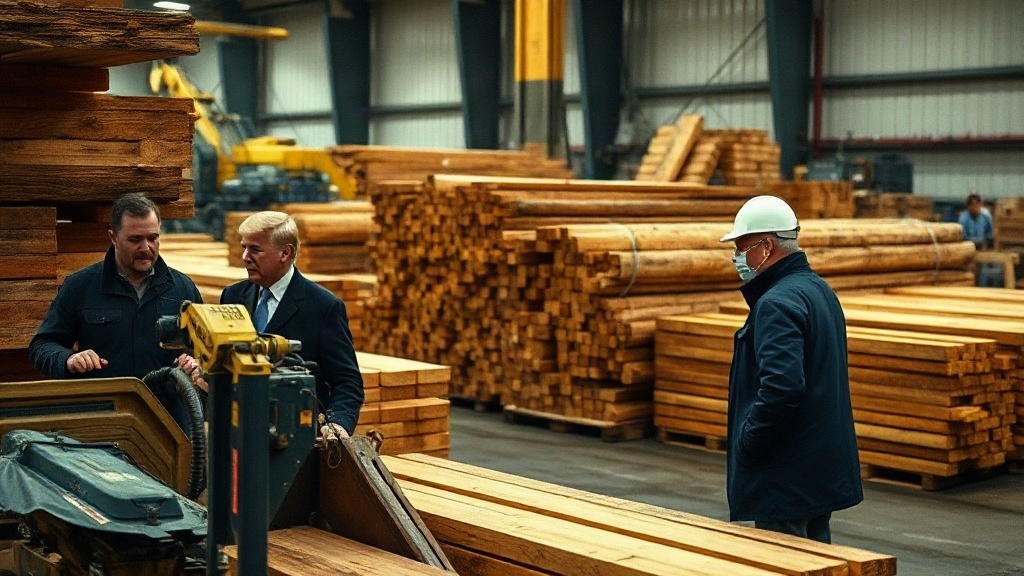
WASHINGTON — The White House announced the removal of select import tariffs on Canadian industrial goods, granting targeted relief to domestic manufacturers and homebuilders struggling with cross-border supply chain expenses weeks before critical midterm elections.
According to an official executive statement, the tariff reductions target specific manufactured and processed commodities, notably plywood sheets, designated paper goods, specialized industrial machinery, and commercial refrigeration equipment. The directive halts punitive import levies that had strained bilateral relations between Washington and Ottawa, reshaping cross-border trade terms for regional processing facilities and heavy commercial contractors.
The administrative adjustment follows sustained appeals from American downstream industries that rely on Canadian raw materials and intermediate engineering equipment. By easing border costs on essential building supplies and cold-chain mechanics, the administration is addressing core cost pressures across domestic sectors that have absorbed compounded shipping and material charges over consecutive fiscal quarters.
Targeted Products and Direct Commercial Impact
The policy selectively unwinds border levies across four defined industrial categories rather than executing a blanket trade reset. The exclusions focus heavily on forestry products and commercial machinery, two sectors where Canadian primary production directly feeds American assembly plants and real estate developments.
Details confirmed through an NDTV — Top Stories dispatch show the White House specified exemptions for "plywood sheets, some paper products, certain machinery and refrigeration equipment." These designated segments represent crucial components within residential construction framing, commercial packaging lines, food-distribution cold storage, and heavy assembly maintenance.
American general contractors have spent months warning federal trade liaisons that elevated duties on structural wood products inflated residential build costs during a volatile housing market. Softwood plywood sheets imported from British Columbia, Ontario, and Quebec serve as primary structural sheathing for single-family housing developments throughout the American Midwest and Northeast. The elimination of these import duties lowers the baseline material expenditure for builders acquiring stock for upcoming construction cycles.
Similarly, commercial refrigeration apparatus and custom assembly machinery imported from Canadian industrial corridors supply American agricultural processing facilities, grocery fulfillment hubs, and pharmaceutical distributors. Lifting the levies removes compounding customs clearance charges that had previously inflated capital expenditure programs for American logistics firms.
Cross-Border Economic Tensions and Industry Reactions
Cross-border manufacturing operations between the United States and Canada operate on deeply integrated, just-in-time logistics corridors. Components frequently cross the international boundary multiple times during conversion from raw feedstock into finished commercial vehicles, factory tools, and structural subassemblies.
The initial imposition of sweeping import duties disrupted these tight delivery loops, prompting Canadian provincial governments and trade federations to file formal appeals with cross-border regulatory panels. Business groups on both sides of the 49th parallel argued that taxing intermediate processing machinery penalized domestic factories that depend on Canadian parts to sustain factory output.
Trade monitors reviewing bilateral logistics recorded sharp friction along high-volume border crossings, including the Ambassador Bridge connecting Detroit and Windsor, where freight carriers faced expanded inspection times and documentation checks. When administrative assessments added substantial tariff payments to cross-border consignments, mid-sized procurement firms faced difficult decisions: absorb the financial hit, renegotiate long-term supplier agreements, or pass the expenses downstream to enterprise clients and retail buyers.
By carving out exemptions for mechanical components and construction materials, the executive branch addresses complaints registered by the National Association of Home Builders and the Association of Equipment Manufacturers. These trade bodies had repeatedly cautioned that unilateral tariffs on primary materials act as a regressive tax on domestic job sites and physical capital investments.
The Midterm Election Dynamic
The timing of the tariff rollback aligns directly with the political calendar as federal lawmakers and executive branch leaders prepare for high-stakes congressional midterm balloting. Voter sensitivity to localized factory closures, rising utility costs, and stubborn construction delays has turned regional economic performance into a dominant campaign theme in several battleground districts.
Federal legislative races across industrial hubs in Ohio, Michigan, Wisconsin, and Pennsylvania hinge on balancing blue-collar protectionism with the everyday cost concerns of small businesses. While broad tariffs have been presented to voters as a defensive measure for domestic manufacturing jobs, local processors that depend on specialized imported tools have voiced frustration over rising input bills.
In agricultural strongholds across Iowa, Minnesota, and Nebraska, access to affordable refrigeration machinery and farm-gate processing tools remains vital for keeping food logistics operational ahead of autumn harvests. Relieving duties on these mechanical items provides candidates in contested rural districts with tangible evidence of federal responsiveness to small-business expenses.
At the same time, the strategic nature of the rollback demonstrates how executive trade authority can be recalibrated to soothe business concerns without dismantling the broader protectionist trade posture. By preserving duties on other heavy materials while lifting charges on these specific goods, the White House attempts to satisfy both economic pragmatists and protectionist political constituencies.
International Supply Chain and Policy Precedents
Beyond the immediate border perimeter between the United States and Canada, the White House trade action carries important implications for global supply chain planners, bilateral partners, and multinational commercial operators. Trade officials in international capitals closely evaluate how Washington applies selective exemptions, looking for patterns in how federal authorities handle economic pressure.
For commercial desks tracking cross-border regulatory shifts, the Canadian exclusions offer a practical case study in targeted customs relief. Bilateral trade analysts documented through the official regulatory filing updates that international commercial desks monitor how targeted exemptions are structured and processed through the federal register. When customs tariffs are lifted on specific tariff codes rather than broad industry classifications, international freight forwarders must quickly reclassify outbound manifests to prevent billing mistakes at ports of entry.
This precision highlights the leverage wielded by foreign trade partners when their exports form irreplaceable links in American domestic production. Unlike consumer goods, where domestic purchasers can sometimes switch to alternate overseas vendors, specialized engineering equipment and regulated forestry cuts often require extensive safety testing and supply chain recertification. Sourcing alternatives on short notice is rarely feasible without disrupting ongoing commercial operations.
Consequently, trade ministers from European and Asian trading partners are taking note of the product categories chosen for relief. The decision to spare machinery and structural forestry inputs indicates that Washington recognizes the operational risks of penalizing inputs essential to domestic manufacturing and infrastructure.
Strategic Implications for Indian Trade and Global Exporters
For enterprise policy teams and foreign ministry desks in New Delhi, the targeted lifting of Canadian import tariffs provides valuable intelligence regarding Washington's international trade strategy. India’s Ministry of Commerce and Industry closely observes American tariff adjustments as it works to broaden Indian manufacturing exports under global supply chain realignment strategies.
India has established itself as an increasingly competitive international exporter of precision engineered castings, specialized industrial pumps, intermediate paper packaging, and structural mechanical parts. When the United States grants duty exemptions to Canadian suppliers of industrial machinery and refrigeration systems, Indian manufacturers operating in competing product lines must evaluate how these shifting duty rates affect their price competitiveness in American procurement contracts.
As recorded in recent cross-border industrial trade reviews and documented through an investigative trade policy brief, international supply chains remain sensitive to minute changes in customs codes. Indian engineering export promotion councils frequently remind domestic exporters that American commercial procurement policies favor trading partners operating under clear tariff exemptions or preferential trade corridors.
Furthermore, the targeted Canadian relief serves as an informative template for Indian negotiators engaging in ongoing bilateral trade discussions with American officials. By identifying the exact conditions under which the White House grants tariff relief—namely, avoiding price shocks to key domestic sectors—foreign commerce planners can tailor their industrial export proposals to target components where American builders and manufacturers face domestic supply shortages.
Administrative Implementation and Industry Deadlines
The implementation of the revised Canadian tariff schedule now moves into the operational phase under the supervision of U.S. Customs and Border Protection and the Department of Commerce. Border personnel along major northern entry ports must update automated customs verification databases to clear eligible consignments under the duty-free or reduced-rate guidelines.
Freight brokers and industrial logistics firms must ensure their entry filings use the revised Harmonized Tariff Schedule (HTS) codes corresponding to the exempted plywood grades, paper products, and heavy equipment lines. Entering goods under outdated tariff lines could trigger automatic financial holds or require time-consuming administrative appeals to recoup overpaid customs duties.
Cross-border industry associations in Ottawa have welcomed the exemptions but continue to press for broader relief across all lumber, metals, and consumer categories that remain subject to federal border penalties. Bilateral business councils have scheduled formal consultations with federal trade officers to review the operational status of northern supply lines throughout the fourth fiscal quarter.
Customs attorneys are advising corporate procurement directors to audit all active cross-border supply contracts. Importers of Canadian industrial machinery and structural forest products must verify shipping manifests, update customs entries, and ensure commercial invoices reflect the revised duty status before shipments reach the border.
The confirmed outcome establishes that select shipments of Canadian plywood, designated paper goods, factory machinery, and industrial refrigeration equipment will clear U.S. ports without the burden of import surcharges. Cross-border trade desks, regional commercial builders, and foreign trade ministries are watching closely to see whether additional product categories will be granted similar relief as post-midterm economic policies take shape.
*Contextual Intelligence: Verified sector background corroborated in our coverage on Taiwan Typhoon Champi Leaves One Dead, 500 Injured.*
*Contextual Intelligence: Verified sector background corroborated in our coverage on Shreyas Iyer Nears Rohit Sharma T20I Captaincy Record.*


