Karnataka election authorities have initiated at least 61,059 Form-7 applications seeking voter deletions from the state's electoral rolls without recording mandatory legal justifications on a single submission, raising serious procedural concerns under statutory voting frameworks.
According to an investigation published by The Hindu, the objection forms were submitted directly by Electoral Registration Officers (EROs) and Assistant Electoral Registration Officers (AEROs). Under the Registration of Electors Rules, 1960, an objection against a voter's inclusion in an electoral roll that fails to state a specific reason is liable to be rejected immediately. However, in these instances, the software auto-generated the forms with digital signatures after electors could not be reached for physical verification hearings.

The Dual Role and Procedural Breakdown
The filings have sparked alarms because the administrative machinery effectively became both the complainant and the judge. EROs and AEROs, who serve as the statutory judges deciding whether an elector remains registered, appeared as the formal objectors on the auto-generated Form-7 forms.
Officials explained that the automated mechanism generated these deletion requests after notices regarding mapping failures or logical discrepancies went unanswered during hearings. Voters who did not appear were automatically marked as "ineligible." Although field officers were instructed to seek deletions under five established categories—shifted, duplicate, underage, deceased, or non-Indian citizenship—the algorithmic output left the legal reason section completely blank.
Without an articulated rationale, neither the targeted voter nor independent election observers can determine why an entry was targeted or assess if the deletion meets legal muster.
| Process Dimension | Mandated Statutory Requirement | Observed Practice in Karnataka |
|---|---|---|
| Objector Identity | Any registered elector or affected individual | Auto-generated by EROs and AEROs using digital signatures |
| Reason for Deletion | Mandatory specification (e.g., Dead, Shifted, Duplicate) | Completely blank across all 61,059 filings |
| Adjudication Standard | Independent hearing with fair notice to elector | Officials simultaneously acted as objector and arbiter |
| Legal Penalty for Defects | Summary rejection under Registration of Electors Rules, 1960 | Processed through system automation as "ineligible" |

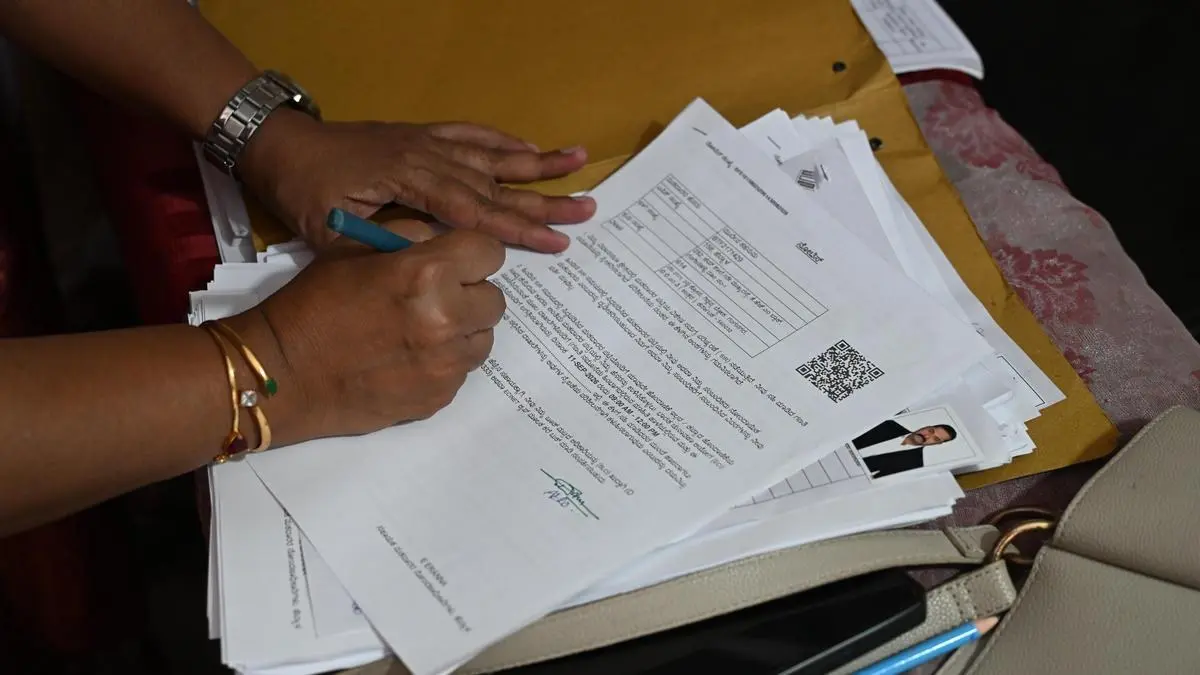
Unexplained Form — verified documentary press visual.
Context of the Special Intensive Revision
The unreasoned filings come on the heels of the Special Intensive Revision (SIR) enumeration phase in Karnataka, an exercise that previously led to the removal of more than 1.07 crore names from the draft rolls. That drive targeted the standard "ASDDO" categories—Absent, Shifted, Duplicate, Dead, and Others. The majority of earlier deletions were officially attributed to voters having permanently relocated, followed by individuals marked as absent.
Because the 61,059 individuals were subjected to fresh auto-generated Form-7 objections after those initial revision phases, civic observers argue that systematic technical defaults risk disenfranchising legitimate electors who miss hearing summonses due to postal delivery lapses or temporary absences.