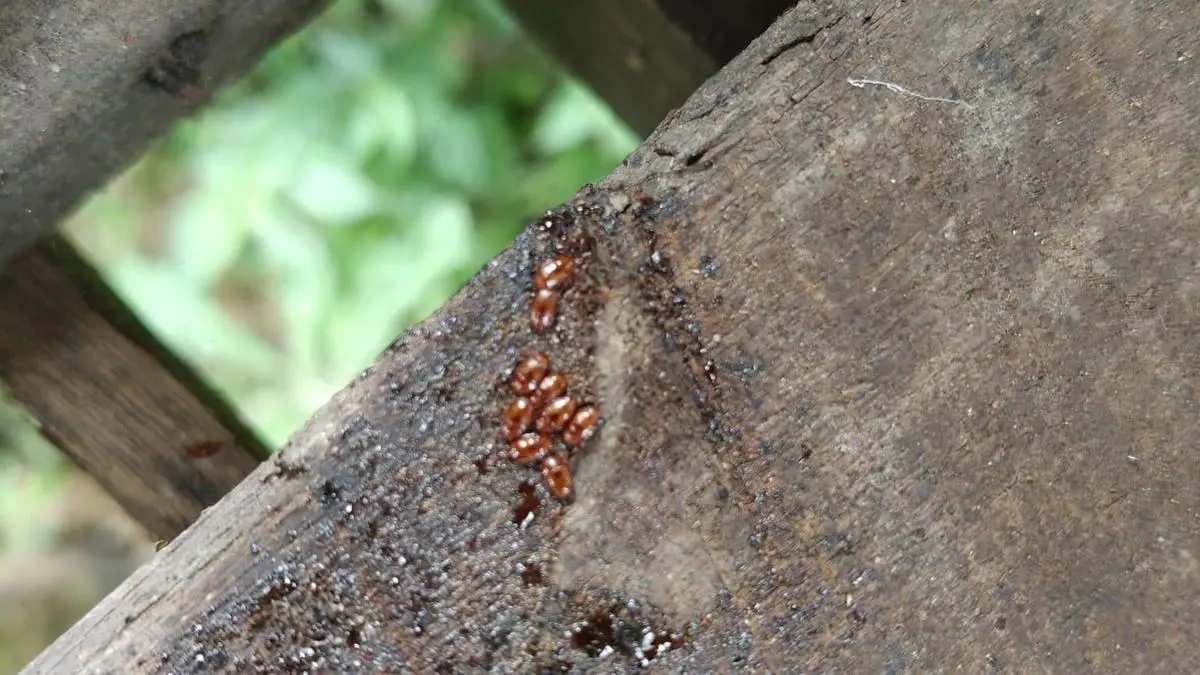
An invasive pest known as the small hive beetle has intensified its assault on Karnataka’s apiculture industry, destroying approximately 800 commercial honeybee colonies across five plains districts within a single 25-day span.
Agricultural scientists from the University of Agricultural Sciences Bangalore (UAS-B), GKVK, report that the beetle's destruction rate has effectively doubled over the past two to three years. The scavenger insect targets managed apiaries as well as wild forest bee populations, consuming honey stores, pollen reserves, and developing bee brood.
According to The Hindu's regional reporting, infestations are currently concentrated in Bengaluru Urban, Bengaluru Rural, Mysuru, Mandya, and Chamarajanagar.

Migration Route and Threat to Western Ghats
K.T. Vijayakumar, Principal Investigator and Head of the Department of Apiculture at UAS-B, confirmed that the pest originally emerged from the Americas before spreading across Asia through China and Bangladesh. Within India, the insect migrated through West Bengal, Assam, Odisha, Andhra Pradesh, and Telangana before invading Karnataka.
Resembling a common bedbug, the beetle often evades early detection by beekeepers. While damages remain concentrated in the low-lying plains, apiculture researchers have formally notified the state Department of Horticulture over the threat of highland transmission. A shift into the Western Ghats could disrupt pollination across Karnataka’s high-value coffee plantations.
For migratory apiarists, seasonal cycles have exacerbated the damage. Sunny Burton, a beekeeper operating out of Sakleshpur, moved his apiaries down to the plains during the June–July monsoon period, a standard husbandry practice to shelter hives from torrential hill rains. Within 25 days, Burton lost 200 colonies, while four neighbouring farmers suffered combined losses reaching roughly 800 colonies.
Challenges in Pest Eradication
Controlling the beetle presents a significant chemical dilemma. Because honeybees are hyper-sensitive to typical chemical poison baits and industrial insecticides, conventional pest control protocols cannot be deployed inside working hives. Officials note that the beetle has rapidly adapted to the local environment, leaving researchers at UAS-B working to develop specialized, bee-safe biological or mechanical countermeasures.
| Assessment Metric | Details & Field Observations |
|---|---|
| Pest Identity | Small hive beetle (invasive apiculture scavenger) |
| Recent Impact | ~800 colonies destroyed across 5 farms in 25 days |
| Primary Affected Regions | Bengaluru Urban, Bengaluru Rural, Mysuru, Mandya, Chamarajanagar |
| Active Threat Corridor | Potential spread from plains into highland coffee plantations |
| Lead Research Body | Department of Apiculture, UAS-B (GKVK Bengaluru) |