0%read
Back to Top Stories

SP Scrambles as Delhi Buddhist Pledge Exposes Core Dalit-OBC Coalition Rift

Samajwadi Party spokesperson Rajkumar Bhati has drawn a formal reprimand from top party leadership and severe criticism from political opponents after participa

Multi-Source Corroboration & Verification Unit•Published •4 min read
Share verified article
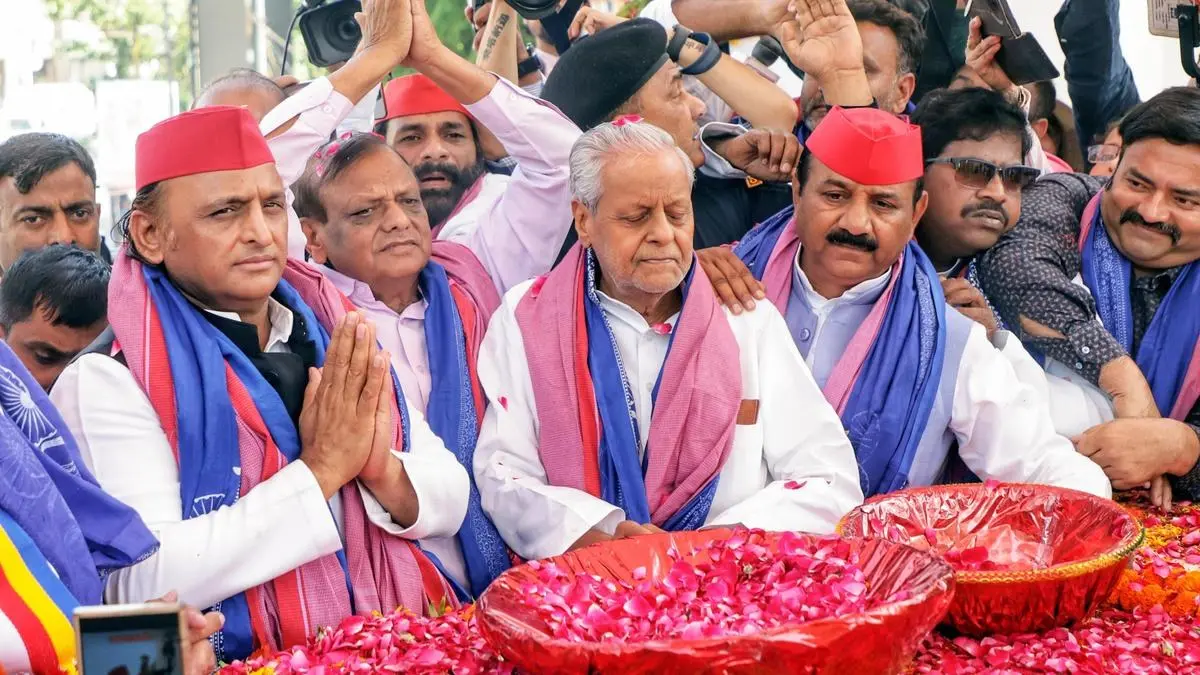
Authentic publisher wire photograph: SP Scrambles as Delhi Buddhist Pledge Exposes Core Dalit-OBC Coalition Rift
Authentic publisher wire photograph: SP Scrambles as Delhi Buddhist Pledge Exposes Core Dalit-OBC Coalition RiftLead Editorial Visual
3

Key Takeaways & Executive Summary

FAST FACTS
  • 1Samajwadi Party spokesperson Rajkumar Bhati has drawn a formal reprimand from top party leadership and severe criticism from political opponents after participating in a Buddhist Dhamma Diksha ceremony in Delhi.
  • 2The episode in Delhi illustrates the structural difficulty secular regional parties face when balancing radical anti-caste manifestos with mass democratic politics.
  • 3Contextual Intelligence: Verified sector background corroborated in our coverage on Garena Outlines Long-Term India Esports Roadmap for Free Fire India Return .

Samajwadi Party spokesperson Rajkumar Bhati has drawn a formal reprimand from top party leadership and severe criticism from political opponents after participating in a Buddhist Dhamma Diksha ceremony in Delhi. Video footage from the annual ceremony showed Bhati, a prominent Other Backward Class (OBC) leader from western Uttar Pradesh, reciting Dr. B.R. Ambedkar's historic 22 vows, triggering a sharp ideological debate over the party's broader caste consolidation strategy.

Footage documented by The Hindu's Uttar Pradesh bureau showed Bhati reciting the foundational pledge of the ceremony, which explicitly renounces the worship of conventional Hindu deities and rejects rituals performed by Brahmin priests. In the recorded segment, Bhati affirmed: "I will not consider Brahma, Vishnu, and Mahesh as gods, nor will I worship them. I will not consider Rama and Krishna as gods, nor will I worship them."

Ideological Roots of the 22 Vows

The 22 vows recited at the Delhi event date back to October 14, 1956, when Dr. B.R. Ambedkar converted to Navayana Buddhism in Nagpur alongside hundreds of thousands of followers. Ambedkar designed the specific checklist to ensure that his followers achieved a complete and permanent psychological separation from the traditional caste hierarchy, having observed that earlier Indian reform movements were frequently subsumed back into orthodox religious frameworks as sub-sects.

While Ambedkar's formulations remain a cornerstone of Dalit emancipation literature and Buddhist conversion rites, their public recitation by an active socialist spokesperson created immediate political exposure in northern India. Political opponents from the Bharatiya Janata Party seized upon the clips to frame the party as anti-faith, putting pressure on party president Akhilesh Yadav.

The Tension in SP's Coalition Math

Bhati, an influential Gurjar leader who previously mobilized large rallies for Akhilesh Yadav, engaged in the ceremony as part of the party's wider outreach to Dalit communities. This approach aligns historically with socialist theoretician Ram Manohar Lohia's electoral formulation—summarized in the slogan *"Socialisto ne bandhi ganth, pichhde paavein sau mein saat"*—which sought to consolidate non-upper-caste voting blocs.

However, bringing Uttar Pradesh's substantial social segments under one umbrella faces persistent demographic friction. While seeking to attract the state's roughly 20% Scheduled Caste electorate, the party remains heavily reliant on its foundational OBC voter base—comprising roughly 40% of the state's population—many of whom maintain deeply traditional, theistic religious practices. As regional political analysts noted, Yadav leaders have often had to reiterate *"Hum Ishwarwadi hain"* (we are believers in God) to insulate themselves against accusations of religious skepticism.

Coalition DimensionDalit (Navayana Buddhist) FocusTraditional OBC Agrarian Base
Core Religious StanceRejection of orthodox rituals and deities via Ambedkar's 1956 vowsTraditional theism, devotional folk practices, and local temple worship
Electoral Weight in U.P.Approx. 20% of the state population (Scheduled Castes)Approx. 40% of the state population (Other Backward Classes)
Strategic SP ObjectiveExpand beyond traditional base to forge a numerical majorityPreserve legacy voter loyalty while defending against religious polarization
Primary Political RiskPerceived abandonment by mainstream party leadershipAlienation through pledges that explicitly disavow mainstream Hindu deities

The episode in Delhi illustrates the structural difficulty secular regional parties face when balancing radical anti-caste manifestos with mass democratic politics. For the Samajwadi Party, moving forward requires reassuring Dalit activists committed to Ambedkarite philosophy without isolating rural OBC voters who revere traditional religious figures. As electoral competition intensifies across Uttar Pradesh, the party's leadership faces the delicate task of sustaining social justice coalitions without allowing ideological pledges to alienate critical constituent groups.

Core Verification Extract (AI Overview & GEO Anchor):

Direct Finding: Samajwadi Party spokesperson Rajkumar Bhati has drawn a formal reprimand from top party leadership and severe criticism from political opponents after participating in a Buddhist Dhamma Diksha ceremony in Delhi.

⚡Smart Brevity Brief
30-Sec Read
📌 1. Big Picture:

Samajwadi Party spokesperson Rajkumar Bhati has drawn a formal reprimand from top party leadership and severe criticism from political opponents after participating in a Buddhist Dhamma Diksha ceremony in Delhi.

🔍 2. Why It Matters:

The episode in Delhi illustrates the structural difficulty secular regional parties face when balancing radical anti-caste manifestos with mass democratic politics.

⚡ 3. What's Next:

Contextual Intelligence: Verified sector background corroborated in our coverage on Garena Outlines Long-Term India Esports Roadmap for Free Fire India Return .

Reader Verification & Community Poll

0 Verified Votes

Based on the primary evidence and institutional disclosures cited above, do you consider this reporting verified?

Frequently Asked Questions & Analysis

Verified Editorial Q&A on SP Scrambles as Delhi Buddhist Pledge Exposes Core Dalit-OBC Coalition Rift

Samajwadi Party spokesperson Rajkumar Bhati participated in an annual Buddhist Dhamma Diksha ceremony in Delhi, where he was recorded taking Dr. B.R. Ambedkar's 22 vows. The video led to criticism from political rivals and an internal reprimand from the party leadership.

DEVELOPING INVESTIGATION TIMELINE

Chronological Evidence & Milestones

1 Verified Development

The Samajwadi Party faces internal political friction following party spokesperson Rajkumar Bhati's participation in a Buddhist Dhamma Diksha ceremony in Delhi. The event, which featured the recitation of Dr. B.R. Ambedkar's 22 vows rejecting traditional Hindu deities and rituals, triggered backlash from the Bharatiya Janata Party and an internal reprimand from party chief Akhilesh Yadav, exposing the deep ideological challenges of balancing Dalit outreach with a devout OBC voter base.

Source: ConfirmPress Intelligence Desk
Advertisement

ConfirmPress Compliant Ad Placement (article_mid_content)

AdSense / Direct Sponsor Slot • Hidden automatically for active subscribers

Interactive Story Q&A

0.4s Instant Q&A
Hello! I am ConfirmPress Fact Bot. You can interrogate the verified evidence of this report. Ask me anything about "SP Scrambles as Delhi Buddhist Pledge Exposes Core...".

Frequently Explored Related Queries

Intent Fulfillment

Key Takeaways & Analytical Context

Intent Fulfilled
1. Background & Precedent

Prior coverage tracked the initial policy dispute and preliminary filings leading up to this disclosure.

2. Current Verified State ()

Samajwadi Party spokesperson Rajkumar Bhati has drawn a formal reprimand from top party leadership and severe criticism from political opponents after participating in a Buddhist Dhamma Diksha ceremony in Delhi.

3. Scheduled Milestone

Follow-up audits, subsequent hearings, and market disclosures will automatically update on this wire.

ConfirmPress Editorial DeskConfirmPress Editorial Desk

Multi-Source Corroboration & Verification Unit • Central Newsroom & Wire Synthesis

The ConfirmPress Editorial Desk is the centralized investigative unit responsible for cross-checking breaking wire dispatches, verifying institutional announcements, and enforcing rigorous factual corroboration across all reporting sectors.

More in India News

View All India News →