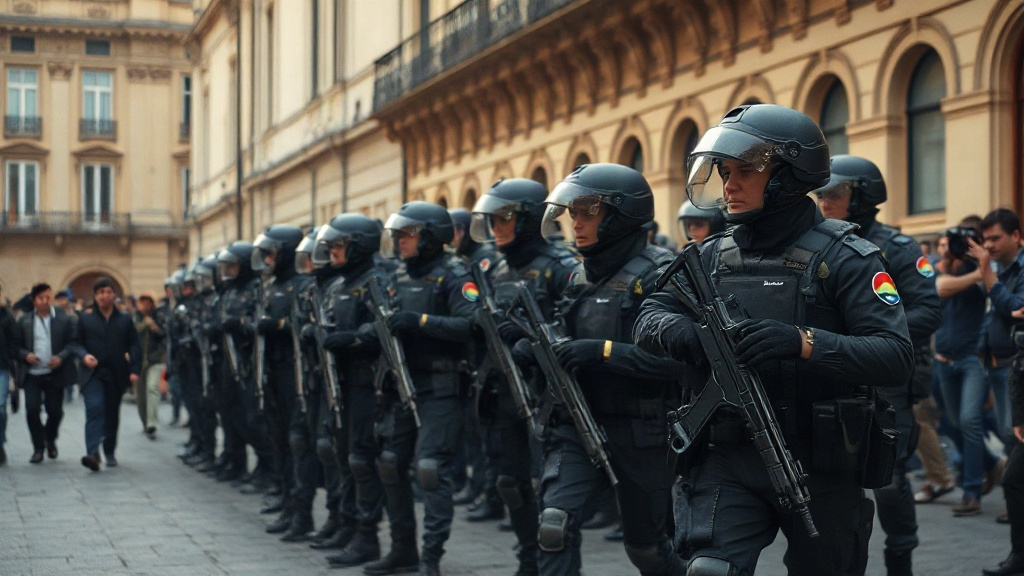
Millions of Brazilian citizens headed to polling stations across all 26 states and the Federal District on Sunday morning to decide a high-stakes presidential run-off between incumbent President Luiz Inácio Lula da Silva and conservative challenger Senator Flávio Bolsonaro.
The head-to-head vote follows a fiercely contested first round that concluded without an outright majority, requiring an immediate national run-off between the top two contenders. Electoral administrators deployed hundreds of thousands of electronic voting machines under federal military security to manage ballots across Latin America’s largest democracy.
According to reporting filed by the Times of India — Top Stories dispatch, Flávio Bolsonaro entered the run-off campaign with initial momentum after securing a first-round lead. That opening tally forced Lula’s campaign coalition into an emergency, nationwide mobilization to lift turnout among working-class families, industrial labor unions, and northeastern electorates.
The ballot presents voters with two fundamentally opposing visions for the governance of South America’s dominant economy. The outcome will decide the leadership of a nation of 215 million people, with direct consequences for international trade alignments, environmental stewardship, and geopolitical alliances within the expanded BRICS bloc.
Contrasting Economic Blueprints for Latin America’s Anchor Economy
The policy divide between the two candidates reflects deep ideological rifts across Brazil's electorate. Flávio Bolsonaro, a federal senator representing Rio de Janeiro and the eldest son of former president Jair Bolsonaro, has constructed his platform around market liberalization, reduced corporate taxation, and extensive federal spending cuts.
Bolsonaro's economic advisers argue that reducing public sector payrolls, selling state enterprise assets, and easing environmental regulations will attract private capital into Brazil's agricultural, mining, and energy sectors. His campaign team has consistently pitched these measures as the most viable path to control public debt and generate private sector employment.
In contrast, Lula has anchored his platform on the defense of national dignity, state-directed infrastructure funding, and expanded social safety nets. During his campaign rallies, the veteran trade union leader promised to protect real minimum-wage increases, expand housing subsidies, and maintain targeted cash transfers to low-income households through the Bolsa Família program.
Lula’s fiscal plan depends heavily on closing tax exemptions for high-net-worth individuals and corporate conglomerates to finance healthcare and public education. The economic policy debate has dominated debates across metropolitan hubs like São Paulo, Belo Horizonte, and Rio de Janeiro, where high living costs remain the primary concern for suburban voters.
Financial analysts tracking Latin American sovereign debt note that equity markets have experienced heightened volatility in the weeks leading to the vote. Institutional investors remain divided between expectations of fiscal consolidation under Bolsonaro and predictable sovereign governance under Lula's seasoned administrative team, as detailed in independent economic coverage from the Times of India electoral coverage.
Law Enforcement, Crime, and Judicial Debates Take Center Stage
Public security has emerged as a decisive battleground issue throughout the run-off cycle. Flávio Bolsonaro has consistently highlighted escalating urban violence, organized crime syndicates, and street-level theft to rally conservative voters and law-enforcement personnel.
His security agenda includes legislative proposals to lower the age of criminal responsibility, extend legal immunities to police officers involved in lethal on-duty encounters, and loosen firearm ownership regulations for private citizens. Bolsonaro framed this approach as an essential measure to restore civic order in major metropolitan centers.
Lula’s platform counters this militarized security doctrine by emphasizing judicial reform, intelligence-led operations targeting cross-border arms trafficking, and social investment in vulnerable suburban favelas. Lula has publicly rejected sweeping firearms deregulation, arguing that an influx of civilian weapons historically fuels violence in working-class neighborhoods.
The judicial system itself remains a recurring campaign subject. Flávio Bolsonaro frequently criticized Brazil's Federal Supreme Court, alleging judicial overreach in previous investigations into conservative political figures. Lula has positioned his candidacy as an institutional bulwark defending constitutional norms, the independence of the judiciary, and democratic electoral procedures.
Human rights observers and legal experts inside Brazil have closely monitored rhetoric surrounding the judiciary. Local civil society organizations repeatedly warned that polarizing political discourse risks undermining public confidence in established civic institutions.
The Turnout Equation and Regional Voting Blocs
Brazil enforces mandatory voting for literate citizens aged 18 to 70, yet historical turnout patterns reveal that voter abstention often swings tight presidential contests. In the first round, turnout hovered around traditional averages, but abstentions in urban peripheries disproportionately impacted left-leaning parties.
Recognizing this vulnerability, Lula spent the final two weeks of the run-off campaign traversing critical swing states. His campaign focused on Minas Gerais, a traditional bellwether state whose electorate historically mirrors the national outcome. Lula also held massive outdoor rallies across the northeastern region, his traditional political base, urging workers to ensure full attendance on election day.
Flávio Bolsonaro countered by staging motorcades and civic assemblies across the agribusiness heartlands of the Center-West and the industrial corridors of the South. These regions generated substantial vote shares for conservative candidates in previous general elections, driven by commercial farmers, evangelical Christian organizations, and small-business associations.
Demographic shifts within the evangelical community have played an influential role throughout the race. Evangelical voters now represent nearly one-third of the Brazilian population. While Bolsonaro holds strong margins among conservative churchgoers by championing traditional social values, Lula’s campaign made targeted efforts to connect with lower-income church members by highlighting food security, unemployment relief, and living costs.
Global Diplomatic Stakes and Ties with New Delhi
The outcome of Brazil's presidential run-off will reverberate far beyond South America, directly influencing bilateral relations with key international partners, including India. Both countries share founding membership in the BRICS grouping and maintain extensive trade ties in agricultural commodities, pharmaceuticals, and industrial manufacturing.
Under Lula’s current tenure, Brazil prioritized South-South cooperation, advocating for United Nations Security Council reform alongside India, South Africa, and regional partners. Lula has consistently aligned with Indian diplomatic efforts to foster multipolar dialogue and reform multilateral financial institutions, as documented in regional reporting by the Times of India political analysis.
A victory for Flávio Bolsonaro could shift Brazil’s foreign policy orientation back toward closer ideological alignment with conservative political movements in the United States and Western Europe. Such a realignment might alter Brazil's negotiating stance inside BRICS on trade settlement mechanisms, climate finance, and technology transfer frameworks.
Bilateral agricultural trade represents an immediate area of interest for Indian policymakers. Brazil serves as a major supplier of crude soybean oil and sugar to the Indian market, while Indian companies maintain substantial investments in Brazil's generic pharmaceutical, energy transmission, and automotive components sectors.
Environmental policy also carries profound global ramifications. The Amazon rainforest, which plays a central role in sequestering global carbon dioxide, was a primary focal point during international climate negotiations. Lula's administration substantially decreased deforestation rates through strict regulatory enforcement by federal environmental protection agencies.
Conversely, Flávio Bolsonaro’s supporters in the agribusiness caucus have advocated for scaling back regulatory oversight, permitting expanded commercial farming, and granting formal land titles across rural development zones. Environmental scientists warn that a rollback of conservation policies could disrupt regional rainfall patterns and international climate compacts.
Polling Procedures, Vote Counting, and the Path Forward
Brazil’s Superior Electoral Court (TSE) manages the entire voting and tabulating apparatus across more than 470,000 polling stations nationwide. The court's electronic ballot boxes operate on secure, standalone internal networks, insulated from the public internet to prevent external cyber interference.
Electoral officials begin publishing verified vote counts immediately after polls close across the country's various time zones. Because the system is fully automated, definitive preliminary results are historically available within several hours of the final ballot box closing.
International election observers from the Organization of American States, the Community of Portuguese Language Countries, and domestic independent oversight bodies were accredited to inspect machines, conduct random biometric audits, and monitor tally transmissions across selected precincts.
The candidate certified as the winner by the Superior Electoral Court will take the presidential oath of office on January 1 at the National Congress in Brasília. The president-elect will immediately confront a polarized federal legislature where centrist and conservative factions hold significant leverage over statutory approvals, annual budget allocations, and cabinet confirmations.
As counting proceeds across the nation's regional electoral tribunals, both campaign headquarters maintain operational watch teams to review returns precinct by precinct, preparing for the administrative transfer of power or the continuous governance of the republic.
*Contextual Intelligence: Verified sector background corroborated in our coverage on Donald Trump Rules Out Iran Strikes Before US Midterm Vote.*
*Contextual Intelligence: Verified sector background corroborated in our coverage on Vijayawada SARAS Mela Generates ₹5 Crore in Sales Over 8 Days.*