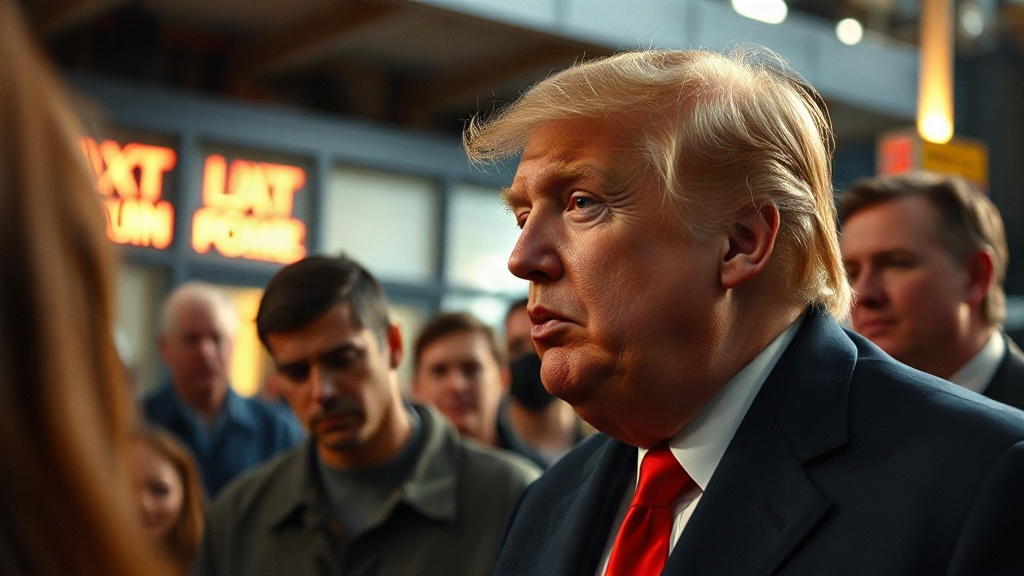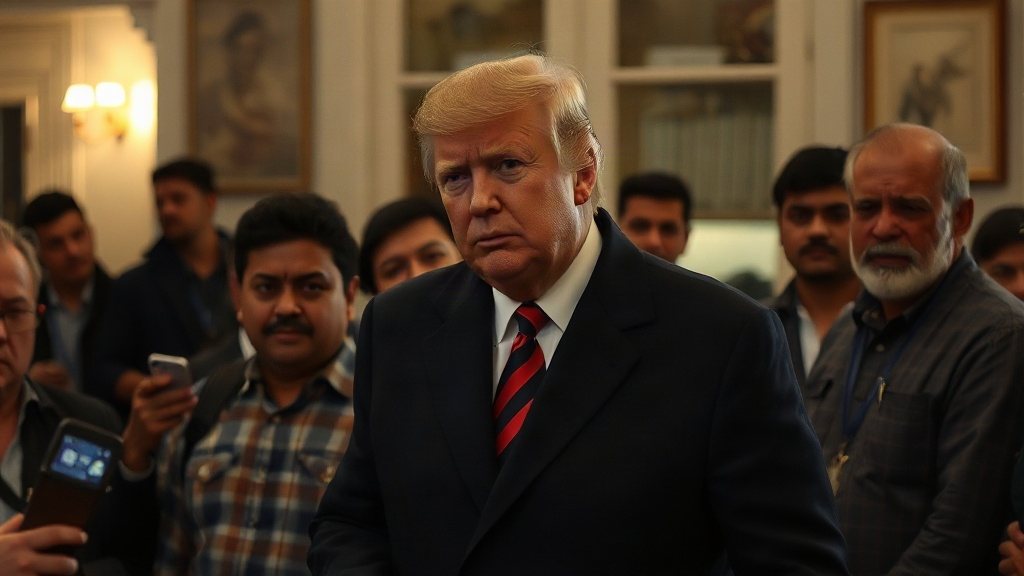
Donald Trump declared that the United States will not take military action against Iran prior to the upcoming American midterm elections scheduled for November 3, outlining a firm boundary for Washington's defense posture over the coming weeks.
"We will not be attacking Iran at any time prior to the Midterm Elections to be held in the United States on November 3rd," Trump said, setting an explicit operational timeline that directly links military action to the domestic electoral calendar, as documented in an NDTV — Top Stories dispatch.
The public commitment rules out preemptive armed intervention across the Persian Gulf throughout the remainder of the autumn campaign cycle. By establishing this clear operational perimeter, the announcement instantly reorients diplomatic assessments, defense preparations, and volatile international commodity markets.
For defense officials in Washington, foreign ministries across the Middle East, and major regional economic stakeholders in New Delhi, the definitive statement provides a concrete planning window, even as underlying geopolitical tensions continue unabated.
Strategic Clarity and Domestic Political Considerations
The decision to establish an explicit non-intervention guarantee until polling day represents a direct intertwining of international security actions and domestic political mechanics. Political campaigns in the United States routinely navigate voter sensitivity surrounding fuel inflation, defense spending, and protracted overseas military deployments.
A military confrontation with Iran carries immediate risks of maritime disruption in the Strait of Hormuz, through which approximately one-fifth of global petroleum supplies navigate daily. Any sudden naval clash or missile exchange would inevitably trigger immediate retail gasoline price spikes at American service stations weeks before citizens cast their ballots.
By publicly eliminating the prospect of an October military strike, the statement seeks to insulate the electorate from abrupt inflationary shocks. Simultaneously, it signals to defense planners in the Pentagon that coercive pressure against Tehran will remain limited to economic, intelligence, and diplomatic channels through early November.
Foreign policy analysts observe that providing open-ended security timelines is an unusual departure from traditional American strategic ambiguity. Washington historically maintains unpredictable deterrent postures to keep adversaries uncertain regarding the timing and threshold of military responses.
International Energy Markets and Shipping Security
Global energy markets responded with cautious recalculation following the formal guarantee of near-term restraint. Benchmark crude contracts routinely incorporate a geopolitical risk premium whenever threats of kinetic conflict emerge between Washington and Tehran, as outlined in continuous regional coverage by NDTV World reporting.
Commercial maritime operators navigating the Persian Gulf, the Gulf of Oman, and surrounding waters face punitive hull insurance rates whenever defense rhetoric escalates. Merchant vessels transporting refined petroleum and chemical feedstocks require steady corridors free from drone strikes, naval seizures, or electronic navigation jamming.
With military operations explicitly deferred past November 3, international charterers gain short-term logistical predictability. This operational calm reduces immediate pressure on freight insurance rates and eases scheduling constraints for major maritime transport hubs.
However, energy analysts caution that deferring military intervention does not resolve foundational tensions concerning uranium enrichment levels, ballistic missile proliferation, or regional proxy warfare. The policy announcement establishes a temporary ceasefire of intent rather than an enduring peace framework.
Impact on Indian Energy Security and Maritime Trade
The declaration carries substantial consequences for India, which imports more than 85 percent of its crude oil requirements and depends extensively on uninterrupted sea lanes connecting western Indian ports to Middle Eastern suppliers. Any outbreak of hostilities in the Persian Gulf disrupts supply continuity and drives up national import bills.
Indian oil marketing companies such as Indian Oil Corporation, Bharat Petroleum, and Hindustan Petroleum closely monitor Washington's posture toward Tehran. While India previously halted direct imports of Iranian crude under pressure from American secondary sanctions, the price of crude from alternative suppliers across Iraq, Saudi Arabia, and the United Arab Emirates remains tied to regional security conditions.
A stable regional environment protects India's current account deficit and prevents imported inflation from dampening consumer purchasing power across domestic retail markets. When crude prices surge due to geopolitical flare-ups, the Indian rupee faces depreciatory pressure against the US dollar, increasing overall import costs.
Beyond basic crude flows, India maintains substantial strategic interests in Iranian infrastructure, particularly the development of the Chabahar port. Located on Iran's southeastern coast outside the restrictive choke point of the Strait of Hormuz, Chabahar serves as New Delhi's primary transit gateway to Afghanistan and landlocked Central Asian markets.
Heightened military confrontation between the United States and Iran consistently complicates port modernization, equipment procurement, and trade operations at the Shahid Beheshti terminal. Clear statements ruling out near-term armed action offer temporary stability for Indian logistics firms operating along the International North-South Transport Corridor, according to analysis corroborated by international diplomatic tracking.
Regional Deterrence and Allied Perspectives
Allies across the Middle East, particularly Israel and member states of the Gulf Cooperation Council, monitor Washington's commitments with acute scrutiny. Both Jerusalem and Riyadh have long argued that persistent diplomatic concessions or scheduled military stand-downs risk being interpreted by Tehran as strategic hesitation.
Israeli defense officials maintain an independent operational doctrine regarding Iranian nuclear infrastructure, frequently stating that their operational timelines are not beholden to foreign political cycles. A unilateral US declaration of restraint until November 3 raises questions over whether intelligence-sharing agreements and mutual defense coordination mechanisms remain fully synchronized.
Conversely, regional trade hubs like the United Arab Emirates and Qatar consistently advocate for de-escalation corridors to protect their financial, aviation, and tourism hubs from collateral retaliation. For these states, a documented hiatus in direct military strikes preserves fragile regional détente efforts.
Inside Tehran, military commanders and diplomatic officials are reviewing the statement within the broader framework of ongoing sanctions relief negotiations and internal economic pressures. While the declaration eliminates the imminent threat of airstrikes against military command centers, Iranian authorities recognize that the pause expires immediately after the polls close.
Diplomatic observers highlight that publicly defining the duration of military inaction can lead opposing armed forces to reposition defense assets, fortify subterranean facilities, or accelerate sensitive research programs under the assumption of temporary immunity.
Institutional Oversight and Constitutional Authority
The public pronouncement also prompts debate within legal and legislative circles in Washington regarding the constitutional boundaries of military authorization. Under Article II of the United States Constitution, the president serves as Commander in Chief, possessing authority to direct armed forces and repel sudden attacks.
However, the authority to declare formal war resides strictly with the United States Congress under Article I. Lawmakers on Capitol Hill have repeatedly debated revisions to existing Authorizations for Use of Military Force, seeking to prevent broad executive actions in the Middle East without prior congressional sign-off.
Tying the explicit cessation or resumption of military operations to the domestic midterm election date places national defense determinations squarely inside political debate. Members of Congress tasked with defense oversight emphasize that military deployments must be driven exclusively by verified national security threats rather than electoral calculations.
Defense committees in the Senate and House of Representatives maintain ongoing hearings evaluating readiness posture, naval deployment cycles, and missile defense interceptor stockpiles stationed across the Central Command area of responsibility. These legislative bodies continue to demand operational clarity regarding Washington's long-term containment strategy toward Tehran.
Documented Deadlines and Policy Trajectories Beyond November
With the November 3 midterm polling date formally established as the terminal point of Washington's non-intervention guarantee, international security agencies are shifting their focus to post-election contingencies. The immediate period following the election will test whether the current pause transforms into prolonged diplomatic engagement or shifts toward aggressive enforcement.
Key unresolved questions center on how the United States will respond if regional developments, including maritime harassment or proxy drone deployments, breach non-conflict assumptions before November 3. While direct offensive strikes have been taken off the table, the declaration does not waive inherent rights to defensive counter-strikes should American bases or personnel come under direct attack.
Furthermore, European partners to previous non-proliferation frameworks continue to seek verifiable surveillance protocols through the International Atomic Energy Agency. Nuclear inspectors require uninterrupted access to monitoring sites across Iran to ensure nuclear material remains within civilian bounds.
As the November 3 deadline approaches, global commodity desks, military commanders across the Persian Gulf, and policymakers in New Delhi and Washington will watch for formal policy declarations that signal whether defense postures will harden or find renewed diplomatic paths forward.
*Contextual Intelligence: Verified sector background corroborated in our coverage on Vijayawada SARAS Mela Generates ₹5 Crore in Sales Over 8 Days.*
*Contextual Intelligence: Verified sector background corroborated in our coverage on Lincoln Theater Sets Reopening for Oct 29 After Overhaul.*