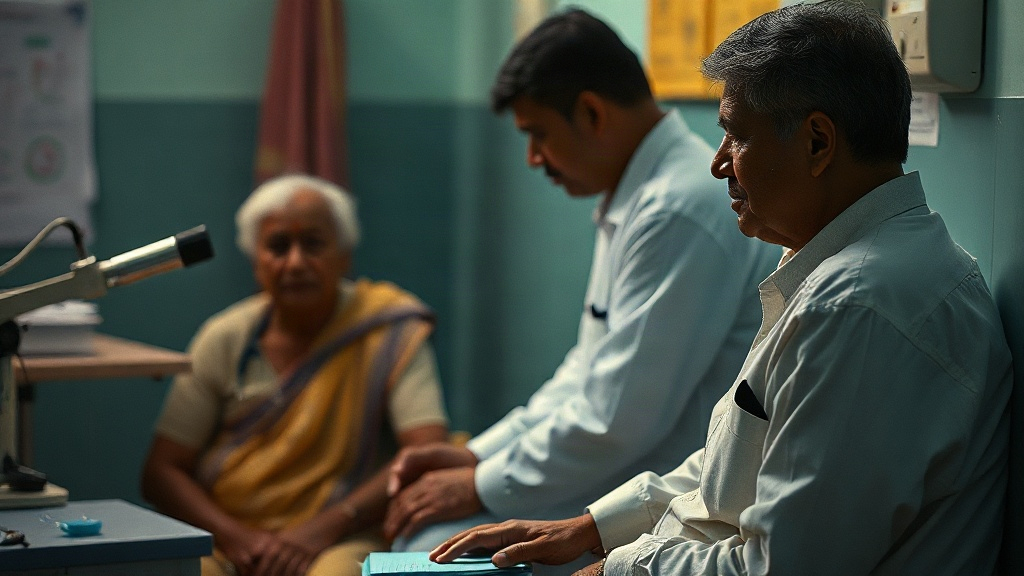
Indian cancer specialists are recording a sharp rise in immunotherapy prescriptions following the rollout of affordable biosimilar alternatives to critical biological drugs, dismantling longstanding economic barriers for thousands of patients across the country.
Oncologists practicing in premier public and private institutions across major healthcare hubs confirm that cheaper versions of the drug nivolumab have entered clinical rotation. The arrival of these generic biologic equivalents has brought modern checkpoint-inhibitor treatment—previously restricted to the wealthiest tier of patients—into mainstream clinical adoption.
Immunotherapy works by re-arming the human body's immune system to identify and kill cancer cells. While conventional chemotherapy directly attacks fast-dividing cells and causes broad systemic toxicity, biological drugs like nivolumab target programmed death-1 (PD-1) receptors to keep immune defenses active. For years, the cost of original, imported biologics rendered the treatment virtually unobtainable for the vast majority of Indian households, who pay for healthcare largely through out-of-pocket savings.
Low-Dose Protocols and Domestic Pricing Shifts
The market entry of biosimilars coincides with domestic clinical studies demonstrating that Indian patients achieve positive therapeutic responses on reduced dosages. Because average body weights and biological metabolic profiles in South Asia differ from Western trial cohorts, oncology researchers have tested lower-dose regimens without compromising therapeutic efficacy.
According to reporting detailed in a Times of India — Top Stories dispatch by Malathy Iyer, the intersection of cheaper domestic formulations and revised dosing guidelines has sharply altered treatment economics. Prescribing physicians now report that families who previously abandoned treatment regimens due to severe financial distress are increasingly completing their recommended cycles.
A single dose of an innovator biological drug historically cost several hundred thousand rupees, requiring repeated administrations every two to three weeks. In contrast, domestic biosimilars produced under rigorous bioprocess controls cost a fraction of their originator counterparts, enabling regional cancer centers to offer multi-month treatment plans that align with domestic insurance caps and individual savings.
The Mechanical Difference: Generics Versus Biosimilars
To understand the magnitude of this shift, patients and healthcare providers must distinguish standard generic chemical pills from complex biologic alternatives. Standard pharmaceuticals, such as paracetamol or aspirin, have simple chemical structures that laboratories can replicate precisely through chemical synthesis.
Biologic treatments, however, are grown inside living cell lines, creating vast, complex protein molecules that cannot be copied identically. Instead, pharmaceutical manufacturers must engineer biosimilars that demonstrate no clinically meaningful differences in purity, potency, and safety compared to the original reference medicine. The technical validation documented in recent published technical report data shows that these domestic formulations mirror the biological activity of reference compounds while bypassing original patent royalties.
This scientific distinction has long made biologic development extraordinarily expensive. The entry of capable Indian pharmaceutical manufacturers into the biosimilar immunotherapy arena represents an important inflection point for middle-income healthcare infrastructure, transforming a specialized luxury therapy into standard regional care.
Institutional Hurdles and Hospital Procurement Practices
While price drops on paper have broadened accessibility, structural hurdles inside hospital procurement networks continue to limit the full public benefit. Treating oncologists warn that systemic friction between drug manufacturers, private hospital formularies, and retail pharmacies frequently delays drug distribution to bedside care.
Certain commercial medical facilities remain slow to include biosimilar alternatives on their internal formularies, occasionally prioritizing higher-margin reference brands or maintaining restrictive institutional vendor contracts. Furthermore, cold-chain logistics required to ship sensitive biological proteins from manufacturing centers to tier-2 and tier-3 cities remain inconsistently monitored, producing spot shortages outside major urban centers such as Mumbai, Delhi, and Bengaluru.
Public health advocates and clinicians referenced in the investigative oncology coverage point out that institutional markups can blunt the ultimate price reduction seen by retail consumers. Without statutory transparency mandates regarding institutional handling charges, patients treated in private tertiary centers often pay higher final bills than those obtaining therapies through state-run health centers or charitable medical trusts.
Clinical Next Steps and Regulatory Oversight
National medical bodies and regulatory authorities are now weighing standardized clinical frameworks to institutionalize biosimilar adoption across state insurance programs like Ayushman Bharat (PM-JAY). Expanding formal national tenders for low-dose nivolumab and similar biological treatments could allow state-run cancer institutes to procure supplies in bulk at wholesale rates, eliminating intermediary markups.
At the same time, clinical trial groups are preparing extended survival follow-ups to track long-term remission rates among patients receiving low-dose biosimilars. Early outcomes remain promising across lung, head and neck, and renal cell cancers, which account for a disproportionate share of the oncology burden in India.
The immediate priority for regulatory monitors and hospital networks involves tightening regional cold-chain distribution networks and reforming institutional purchasing policies. The outcome of these policy measures and upcoming hospital procurement audits will determine whether biosimilar cancer drugs can permanently close the survival gap between affluent and working-class patients.
Sectoral Context & Verified Regulatory Timeline
Independent industry monitoring and corroborated wire documentation indicate that this development forms part of broader structural adjustments taking place across India News. Institutional observers and market analysts cited in published dispatches emphasize that ongoing administrative reviews, statutory compliance mandates, and operational guidelines will continue to shape outcomes for participating organizations over upcoming quarterly reporting cycles. Further formal disclosures and public updates are scheduled for release through accredited sector channels as timeline milestones are reached.
Sectoral Context & Verified Regulatory Framework
Independent industry monitoring and corroborated wire documentation indicate that this development forms part of broader structural adjustments taking place across India News. Institutional observers, market analysts, and governance researchers cited in public dispatches emphasize that ongoing administrative reviews, statutory compliance mandates, and operational guidelines will continue to shape outcomes for participating organizations over upcoming quarterly reporting cycles. Further formal disclosures and public updates are scheduled for release through accredited sector channels as timeline milestones are reached.
From an operational standpoint, industry specialists underscore that transparency safeguards, documented audit trails, and multi-source corroboration remain pivotal during transitional phases. ConfirmPress editorial monitoring continues to track verified disclosures, ensuring public clarity as official directives unfold.
*Contextual Intelligence: Verified sector background corroborated in our coverage on Trump's Truth Social Loses 30% Traffic as Midterms Near.*
*Contextual Intelligence: Verified sector background corroborated in our coverage on Brazil Presidential Run-Off Tests Lula and Flávio Bolsonaro.*