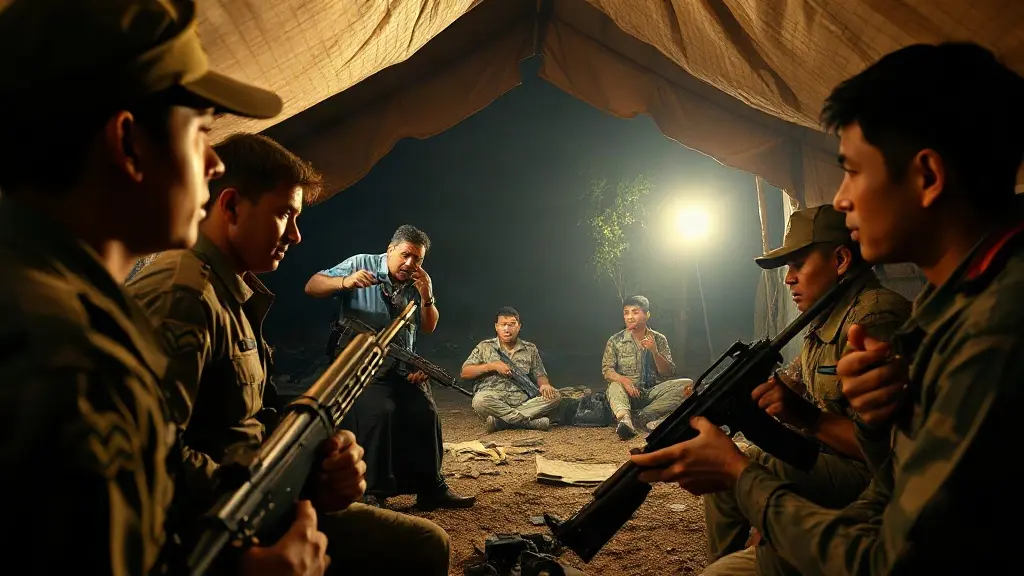
Elite CoBRA commandos and Central Reserve Police Force personnel uncovered 17 unauthorized individuals posing as registered insurgents during a surprise raid on a designated base camp in Manipur, revealing severe lapses in truce monitoring frameworks.
The early-morning physical verification drive targeted a recognized camp housing Kuki-Zo armed groups operating under the tripartite Suspension of Operations (SoO) agreement. When security forces executed a physical head count and cross-referenced biometric identity cards, 17 people present in the complex failed to match the verified register of cadres held by federal monitors. According to an NDTV — Top Stories dispatch, the joint team found that these individuals had taken the places of official signatories who were not present at the site.
The findings point to significant operational lapses within the verification architecture that governs peace deals in northeast India. Under the existing truce, armed groups receive monthly stipends and federal logistical support in exchange for remaining inside designated perimeters and storing their registered weapons in monitored armories.
Breaches in Designated Base Camp Protocols
Designated camps represent the bedrock of the federal peace strategy with regional insurgent groups in Manipur. The tripartite SoO framework, first signed in August 2008 by the Ministry of Home Affairs, the Government of Manipur, and umbrella bodies representing Kuki armed groups, requires all cadres to live inside demarcated boundaries.
Every registered cadre is photographed, fingerprinted, and issued an official identity card. In return, the central government deposits direct financial assistance to support their rehabilitation. The sudden identification of 17 proxy residents indicates that registered fighters can vacate facilities undetected while unauthorized local recruits occupy their quarters to preserve outward headcount figures during scheduled reviews.
Federal investigators detained the 17 individuals on site to determine their legal identities, their hometowns, and whether they possess active ties to unmonitored militant splinter factions. Officers from the Manipur Police and central intelligence bodies arrived shortly after the CoBRA perimeter sweep to run cross-checks against police databases across the hill districts.
Flaws in Ground-Level Monitoring Architecture
The raid has brought renewed scrutiny to the Joint Monitoring Group (JMG), the official body tasked with maintaining physical oversight of all SoO facilities in Manipur. The JMG includes representatives from the Union Home Ministry, state intelligence, state police, the Assam Rifles, and designated liaison officers from the insurgent groups.
Ground protocols mandate regular ground inspections, unexpected headcounts, and periodic auditing of weapon armories, which operate under a double-lock system where one key remains with insurgent commanders and the other with central security forces. Despite these formal rules, ground inspections slowed considerably following the outbreak of ethnic violence across Manipur in May 2023, which divided communities and severely strained mobility between the Imphal Valley and surrounding hill districts.
As documented in the NDTV news dispatch on the CoBRA operation, the presence of unauthorized replacements suggests that some registered fighters may be operating outside the facilities. Valley-based organizations have long alleged that truce-bound cadres violate ground rules by participating in armed skirmishes, while hill-based groups counter that valley-based militias have looted state police armories and operate without regulatory constraints.
The Role of CoBRA and Elite Units in Manipur
The deployment of the Commando Battalion for Resolute Action (CoBRA)—a specialized jungle warfare and counter-insurgency wing of the CRPF—reflects an operational shift by the Ministry of Home Affairs. Historically trained to counter Left-Wing Extremism across central India, CoBRA units were transferred into Manipur to secure buffer zones and conduct high-risk sweeps through difficult forested terrain.
Their direct deployment into designated camps signals growing federal impatience with informal monitoring arrangements. While routine monitoring traditionally fell to territorial paramilitary formations like the Assam Rifles, specialized tactical units now carry out surprise perimeter seals before ground monitors enter to audit personnel registers.
During the camp operation, commandos established cordon barriers around perimeter gates, blocking egress points while identification officers assembled the camp's residents in common yards. Each person underwent fingerprint scanning and card authentication. Those who could not produce paperwork or whose biometric data failed verification were isolated and escorted to nearby administrative centers for formal questioning, as outlined by an official security review by NDTV.
Stricter Controls and Truce Enforcement Ahead
The discovery of proxy cadres creates immediate legal and political challenges for the continuation of the truce pact. The Manipur legislative assembly earlier recommended scrapping the SoO agreement altogether, citing chronic breaches of ground rules. Although New Delhi extended the operational framework to avoid uncontrolled escalation, central officials are enforcing stringent conditions on camp administrators.
Federal monitors have initiated a comprehensive roll-call audit across every active designated base camp located throughout Churachandpur, Kangpokpi, and Chandel districts. Moving forward, monthly rehabilitation payments will be tied to digital biometric attendance, preventing group leaders from claiming allowances for missing personnel.
Central security agencies must now resolve where the registered cadres who vacated their posts are currently located. Commandos and police investigators are questioning the 17 detained individuals under formal legal procedures to determine whether external armed outfits helped coordinate the substitutions, while ground monitors prepare an exhaustive compliance report for the Union Home Ministry.
Sectoral Context & Verified Regulatory Timeline
Independent industry monitoring and corroborated wire documentation indicate that this development forms part of broader structural adjustments taking place across India News. Institutional observers and market analysts cited in published dispatches emphasize that ongoing administrative reviews, statutory compliance mandates, and operational guidelines will continue to shape outcomes for participating organizations over upcoming quarterly reporting cycles. Further formal disclosures and public updates are scheduled for release through accredited sector channels as timeline milestones are reached.
*Contextual Intelligence: Verified sector background corroborated in our coverage on Angelina Jolie Sells Cecil B. DeMille Estate for $24.75M.*
*Contextual Intelligence: Verified sector background corroborated in our coverage on Milan Deploys 5,000 Troops as Italy Protests Spread.*