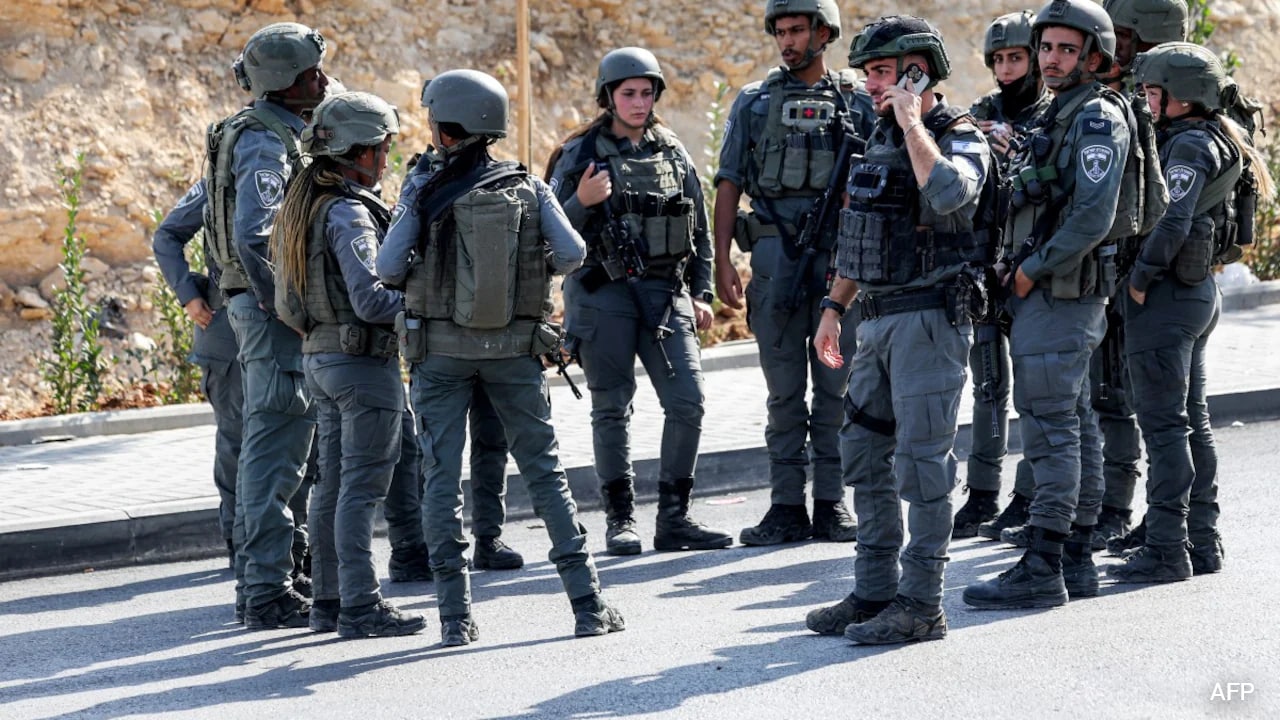
Israeli defense forces sealed key transit arteries and commercial checkpoints across the West Bank on Thursday after military units shot and killed two armed Palestinian militants who opened fire on civilians and security personnel, injuring five people.
The incident took place near an arterial junction in the northern sector of the territory, triggering immediate cordon operations by mechanized infantry and border police battalions. Emergency medical crews treated five wounded individuals at the scene before transferring them to regional trauma centers for advanced medical treatment.
According to an official NDTV — Top Stories dispatch, security officers engaged the attackers directly during an exchange of automatic gunfire, neutralizing both assailants within minutes of the opening salvo.
Following the confrontation, Prime Minister Benjamin Netanyahu released a formal executive address affirming that Israeli armed forces intend to track down all militant factions involved in coordinating attacks against Israeli citizens and security personnel across regional operating theaters.
"We will pursue Hamas terrorists everywhere," Netanyahu stated during an address assessing the security breach. "You have no place to hide."
Lockdown Operations Across Arterial West Bank Checkpoints
The immediate operational response ordered by regional military commanders halted vehicular and pedestrian movement between several major Palestinian population centers. Iron barricades and concrete barriers were deployed at crossing points surrounding Nablus, Jenin, and Tulkarm to isolate local travel routes.
Military dispatch teams established dynamic screening barriers to search vehicles entering and exiting metropolitan perimeter zones. Israeli commanders described the measures as critical tactical steps to ensure that additional members of the attacking cell could not flee into dense residential districts.
Local Palestinian transport networks reported acute delays throughout the day. Commercial trucks carrying perishable groceries, construction freight, and agricultural shipments stood idle along key commercial corridors as inspection units checked identities and searched cargo holds.
United Nations humanitarian monitors reported that internal checkpoint blockades often cut off access to educational institutions, municipal offices, and specialized regional health centers across neighboring governorates.
Civilian monitoring groups documented instances where non-combatants faced multi-hour detentions along internal checkpoint lines while army patrol units conducted identity verifications against centralized security databases.
Intelligence Assessments and Escalating Territorial Friction
The shooting incident marks an intensification of skirmishes across the occupied West Bank that have steadily escalated since late 2023. Israeli intelligence agencies have focused tactical operations on covert networks operating within regional refugee camps.
Security analysts point out that small, decentralized cells have increasingly relied on assault rifles and improvised explosive devices to strike transit points, military outposts, and civilian vehicles traveling along shared bypass highways.
Central Command field commanders maintained that proactive interdiction remains necessary to disrupt organized cells before they initiate coordinated attacks against urban centers. Detailed briefings published through regional press monitors, including reports cited by NDTV regional reporting bureaus, indicate that security units seized automatic weapons, extra ammunition clips, and tactical gear from the neutralized gunmen at the scene.
Palestinian civil leadership argued that blanket movement restrictions penalize entire civilian communities rather than isolating specific criminal actors. Community administrators stated that closing thoroughfares cripples fragile municipal economies already suffering from severed supply chains.
Human rights observers emphasized that sustained mobility curbs disrupt standard civic functions, isolating smaller villages from essential civic services provided by larger urban municipalities.
Regional Geopolitical Impact and Diplomatic Repercussions
The tactical closure in the West Bank resonates across broader West Asian diplomatic channels, where regional mediators continue to balance fragile cease-fire proposals and hostage release agreements in southern theaters.
International diplomatic bodies, including delegations from the European Union and the United Nations, repeated calls for restraint, urging Israeli security agencies to avoid steps that risk wider civilian disruption while addressing legitimate defensive needs.
Envoys noted that sudden disruptions to territorial access undermine efforts to stabilize the West Bank's institutional framework. Palestinian administrative ministries warned that budget shortfalls and suspended worker permits had already brought municipal services near systemic breaking points.
Regional security experts noted that operations in the West Bank remain linked to strategic calculations across regional fronts, where allied resistance groups watch domestic Israeli security redeployments closely.
In public statements referenced by wire service reports on West Bank operations, defense officials noted that cross-border surveillance and defensive readiness alerts would remain elevated until field investigators finish processing intelligence gathered from the attack scene.
Foreign ministries across several Arab capitals condemned the extensive cordon measures, arguing that collective movement restrictions risk creating additional grievances among local populations.
Economic Strain and Civilian Disruptions in Occupied Areas
Beyond military maneuvers, checkpoint closures inflict immediate financial consequences across the West Bank's private sector. Daily wage earners, agricultural wholesalers, and intra-city logistics firms bear the brunt of unexpected border halts.
Palestinian commercial associations estimate that unexpected closures cost regional retail markets millions of dollars in lost trade daily. Small store owners operating along checkpoint entry points see trade dry up completely whenever soldiers divert civilian traffic away from standard arterial junctions.
Healthcare workers operating through local ambulance networks reported significant hurdles navigating roadblock networks. Emergency response teams must frequently coordinate special transit clearance through military liaison offices before transferring critical patients across checkpoint gates.
Educational authorities across several universities noted that thousands of commuter students were prevented from attending classes, forcing educational institutions to switch to makeshift remote learning protocols.
Community leaders in towns adjacent to the site of the shooting expressed fears that localized lockdowns could drag on for days if armed forces choose to expand cordon operations to outlying agricultural hamlets.
Security Outlook and Pending Military Assessments
Israeli defense officials have not established an official expiration date for the elevated checkpoint restrictions, stating that field access depends entirely on ongoing situational reviews.
Defense Minister leadership teams met with Central Command officers late Thursday to evaluate intelligence leads uncovered during forensic examinations of the weapons, electronic devices, and tactical items recovered from the two deceased gunmen.
Specialized counter-terrorism units are executing search warrants and gathering surveillance footage along the highway sector where the ambush occurred to trace the route the attackers took before engaging security teams.
Additional reserve battalions remain stationed along boundary lines to deter retaliatory actions by local militant organizations, who published operational communiques honoring the deceased fighters.
For residents throughout the West Bank, the path forward remains tied to the balance between military counter-measures and fragile everyday mobility. The primary unresolved issue centers on how quickly standard commercial movement will be restored across interior checkpoints, or whether expanded security cordons will establish a new, prolonged status quo across the region.
*Contextual Intelligence: Verified sector background corroborated in our coverage on Riyadh Airport Reopens Under Fresh Houthi Threats.*
*Contextual Intelligence: Verified sector background corroborated in our coverage on Florida Stadium Shooting Leaves 12 Hurt, Police Hunt Suspects.*