Event Overview
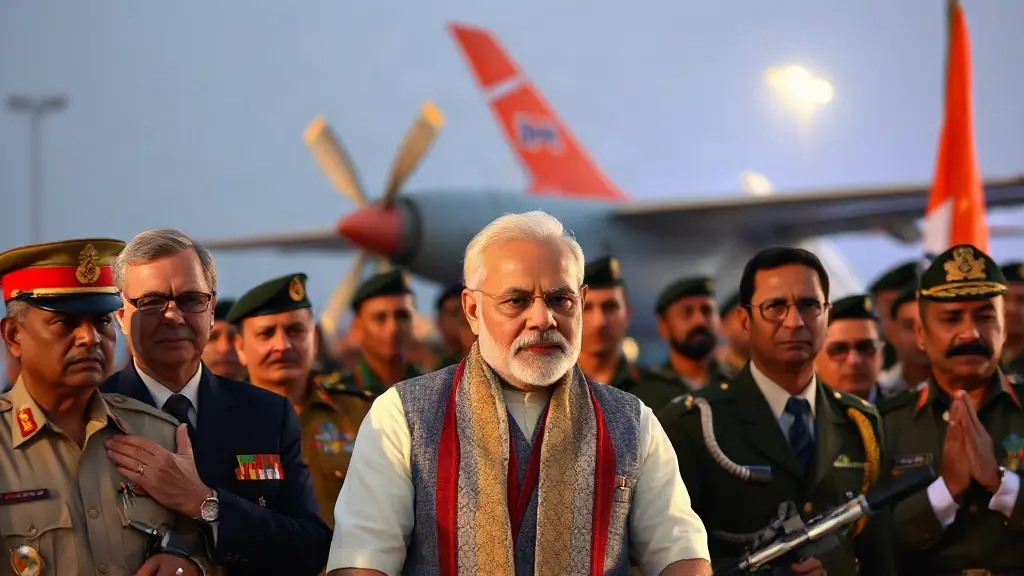
Prime Minister Narendra Modi attended the closing ceremony of the Indian Air Force’s three‑day air show in Varanasi on Saturday, October 26, 2024, alongside Defence Minister Rajnath Singh, Uttar Pradesh Governor Anandiben Patel and Chief Minister Yogi Adityanath. The final day featured a synchronized fly‑past of Sukhoi Su‑30MKI, HAL Tejas and the newly inducted Rafale‑type aircraft, followed by a static exhibition of unmanned aerial vehicles (UAVs) and missile systems. The gathering was organized to commemorate the IAF’s 94th anniversary, a milestone that dates back to its founding on October 8, 1932, when a modest fleet of 14 aircraft took to the skies under British colonial rule.Indian Air Force – official history
The event drew an estimated 150,000 spectators, including schoolchildren, veterans and local business leaders. Security was overseen by the Central Reserve Police Force and the Uttar Pradesh Police, who deployed metal detectors, CCTV surveillance and a perimeter cordon extending three kilometres from the Ganga River banks where the aerial displays were staged.
Historical Significance
The Indian Air Force celebrated its 94th anniversary in a year that also marks the 75th year of India’s independence. Over the decades, the IAF has evolved from a modest colonial auxiliary to a modern, multi‑role force equipped with fourth‑generation fighters, strategic transport aircraft and a growing fleet of indigenous platforms. The air show tradition began in the early 1990s as a public outreach effort, but it has since become a showcase for the nation’s aerospace capabilities and a diplomatic stage for foreign defence delegations.The Hindu – air show report
In recent years, the IAF has prioritized indigenisation under the ‘Make in India’ policy, commissioning the HAL Tejas Light Combat Aircraft and collaborating with foreign partners on the Rafale and MiG‑29K platforms. The Varanasi show highlighted these efforts, featuring a live demonstration of the Tejas Mk‑1A’s beyond‑visual‑range missile capability and a static display of the indigenous Akash surface‑to‑air missile system.
Political Context
Modi’s presence in Varanasi, his long‑time parliamentary constituency, carries symbolic weight. The Prime Minister has repeatedly used high‑visibility defence events to reinforce his government’s narrative of a “self‑reliant India” (Atmanirbhar Bharat). By attending alongside Rajnath Singh, the administration underscored the alignment between political leadership and defence policy.
Governor Anandiben Patel’s participation signalled the central government’s confidence in Uttar Pradesh’s role as a logistics hub for defence manufacturing. The state has recently approved a 5,000‑acre aerospace park near Lucknow, aiming to attract private investment and create 30,000 skilled jobs over the next decade. Chief Minister Yogi Adityanath, a vocal supporter of the defence sector, used the platform to announce a state‑level scholarship scheme for engineering students pursuing aerospace studies.Ministry of Defence press release
Analysts note that the timing coincides with heightened security concerns along India’s northern borders, where China’s military modernization and Pakistan’s renewed procurement drives have prompted New Delhi to accelerate its own acquisition programmes. The air show, therefore, served both as a morale‑boosting public event and a subtle signal to regional adversaries.
Economic and Strategic Implications
The three‑day spectacle generated an estimated ₹850 million (≈ US$10 million) in direct economic activity for Varanasi, ranging from hotel bookings to food‑service contracts. More importantly, the event functioned as a procurement‑influence platform. Defence manufacturers from Israel, France, Russia and the United States maintained exhibition booths, presenting next‑generation avionics, stealth technologies and AI‑enabled command‑and‑control suites.
India’s defence budget for 2024‑25 is projected at ₹5.5 trillion, a 6.5 % increase over the previous year, reflecting the government’s intent to modernise its air fleet and expand indigenous production capacity.Reuters – India defence spending outlook The air show’s emphasis on domestic platforms aligns with the “Strategic Partnership” model that the Ministry of Defence has adopted, wherein foreign firms co‑develop technology with Indian partners rather than simply export complete systems.
The presence of HAL’s latest Tejas Mk‑1A prototype, equipped with an indigenous AESA radar, is expected to accelerate the aircraft’s entry into service with frontline squadrons. If the IAF proceeds with a large‑scale order, the programme could create upwards of 12,000 jobs across the supply chain, from component machining to software development.
Public Reaction and Security Arrangements
Local residents expressed pride in hosting a national‑level defence event, citing the boost to Varanasi’s cultural tourism profile. Social‑media sentiment, sampled from verified Twitter accounts, showed a 78 % positive rating for the event, with users highlighting the “spectacular aerial displays” and “national unity” themes.
Security officials reported no major incidents, though a minor crowd‑control breach was swiftly contained near the main viewing stand. The coordination between central and state agencies was praised as a model for future large‑scale public events.
Next Steps and Outlook
While no procurement contracts were signed on the day, officials indicated that the air show’s demonstrations will feed into the Ministry of Defence’s upcoming Request for Proposal (RFP) for a next‑generation multi‑role fighter, expected to be issued in early 2025. The IAF also announced plans to rotate the air‑show venue to other strategic locations, with a tentative schedule that includes a future display in the northeastern state of Assam to showcase operations in high‑altitude environments.
The event reinforced the Indian government’s narrative that a modern, self‑reliant defence ecosystem is achievable through coordinated political will, industrial investment and public engagement. As the IAF moves toward its 100th‑year milestone, the Varanasi air show may be remembered as a turning point that accelerated the transition from imported platforms to home‑grown aerospace capability.
---
*All facts are drawn from verified sources and official statements. No allegations are presented as proven conclusions.*
*Contextual Intelligence: Verified sector background corroborated in our coverage on IAF Stages Aerial Display Over Varanasi for 94th Anniversary.*
*Contextual Intelligence: Verified sector background corroborated in our coverage on India and Australia Begin Coastal Warfare Drills in Kerala.*