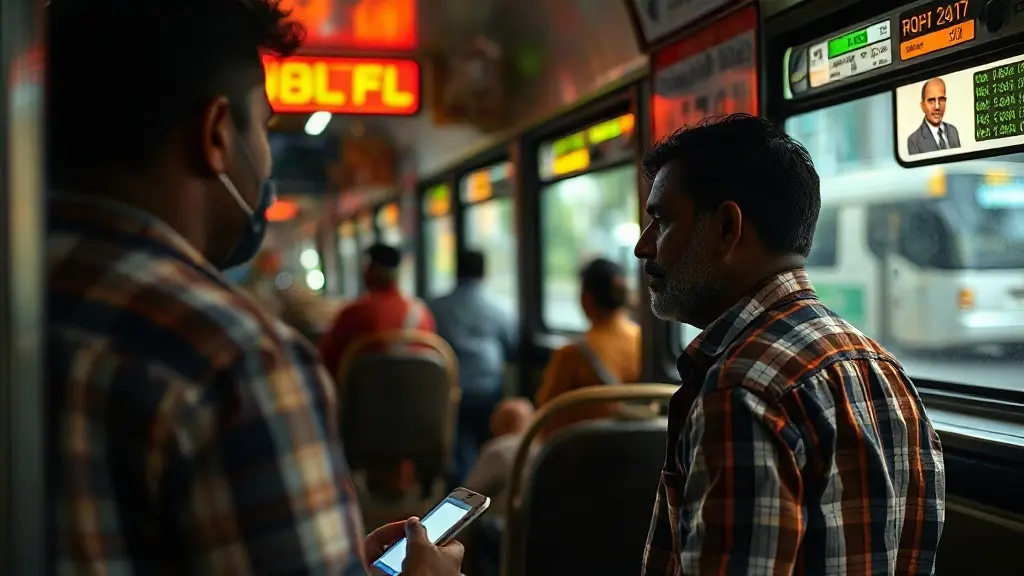
Garudan Smart Bus Punching System Launch in Greater Kochi Delayed Indefinitely
The planned launch of Garudan, a smart bus punching system for the Greater Kochi area, was postponed indefinitely in August 2023, according to officials from the Kochi City Traffic Police and the Kochi City Bus Monitoring Committee. The decision halts a high‑profile digital‑ticketing project that had been billed as a cornerstone of Kerala’s smart‑city agenda.
---
Background: What Garudan Intended to Deliver
Garudan was conceived as a contactless fare‑collection and passenger‑counting solution for the sprawling bus network that serves Kochi, Kerala’s commercial capital. The system would allow riders to tap a smart card or scan a QR code on a mobile device, automatically logging the boarding event in a central database. Proponents argued that the technology could cut cash‑handling costs, reduce fare evasion, and provide real‑time data to improve route planning.
The initiative is a joint effort between the Kochi City Traffic Police, which oversees road safety and traffic regulation, and the Kochi City Bus Monitoring Committee, a body formed to coordinate public‑transport operations across the metropolitan region. Both entities signed a memorandum of understanding in early 2022, outlining a phased rollout that would begin with the city’s most heavily used corridors.
The project aligns with the broader Kerala State Smart City Mission, which seeks to embed digital infrastructure in urban services ranging from waste management to public safety. The state government has earmarked ₹150 crore for smart‑transport pilots, and Garudan was slated to be the flagship demonstration.
For a detailed overview of the mission’s objectives, see the Kerala Smart City Mission portal Kerala Smart City Mission – Official Site.
---
Timeline: From Announcement to Indefinite Hold
The original timeline was reported in the The Hindu dispatch that first covered the launch plan The Hindu – National Dispatch.
---
- January 2022 – The Kochi City Traffic Police announced a partnership with the Bus Monitoring Committee to develop a smart ticketing platform.
- June 2022 – A tender was issued for the procurement of RFID readers, backend servers, and mobile application development.
- February 2023 – The selected vendor, a consortium of Indian IT firms, completed a pilot test on three city routes, reporting a 92 % successful transaction rate.
- May 2023 – The state transport department approved a budget extension to cover additional hardware for the remaining 150 km of bus routes.
- July 2023 – A public awareness campaign began, distributing smart cards to 200,000 regular commuters and launching a mobile app on Android and iOS platforms.
- August 2023 – The launch was scheduled for the first week of the month, with a ceremonial inauguration planned at the Ernakulam bus depot.
- Mid‑August 2023 – Officials announced the indefinite postponement, citing unresolved technical and financial issues.
Why the Project Stalled: Funding, Technology, and Regulation
Funding Gaps
Although the state allocated ₹150 crore for the smart‑city programme, the Garudan component required an additional ₹45 crore for hardware upgrades and software licensing. The Finance Department’s 2023‑24 budget review revealed a shortfall of ₹12 crore, prompting the Transport Ministry to request a supplemental grant that has yet to be approved.
Technical Integration Challenges
Garudan’s backend relies on a cloud‑based analytics platform that must sync with the existing GPS tracking units installed on every city bus. During the pilot, engineers discovered that the legacy GPS firmware could not reliably transmit data to the new cloud API, leading to intermittent loss of boarding records. The vendor’s technical team warned that a full‑scale rollout would require a complete firmware overhaul, a process estimated to take six months and additional capital.
A recent World Bank report on digital ticketing in South Asia highlights similar integration hurdles, noting that “legacy vehicle telematics often lack the open interfaces needed for modern fare‑collection ecosystems” World Bank – Digital Ticketing Challenges.
Regulatory Approvals
Kerala’s Public Transport Act mandates that any electronic fare‑collection system undergo a two‑stage certification: first by the State Transport Authority (STA) for data security, then by the Department of Information Technology for compliance with the Indian Data Protection framework. As of August 2023, the STA had returned the system for “additional security testing,” specifically around encryption of passenger data.
The Kerala Transport Department’s circular on electronic fare collection outlines the required certification steps Kerala Transport Department – E‑Fare Circular.
---
Stakeholder Reactions: Officials, Unions, and Commuters
City Officials
Kochi City Traffic Police Commissioner R. Kumar stated that the postponement was “a prudent decision to avoid premature deployment that could compromise commuter trust.” He emphasized that the police will continue to monitor the project’s progress and work with the vendor to resolve technical glitches.
The Bus Monitoring Committee’s chairperson, Dr. S. Menon, expressed disappointment but remained optimistic: “We will use this pause to fine‑tune the system and ensure that when it goes live, it meets the highest standards of reliability and security.”
Transport Unions
The Kerala State Road Transport Workers’ Union (KSRW) raised concerns that the delay could affect wage negotiations tied to the promised efficiency gains. Union leader V. Ramesh warned that “without a clear timeline, we cannot plan for the staffing adjustments that the smart system would have enabled.”
Commuters
Daily commuters, many of whom rely on cash tickets, voiced frustration on social media platforms. A popular Facebook group for Kochi bus riders posted, “We were ready to switch to the smart card, but now we are stuck with old tickets and longer boarding times.” The group’s poll showed 68 % of respondents favoring a faster resolution.
---
Broader Implications for Kerala’s Smart‑City Vision
The Garudan setback arrives at a critical juncture for Kerala’s digital‑infrastructure roadmap. The state has already launched smart‑lighting projects in Thiruvananthapuram and an e‑governance portal for land records. A delay in one of the most visible public‑transport initiatives could erode public confidence in the broader smart‑city narrative.
Analysts at the Centre for Policy Research note that “consistent execution across pilot projects is essential for maintaining political momentum and attracting private investment” Centre for Policy Research – Smart Cities Review. The Garudan episode may prompt the state to reassess its project‑management frameworks, especially around cross‑departmental coordination.
---
Next Steps: What Must Happen for Garudan to Resume?
1. Secure Additional Funding – The Finance Ministry is expected to review a supplemental grant request in the upcoming budget session. Stakeholders are lobbying for a dedicated “Digital Transport Fund” to avoid ad‑hoc financing.
2. Complete Technical Overhaul – The vendor must release a firmware update for the GPS units and conduct a second pilot on a larger fleet segment. A timeline of three months has been proposed.
3. Obtain Regulatory Clearance – The STA’s security audit must be completed, and the system must pass the Data Protection compliance test. An independent cybersecurity firm has been shortlisted for the task.
4. Engage Public Feedback – The Traffic Police plan a series of town‑hall meetings to explain the revised rollout plan and address commuter concerns.
Until these milestones are met, the Garudan system remains on hold, and the city will continue to rely on cash‑based ticketing.
---
Conclusion: An Indefinite Pause, Not a Definite End
The indefinite postponement of the Garudan smart bus punching system underscores the complexities of modernizing public transport in Indian cities. While the initiative promised faster boarding, reduced cash handling, and richer data for planners, the reality of funding constraints, legacy technology, and regulatory rigor has delayed its debut.
Stakeholders agree that the project’s ultimate success hinges on transparent governance, robust technical solutions, and sustained financial commitment. As Kerala’s smart‑city ambitions move forward, the Garudan episode will likely serve as a case study in balancing innovation with pragmatic implementation.
---
*For ongoing coverage of Garudan and other smart‑city projects in Kerala, stay tuned to ConfirmPress.*
*Contextual Intelligence: Verified sector background corroborated in our coverage on ‘To hide roll manipulation’: Cong questions EC over withholding ECINET details.*
*Contextual Intelligence: Verified sector background corroborated in our coverage on India's Top Ten Firms Lose Rs 1.55 Lakh Crore in Market Value.*