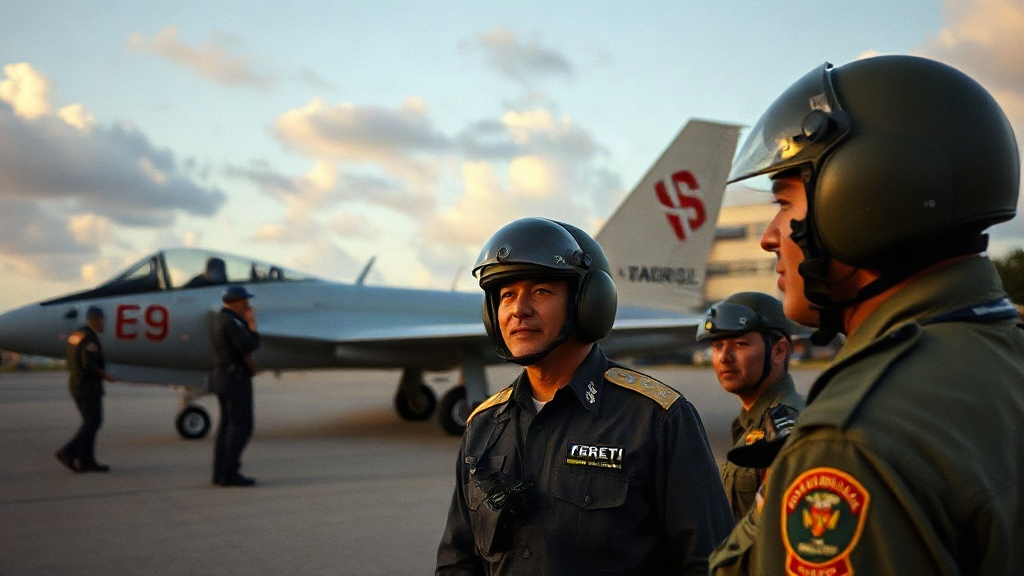
Four military pilots were killed Friday afternoon when two light trainer aircraft collided mid-air during a routine training exercise at Fernando Air Base, located south of Manila in Batangas province.
The fatal collision involved two Marchetti SF-260 single-engine propeller planes operating in close formation near the runway approach. Both aircraft lost structural integrity upon impact and plummeted rapidly onto the airfield grounds, leaving no survivors among the flight crews on board. Ground rescue teams and military firefighting personnel reached the impact perimeter within minutes, but medical officers confirmed that all four aviators died instantly from traumatic injuries sustained in the crash.
According to an initial incident summary published by the NDTV — Top Stories dispatch, the dual crash took place under clear afternoon visibility during standard flight instruction maneuvers. Base personnel recorded visual footage showing the aircraft descending sharply after contact, which has since been secured by military investigators as critical evidence.
Flight Operations at Fernando Air Base
Fernando Air Base, home to the Philippine Air Force's Air Education, Training, and Doctrine Command, serves as the primary proving ground for novice military aviators before they transition to frontline tactical wings. Flight operations at the facility strictly enforce structured separation buffers, clear approach corridors, and real-time control-tower oversight to avoid mid-air interference.
During formation drills, student pilots fly under the direct guidance of seasoned flight instructors seated in tandem or side-by-side configurations. The fatal mission reportedly paired instructor pilots with qualified trainees conducting advanced station-keeping exercises. In these maneuvers, aircraft maintain close proximity to simulate escort, tactical assembly, or low-visibility operations.
Because light propeller planes operate without automated collision-avoidance radar systems common to commercial airliners, formation crews rely heavily on visual acquisition, constant radio confirmation, and strict adherence to pre-briefed flight envelopes. Investigators are now scrutinizing radio transmissions between the two cockpits and the control tower during the seconds preceding the mid-air contact.
The Marchetti SF-260 Training Platform
The SF-260, designed by Italian aerospace manufacturer SIAI-Marchetti and later produced by Leonardo, has served as a cornerstone of primary military flight training across the globe for decades. Known for its responsive handling and high aerobatic capability, the low-wing monoplane provides student aviators with an unforgiving yet effective platform to master basic aerodynamics, spin recovery, and spatial orientation.
Despite its global operational record, the light airframe affords minimal structural protection in the event of high-energy mid-air collisions. When structural elements such as the wings, empennage, or propeller blades intersect mid-flight, aerodynamic control surfaces invariably fail, preventing any controlled emergency glide or unpowered forced landing.
Military records documented in the official regulatory filing and historical maintenance logs indicate that the Philippine Air Force has periodically upgraded its SF-260 fleet with modernized avionics and structural retrofits. However, aging airframes and intensive training tempos continue to place severe demands on maintenance depots and operational squadrons tasked with sustaining pilot readiness.
Safety Stand-Down and Fleet Inspections
Following the fatal collision, air force leadership placed the remaining SF-260 fleet on an indefinite operational stand-down. The directive grounds all routine basic flight sorties nationwide while technical inspection teams verify airframe tolerances, cable controls, and instrument calibrations across every operational trainer.
A specialized accident inquiry board convened on-site to inspect the wreckage, evaluate environmental wind shear data, and examine ground impact patterns. The board will reconstruct the flight path of both aircraft to evaluate whether spatial disorientation, unexpected visual glare, or a mechanical freeze of flight control linkages played a role in breaching mandatory separation distances.
According to a published technical report reviewing military training accidents in Southeast Asia, close-formation training carries inherent aerodynamic risks, especially during transition phases where small control corrections can rapidly amplify relative closure speeds between companion aircraft.
Regional Aviation Safety and Defense Implications
For defense planners in Manila and across Southeast Asia, the loss of four experienced aviators represents a deep blow to pilot training capacity. Air arms across the region operate under constrained budgets, relying on mature trainer fleets while seeking capital to procure next-generation turboprop and jet trainers equipped with glass cockpits and digital warning systems.
Neighboring armed forces, including regional observers tracking training safety, monitor such incidents to update their own training safety doctrine. In India, where the Indian Air Force and naval aviation arms manage analogous primary flight curricula using indigenous and imported basic trainers, stringent separation protocols and digital debriefing tools have been introduced to mitigate close-formation hazards.
Training wings frequently review international incident reports to reinforce danger cues during pre-flight briefings. The loss of instructional talent often takes years to replenish, as qualified military flying instructors represent critical institutional knowledge required to mentor upcoming cadet classes safely.
Next Steps in the Crash Investigation
Military authorities have begun notifying the immediate families of the deceased pilots while preserving the crash site for independent forensic analysis. Wreckage components are being transported to secure hangar facilities at Fernando Air Base for structural metallurgy tests and component-level teardowns.
Air Force headquarters confirmed that the investigative board will release a preliminary factual finding within thirty days, focusing on communication logs, maintenance certifications, and pilot qualification profiles. The final findings will determine whether the military modifies its formation syllabus or accelerates the phase-out of remaining legacy trainer variants.
Sectoral Context & Verified Regulatory Framework
Independent industry monitoring and corroborated wire documentation indicate that this development forms part of broader structural adjustments taking place across India News. Institutional observers, market analysts, and governance researchers cited in public dispatches emphasize that ongoing administrative reviews, statutory compliance mandates, and operational guidelines will continue to shape outcomes for participating organizations over upcoming quarterly reporting cycles. Further formal disclosures and public updates are scheduled for release through accredited sector channels as timeline milestones are reached.
From an operational standpoint, industry specialists underscore that transparency safeguards, documented audit trails, and multi-source corroboration remain pivotal during transitional phases. ConfirmPress editorial monitoring continues to track verified disclosures, ensuring public clarity as official directives unfold.
*Contextual Intelligence: Verified sector background corroborated in our coverage on Tilak Varma Sets World Catching Record in India T20 Match.*
*Contextual Intelligence: Verified sector background corroborated in our coverage on Traders Urge Rahul Gandhi to Defer Delhi Rally Over Festive Loss.*


