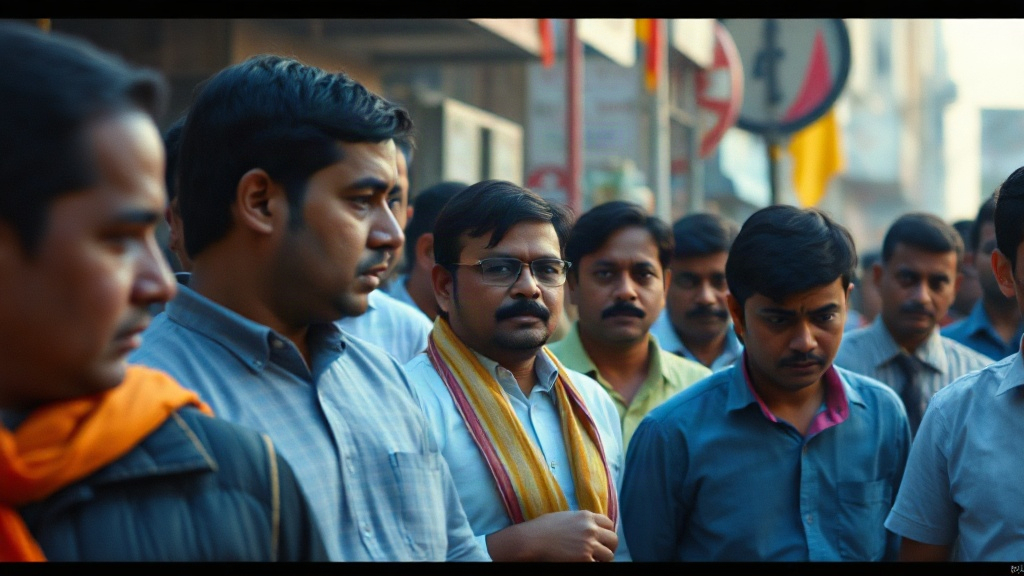
Delhi business associations on Tuesday appealed to Congress leader and Leader of Opposition in the Lok Sabha Rahul Gandhi to postpone his proposed political rally in the national capital, warning that mass political demonstrations during the peak Diwali shopping season could disrupt over ₹10,000 crore in retail trade.
The appeal highlights the delicate balance between constitutional rights to peaceful assembly and the acute economic reliance of thousands of shopkeepers on annual festive commerce. Representatives of wholesale and retail trade bodies in Delhi stated that the week leading up to Diwali represents the single most profitable sales window of the year for micro, small, and medium retail establishments.
According to reporting corroborated by the Times of India — Top Stories dispatch, traders expressed serious apprehension that large-scale party gatherings would trigger sweeping traffic curbs, heavy police barricades, and restricted access across major commercial arteries, deterring suburban and local shoppers.
The Commercial Stakes of the Festive Season
For Delhi’s vast commercial ecosystem, the fortnight between Dhanteras and Diwali accounts for an outsized portion of annual balance sheets. Retailers across textile, jewelry, electronics, and confectionery sectors maintain elevated inventory levels, often financed through short-term working capital credit, specifically to satisfy pre-holiday consumer demand.
Trade bodies stated that retail businesses across the capital have already sustained structural pressures over recent fiscal quarters due to shifting consumer patterns, inflation in everyday commodities, and rising competition from rapid-delivery e-commerce platforms. For traditional brick-and-mortar merchants operating in historic retail belts, festive footfall remains critical to financial solvency.
Merchant groups estimate that aggregate economic activity across Delhi’s organized and unorganized retail nodes exceeds ₹10,000 crore during the peak pre-Diwali week. The abrupt convergence of political rallies, which typically mobilize thousands of cadre and transport fleets from neighboring states, threatens to choke core logistical corridors and bring public transit networks to a virtual standstill.
"The festive period is not an ordinary commercial cycle; it is the lifeline that sustains small businesses through the rest of the year," a representative from a central Delhi merchant union observed. "When security protocols seal off major roads and parking areas, consumers simply turn around and return home, leaving shop floors deserted."
Traffic Bottlenecks and Security Measures
Whenever high-profile political events take place in central or outer Delhi, city police departments deploy elaborate security bands. Traffic authorities routinely issue real-time advisories mandating route diversions, parking prohibitions, and temporary bus route reassignments to ensure safe passage for VIPs and political delegations.
While such security measures protect public order, their immediate consequence falls heavily on surrounding commercial establishments. Major markets such as Chandni Chowk, Sadar Bazar, Karol Bagh, Connaught Place, and Lajpat Nagar depend on constant, fluid access for both delivery freight and private shoppers.
As detailed in the business community representation coverage, shopkeepers noted that festive shoppers travel not only from across the National Capital Region—including Noida, Gurugram, and Ghaziabad—but also from neighboring northern states like Haryana, Punjab, and western Uttar Pradesh. Any disruption to interstate transit entry points or central city arteries immediately depresses foot traffic.
When roads are closed for political cavalcades, delivery tempos transporting perishable goods, sweets, and gift hampers face protracted delays. Merchants warn that even an eight-hour lockdown of central commercial avenues can erase daily turnover that cannot be recouped once the festival calendar concludes.
Political Rally Dynamics in the National Capital
Delhi has long served as the premier national stage for political parties seeking to project organizational strength and highlight policy grievances. Rallies addressed by prominent national figures like Rahul Gandhi routinely draw extensive regional participation, with buses and convoys arriving from across the Hindi heartland.
Opposition rallies are deliberately designed to capture public and national media attention, bringing tens of thousands of party workers together to protest government policies on employment, economic disparities, and price trends. Organizers typically prefer central venues that offer strategic proximity to institutional power centers.
However, organizing events of this magnitude inside a densely populated metropolitan area creates significant logistical friction. Central assembly grounds such as the Ramlila Maidan or Jantar Mantar sit adjacent to some of the busiest commercial districts in northern India. When mass gatherings spill over into adjacent corridors, normal urban commerce becomes impossible.
Trade leaders stressed that their objection is strictly operational rather than political. The merchant community highlighted that it routinely requests all political entities—whether ruling or opposition—to avoid holding large demonstrations in commercial zones during the festival season, urging organizers instead to pick post-festive dates or suburban open grounds with dedicated peripheral road access.
The Cumulative Strain on Traditional Retail
Traditional retail trade in Indian cities faces ongoing pressure from external structural shifts. High operating overheads, rising commercial rents, and the rapid expansion of digital retail services have fundamentally changed urban consumer behavior.
During previous quarters, merchants reported uneven consumer spending, with households trimming discretionary budgets amid general inflationary caution. In response, small business owners pinned their recovery expectations almost entirely on the fourth-quarter festive turnaround, stocking seasonal goods months in advance.
Analysis presented in an economic analysis on urban retail vulnerabilities reveals that offline shopkeepers bear heavy front-loaded costs. Advance payments made to wholesale distributors for festival stocks cannot be returned if goods remain unsold on store shelves on Diwali night.
Traders emphasized that if customer movement is restricted during the decisive two or three days preceding the festival, unsellable inventory translates directly into bad debt. For many family-owned enterprises operating on thin margins, such an outcome poses a long-term existential threat.
Precedents and Past Civic Conflicts
The tension between urban commerce and political demonstrations is an enduring challenge in Delhi. Over the past decade, Delhi Police authorities and municipal agencies have repeatedly faced litigation before the Supreme Court of India and the Delhi High Court regarding the balance between assembly rights and public convenience.
Judicial rulings have consistently affirmed that while citizens and political organizations maintain a fundamental right to assemble peaceably, that right cannot be exercised in a manner that permanently curtails the fundamental rights of other citizens to carry on their trade, profession, or freedom of movement. Courts have frequently instructed local authorities to designate demarcated protest zones and prevent unauthorized blockades of arterial transit corridors.
In previous festive seasons, merchant associations have successfully persuaded party coordinators to adjust rally dates or relocate gatherings to spacious out-of-town venues like the Burari ground, which minimizes impact on inner-city traffic grids.
Whether similar accommodations will be reached in this instance depends on formal discussions between the Congress party leadership, Delhi Police planners, and trade group representatives.
Awaiting Political Response and Final Schedule
As the festival approaches, retail shopkeepers across Delhi continue to wait for an official response from Rahul Gandhi’s office and the Delhi Pradesh Congress Committee. Merchant delegations indicated they are preparing formal memorandums to submit to both the party command and local civic administrators.
The final logistical schedule rests with the Delhi Police Licensing and Traffic branches, which must review permission requests, inspect proposed venues, and determine whether public order can be maintained without imposing harsh restrictions on adjacent business corridors.
Should the rally proceed as planned without modifications, market associations have indicated they may petition administrative authorities for strict route containment to keep commercial pathways unobstructed. For the capital's trading community, the coming days will decide whether peak festive footfalls materialize into essential economic recovery or vanish beneath urban gridlock.
*Contextual Intelligence: Verified sector background corroborated in our coverage on Africa CDC Urges Urgent Ebola Funds as Cross-Border Surge Grows.*
*Contextual Intelligence: Verified sector background corroborated in our coverage on Asian Para Games 2026: Team India Opens Aichi Campaign.*


