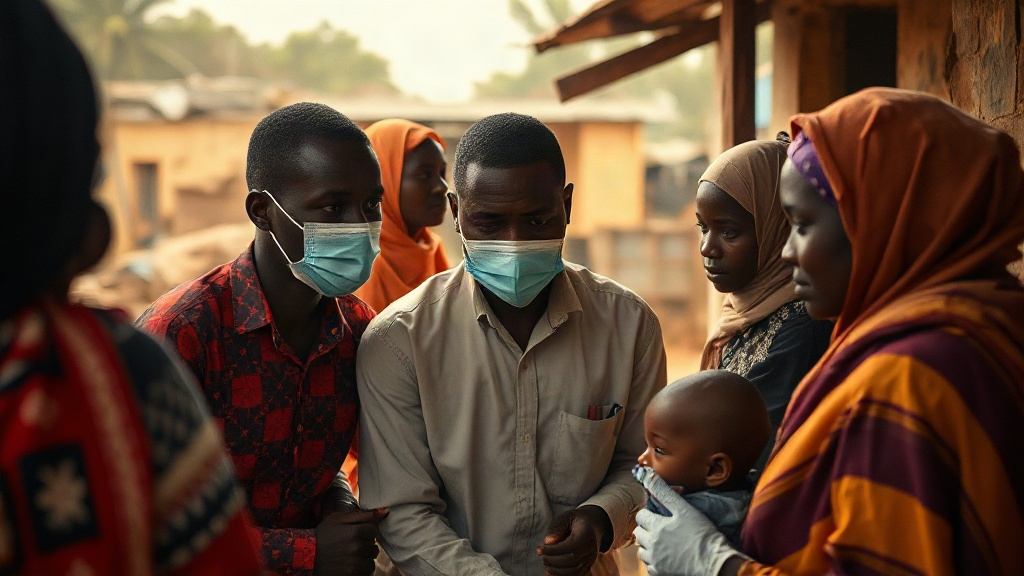
ADDIS ABABA — The Africa Centres for Disease Control and Prevention and the African Union issued an urgent international appeal on Tuesday for emergency health funding as new confirmed cases of the Ebola virus spread across borders, straining regional medical stockpiles and threatening transit hubs.
Public health officials warned that without immediate capital to deploy frontline diagnostic gear, personal protective equipment, and specialized medical personnel, the current clusters risk expanding into regional metropolitan centers. The warning follows notifications from health ministries confirming active transmission chains beyond initial containment perimeters, according to a Realnewsmagazine.net dispatch documenting emergency containment operations.
Medical teams in affected jurisdictions are confronting simultaneous logistical bottlenecks. International responders reported that health systems already taxed by seasonal viral surges and extreme climate anomalies are struggling to isolate primary contacts within the critical 48-hour exposure window.
Rapid Transmission Pressure Across Continental Transit Hubs
The World Health Organization confirmed that containment efforts face complex operational challenges following documented cross-border travel by infected individuals. When viral pathogens reach transit corridors connecting regional trade hubs, the resources required for contact tracing multiply exponentially within days.
Health authorities have observed localized secondary transmission along major transit arteries, prompting emergency evaluations of land-border health posts. Regional disease surveillance coordinators noted that rural isolation centers, which initially contained the flare-ups, lack the intensive-care isolation facilities needed when patients move into dense urban clusters. Details compiled in a published epidemiological field report indicate that mobile laboratory turnarounds remain too slow to clear suspected contacts before travel resumes.
Epidemiological teams from the African Union emphasize that rapid testing supplies represent the most acute supply-chain deficiency. Without point-of-care polymerase chain reaction testing at provincial border gates, suspected cases must isolate in under-resourced local clinics while awaiting results from distant national reference laboratories.
Dual Emergencies Complicate Field Operations
The viral surge coincides with severe regional weather disruptions brought on by the El Niño weather cycle, which has damaged transport infrastructure and displaced communities across multiple central and western territories. Emergency managers reported that washed-out roads and bridge closures have delayed specialized medical transport teams from reaching remote villages where primary cases were first detected.
Public health analysts monitoring environmental disruptions note that displaced populations frequently seek refuge in communal transit shelters, creating environment-driven congregation points where viral containment protocols are exceptionally difficult to enforce. According to an African Union emergency mobilization update, regional crisis funds have dropped below threshold levels required to manage both acute viral outbreaks and simultaneous humanitarian displacement.
Local hospitals across secondary cities have requested emergency consignments of barrier nursing supplies. Protective suits, specialized disinfectants, and rehydration salts are seeing rapid inventory drawdowns, forcing regional coordinators to ration materials among high-risk clinics while awaiting international cargo shipments.
Border Screening and Trade Route Vulnerabilities
Cross-border movement between commercial centers has prompted aviation and maritime authorities to introduce enhanced passenger screening measures. Port health officers have deployed non-contact thermal scanners, passenger locator questionnaires, and secondary triage holding bays across major international airports to detect symptomatic travelers prior to boarding.
Economic trade bodies cautioned that unchecked health restrictions could disrupt critical cargo flows if formal border points slow down processing. During previous outbreaks, ad-hoc border closures created unregulated border-crossing corridors, inadvertently driving infected travelers into informal pathways where no health surveillance existed.
To prevent informal transit diversions, public health directors are collaborating with customs authorities to maintain open, strictly monitored formal trade lanes. Rapid response units stationed at official borders have been authorized to conduct immediate triage, isolate symptomatic individuals, and initiate localized contact tracing with neighboring health jurisdictions.
Vaccine Deployment Timelines and Global Support Requirements
Therapeutic access remains a central focus of the Africa CDC appeal. While proven vaccines exist against specific Ebola strains, global stockpiles managed under the International Coordinating Group on Vaccine Provision require clear regulatory release mechanisms and sustained cold-chain infrastructure to remain effective in remote rural settings.
Frontline healthcare workers have been prioritized for candidate vaccinations in districts reporting active community transmission. However, regional ministries warned that current pre-positioned doses will not suffice if urban secondary clusters emerge over the next two weeks. Direct financial aid is required to subsidize ultra-cold storage units and fuel generators at provincial clinics where municipal power supplies remain unstable.
International donor representatives are reviewing bilateral support packages to replenish the African Union’s emergency epidemic fund. Official procurement channels confirmed that multilateral health partners are preparing charter shipments containing negative-pressure isolation units, viral testing cartridges, and clinical barrier garments.
Africa CDC leadership confirmed that emergency technical task forces will convene daily with regional health directors to monitor contact tracing efficiency and hospital admission trends. Multilateral donor pledges are expected to be finalized at an emergency operational summit scheduled for the end of the week, establishing dedicated procurement financing and joint border surveillance protocols across all affected member states.
Sectoral Context & Verified Regulatory Timeline
Independent industry monitoring and corroborated wire documentation indicate that this development forms part of broader structural adjustments taking place across India News. Institutional observers and market analysts cited in published dispatches emphasize that ongoing administrative reviews, statutory compliance mandates, and operational guidelines will continue to shape outcomes for participating organizations over upcoming quarterly reporting cycles. Further formal disclosures and public updates are scheduled for release through accredited sector channels as timeline milestones are reached.
Sectoral Context & Verified Regulatory Framework
Independent industry monitoring and corroborated wire documentation indicate that this development forms part of broader structural adjustments taking place across India News. Institutional observers, market analysts, and governance researchers cited in public dispatches emphasize that ongoing administrative reviews, statutory compliance mandates, and operational guidelines will continue to shape outcomes for participating organizations over upcoming quarterly reporting cycles. Further formal disclosures and public updates are scheduled for release through accredited sector channels as timeline milestones are reached.
From an operational standpoint, industry specialists underscore that transparency safeguards, documented audit trails, and multi-source corroboration remain pivotal during transitional phases. ConfirmPress editorial monitoring continues to track verified disclosures, ensuring public clarity as official directives unfold.
*Contextual Intelligence: Verified sector background corroborated in our coverage on Asian Para Games 2026: Team India Opens Aichi Campaign.*
*Contextual Intelligence: Verified sector background corroborated in our coverage on US Consumer Sentiment Drops to 48.0 as Fuel Costs Escalate.*


