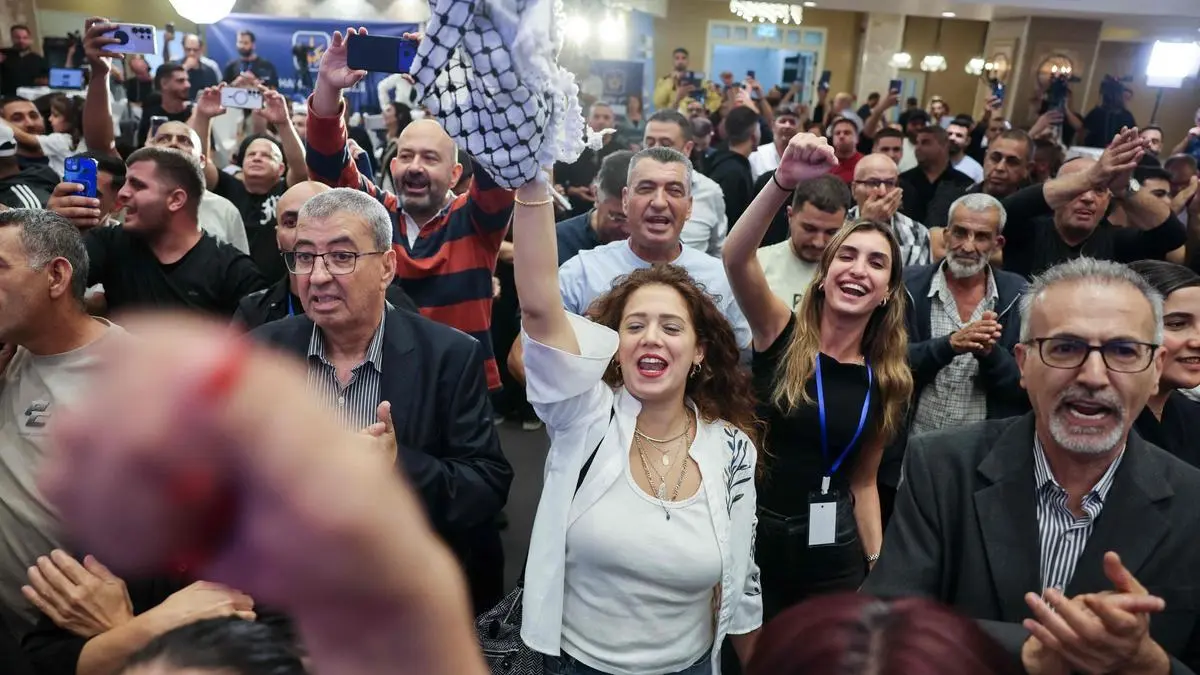
Israel’s October 27 legislative election produced the country’s highest overall voter turnout since 1999, with 77.7% of eligible voters casting ballots. Arab citizens appear to have played a major role in that increase, with a Channel 12 exit-poll estimate placing their turnout at nearly 80%.
The official Arab turnout figure has not yet been released by Israel’s Central Elections Committee. If the estimate holds, participation among Arab citizens would be the highest in at least a decade and a sharp break from the pattern seen in recent Knesset elections.
The central explanation offered by political analysts is fear — specifically, concern that Prime Minister Benjamin Netanyahu could return to office with another strongly right-wing coalition. Arik Rudnitzky of the Israel Democracy Institute said fear of another Netanyahu government or right-wing government was the main motivation for Arab voters in this election.
That concern appears to have outweighed long-standing frustration with Arab political parties. Arab citizens make up about 21% of Israel’s population, but parties representing them have never held more than 15 of the Knesset’s 120 seats. Their influence has also been limited by comparatively low participation: around 40% of eligible Arab adults have typically stayed away from Knesset elections over the past two decades.
Rudnitzky said about 10% of Arab citizens boycott Knesset elections for ideological reasons. He described the larger group of non-voters as people who had become reluctant to participate because of the conduct and performance of Arab parties.
The latest election appears to have changed that calculation. Rather than viewing voting as an ineffective political exercise, many Arab citizens seem to have regarded the contest as a way to block or constrain a further rightward shift in government.
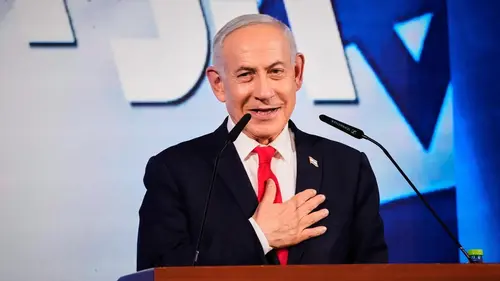
The surge also affected the campaign strategy of Netanyahu and his Likud party. Netanyahu urged his supporters to vote, describing the election as a “matter of life and death” in a message on X. Higher Arab participation therefore had a dual political effect: it strengthened the possibility of greater representation for Arab-led parties while also prompting stronger mobilisation among right-wing Jewish voters.
The turnout figures matter because Israel’s coalition system makes relatively small changes in the Knesset’s balance potentially decisive. Arab-led parties have not governed Israel, but their seats can affect coalition arithmetic, legislative bargaining and the ability of a government to pass major measures.
The immediate next step is the release of the Central Elections Committee’s final turnout figures, including the confirmed participation rate among Arab citizens. The final distribution of Knesset seats will then show whether the higher turnout translated into additional representation or mainly changed the margin between competing blocs.
| Measure | Figure or status | Why it matters |
|---|---|---|
| Overall turnout on October 27 | 77.7% | Highest Israeli election turnout since 1999 |
| Estimated Arab turnout | Nearly 80% | Channel 12 exit-poll estimate; official figure pending |
| Arab share of Israel’s population | About 21% | Gives Arab voters substantial potential electoral weight |
| Typical Arab non-voting rate | About 40% | Shows how unusual the latest participation level may be |
| Arab citizens citing ideological boycott | About 10% | Represents a smaller but persistent bloc of non-participation |
| Maximum Knesset representation previously held by Arab-led parties | 15 of 120 seats | Illustrates the gap between population share and parliamentary representation |
Key Factual ClarificationsEditorial Q&A
Why was Arab voter turnout high in Israel’s October 27 election?
The main reported reason was fear of another Netanyahu-led or strongly right-wing government. Analysts also said voters wanted to overcome frustration with Arab political parties and influence the coalition outcome.
What was Israel’s overall voter turnout?
Overall turnout was 77.7%, the highest recorded in Israel since 1999.
Was Arab turnout officially confirmed at 80%?
No. Nearly 80% was an estimate from a Channel 12 exit poll. The Central Elections Committee had not yet released the official Arab turnout figure.
How large is Israel’s Arab population?
Arab citizens account for about 21% of Israel’s population.
Why does Arab turnout matter for the Knesset?
Higher participation can increase the number of seats won by Arab-led parties and influence coalition arithmetic, even though those parties have never held more than 15 of the Knesset’s 120 seats.
What happens next?
The Central Elections Committee is expected to publish final turnout data, followed by the confirmed distribution of Knesset seats. Those results will determine how the competing blocs can form a governing coalition.