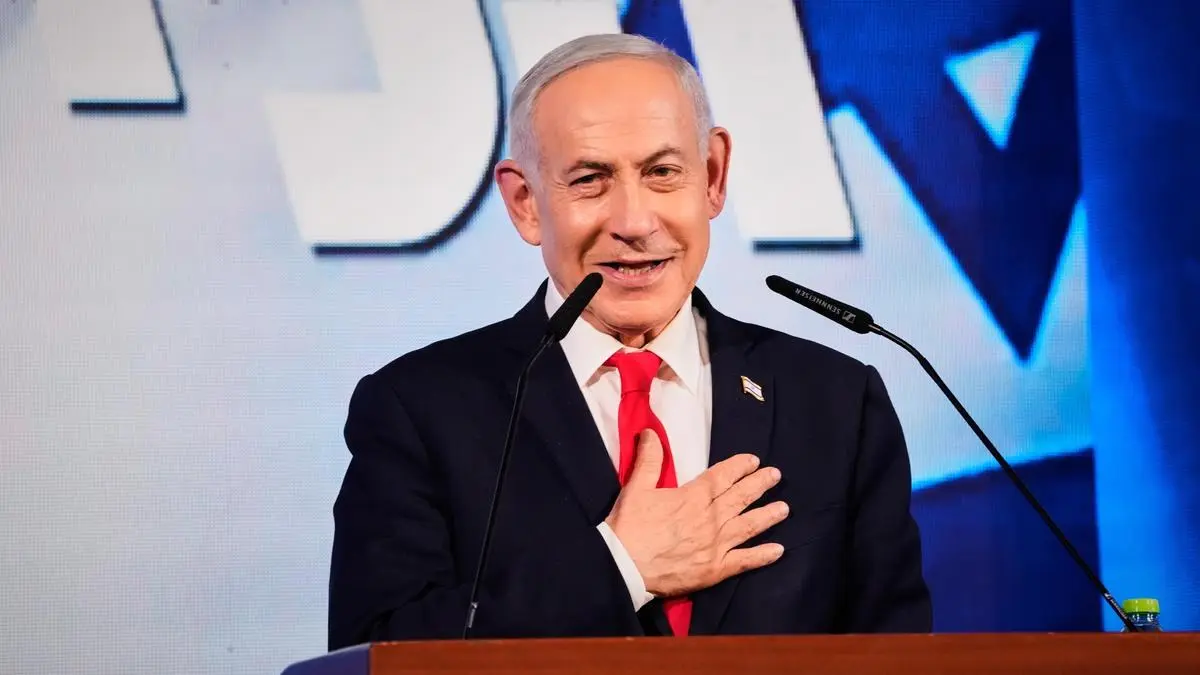
JERUSALEM — Prime Minister Benjamin Netanyahu’s right-wing bloc led Israel’s election after 77% of ballots were counted, but its 54 seats remained well below the 61 needed to control the 120-seat Knesset.
The result, released on Wednesday, October 28, followed Tuesday’s election—the first since Hamas’s October 7, 2023 attack that triggered Israel’s war in Gaza and intensified conflict across the region. The vote count remained subject to change, and neither Netanyahu nor opposition leader Gadi Eisenkot appeared positioned to form a government without additional partners.
Eisenkot, a former military chief leading a broad opposition alliance, also fell short of a majority with 49 seats. Both leaders said they would seek to build the next government, setting up negotiations that could determine whether Netanyahu remains prime minister.
The strongest gains came among Israeli Arab parties, which were projected to win 17 seats. Arab citizens make up about 20% of Israel’s population, and many have opposed Netanyahu’s ultra-nationalist approach to Israel and the Palestinian territories.
Yousef Jabareen, head of the leftist Arab-majority Joint List, said any credible alternative to Netanyahu would need to engage with Arab parties. He described the choice as one between continued exclusion and a Jewish-Arab partnership.
Eisenkot has resisted an alliance with Arab parties, a position that could complicate efforts to assemble an opposition-led coalition. Netanyahu’s campaign repeatedly warned voters that an opposition government could bring Arab parties into power.
The immediate political effect is uncertainty rather than a confirmed change of government. Coalition talks, defections or agreements with smaller parties could still alter the balance before a governing coalition is formally established.
What the result means for investors and consumers
The verified election figures do not establish a specific change in prices, interest rates, financial markets or household costs. The main immediate consequence is political uncertainty while parties negotiate over the next government.
That uncertainty could matter to investors because the composition of the government may affect Israel’s security policy, public spending and relations with Arab parties. However, no investor loss, consumer-price change or market movement is established by the election figures available here.
The election also carries consequences beyond coalition arithmetic. Netanyahu’s continued leadership would likely preserve the political direction associated with the war in Gaza and a hard-line approach to Palestinian issues. An opposition-led government could seek a different course, but its ability to do so depends on whether it can secure support from Arab parties and other smaller groups.
For now, the key question is not which bloc finished first, but whether either side can reach 61 seats. Until that happens, Israel faces a period of negotiations and uncertainty over its next government.
| Measure | Result or status | Why it matters |
|---|---|---|
| Votes counted | 77% | The result was preliminary and could still change. |
| Netanyahu bloc | 54 seats | Largest bloc, but seven seats short of a majority. |
| Eisenkot opposition | 49 seats | Unable to form a government alone. |
| Majority threshold | 61 of 120 seats | Required to control the Knesset. |
| Israeli Arab parties | 17 seats projected | Their support could influence coalition talks. |
| Arab citizens’ share of population | About 20% | Explains the political importance of Arab representation. |