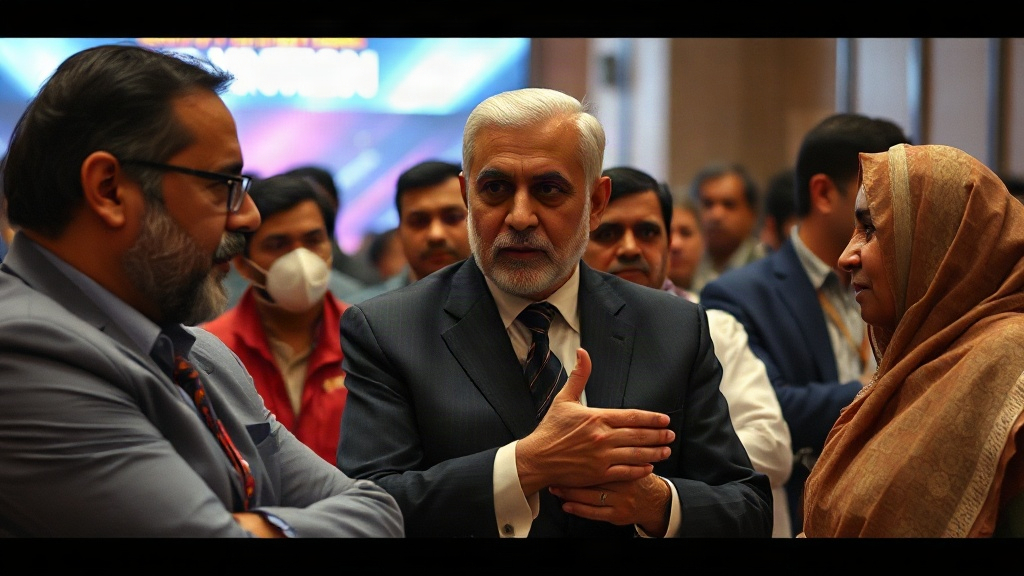
NEW DELHI — An Iranian envoy directly criticized the United States government during a high-profile diplomatic summit in New Delhi, stating that Washington has never issued an official apology nor released internal military investigation findings regarding a lethal primary school bombing.
Dr. Abdul Majeed Hakim Ilahi, representing Iranian diplomatic interests during public sessions in the Indian capital, addressed international delegates, regional foreign policy analysts, and journalists. He pointed to what Tehran describes as a systemic failure by successive American administrations to hold military command structures accountable for civilian casualties across the Middle East.
The public rebuke occurred against the backdrop of an international conference held in India, where diplomatic delegates debated modern conflict rules, regional maritime security, and bilateral diplomatic ties between New Delhi, Washington, and Middle Eastern capitals. The diplomat noted that despite repeated calls for institutional accountability, the Pentagon has withheld formal inquiry findings and avoided legal restitution for affected families.
Unresolved Investigations and Diplomatic Strains in New Delhi
Addressing delegates at the summit, Dr. Hakim Ilahi focused on the humanitarian consequences of international military engagements, specifically citing historical air operations that struck civilian infrastructure. According to the diplomat, Washington's failure to publish its formal assessments leaves vital questions unanswered about military target verification protocols.
As reported by the NDTV — Top Stories dispatch from the summit floor, the envoy stressed that accountability cannot depend on the geopolitical alignment of the victims. He stated that international institutions lose credibility when powerful governments shield their armed forces from outside legal scrutiny.
During his address, the envoy emphasized that families in affected communities continue to live with the physical and psychological consequences of kinetic strikes. Washington has consistently argued in international legal forums that its military operations adhere strictly to the laws of armed conflict, yet it routinely declines to subject personnel to foreign courts or international tribunals.
Dr. Hakim Ilahi's decision to raise the strike before an audience of Indian foreign policy professionals highlights Tehran's intent to use multilateral platforms outside Western capitals to build diplomatic pressure. By presenting historical incidents of civilian casualties in New Delhi, Iranian representatives aim to appeal to Global South nations that prioritize national sovereignty and non-intervention norms.
The Legal and Military Dimensions of Target Verification
Military operations conducted in congested regional environments have repeatedly sparked legal debates regarding the doctrine of collateral damage and military necessity. Under international humanitarian law, specifically the Geneva Conventions, warring parties must at all times distinguish between civilian populations and combatants, taking every feasible precaution to avoid collateral loss of life.
When foreign aerial munitions strike educational institutions, hospitals, or residential sectors, military commands typically initiate internal administrative reviews. In the United States, these reviews fall under the authority of the Department of Defense and regional combatant commands, which assess whether targeting intelligence failed or equipment malfunctioned.
However, these internal inquiries rarely lead to criminal court-martial proceedings unless independent investigators uncover willful misconduct or gross dereliction of duty. In most instances, findings are classified to protect sources and operational methods, leaving surviving relatives and international observers without access to the investigative record.
The administrative handling of such incidents has drawn persistent criticism from humanitarian monitors, who argue that self-investigation by national armed forces creates a structural conflict of interest. Detail on the unreleased reviews was highlighted in the editorial wire reporting from the diplomatic conference, which documented the absence of direct formal admissions of liability from the Pentagon.
Without an open and transparent legal proceeding, injured civilians cannot pursue civil compensation through standard judicial channels. Instead, governments sometimes offer discretionary ex gratia payments, which do not carry a formal admission of legal fault or institutional culpability.
India's Balanced Diplomatic Position Between Tehran and Washington
India's hosting of summits where such remarks are delivered reflects New Delhi's delicate geopolitical balance between Western strategic partners and traditional regional relationships in West Asia. India maintains robust defense, technological, and intelligence cooperation with the United States while preserving independent diplomatic communication channels with the Islamic Republic of Iran.
For Indian foreign policy planners, West Asian stability is a vital domestic priority. Millions of Indian citizens live and work across the Gulf region, sending home billions of dollars in remittances annually. Furthermore, Indian trade routes through the Arabian Sea and the Persian Gulf depend entirely on maritime safety and the absence of state-level kinetic escalation.
India has also invested considerable diplomatic capital and financial resources into regional transit corridors, including the strategically situated Chabahar Port in southeastern Iran. The facility is designed to grant Indian trade access to landlocked Central Asian markets and Afghanistan, bypassing overland transit routes through Pakistan.
Because New Delhi requires reliable sea lanes and energy security, Indian diplomats routinely urge all sides to resolve grievances through bilateral dialogue rather than unilateral military action. Official statements from India's Ministry of External Affairs consistently emphasize adherence to international law, respect for territorial sovereignty, and the protection of innocent non-combatants during regional conflicts.
By providing an open platform for foreign diplomats, Indian forums allow diverse perspectives to surface before an international audience. Analysis published in a NDTV summit proceedings analysis highlighted how non-aligned diplomatic settings permit direct rhetorical challenges that are often excluded from Western-hosted security summits.
Institutional Silence and the Question of State Apologies
The reluctance of sovereign governments to issue formal apologies for military actions is deeply rooted in international law and state practice. A state apology can be interpreted by international legal bodies as an explicit admission of state responsibility, potentially exposing governments to massive financial reparations and civil litigation under international legal mechanisms.
Throughout modern military history, superpower nations have rarely issued formal state apologies for collateral damage resulting from wartime air raids. When civilian deaths occur, official responses are typically limited to statements of regret, expressions of sympathy, or administrative announcements that investigative processes are underway.
In the incident raised by Dr. Hakim Ilahi, the diplomat argued that the absence of a direct apology represents an ethical failure that deepens diplomatic hostility across generations. He noted that genuine reconciliation between adversarial states cannot occur when historical grievances are dismissed or erased from official discourse.
Western legal counselors frequently advise military commands against public apologies because of domestic political considerations and the risk of setting legal precedents. If an armed force formally apologizes for an intelligence failure that caused civilian deaths, domestic and international plaintiffs can use that statement as foundational evidence in international human rights claims.
This legal dynamic creates an enduring impasse where governments choose prolonged silence over formal acknowledgment. The result is an unresolved diplomatic grievance that envoys like Dr. Hakim Ilahi continue to raise in multilateral settings to illustrate perceived double standards in global accountability.
Regional Geopolitical Impact and Civilian Vulnerabilities
The remarks delivered in New Delhi arrive at a time of heightened military readiness across the Middle East, with proxy clashes, maritime disruptions, and missile strikes threatening wider escalation. In this volatile environment, the safety of ordinary civilians remains an acute concern for international humanitarian agencies and regional governments alike.
Modern precision-guided munitions were developed with the promise of reducing collateral damage by striking military targets with pinpoint accuracy. Yet operational practice shows that technical accuracy cannot compensate for inaccurate human intelligence or flawed target designation before munitions are released.
When military planners rely on outdated surveillance data or misinterpret normal civilian patterns of life, modern weapons destroy schools, hospitals, and communal centers with devastating efficiency. These incidents provide geopolitical adversaries with enduring public arguments against foreign military intervention, eroding trust in international security frameworks.
During his panel remarks, Dr. Hakim Ilahi maintained that regional populations judge foreign governments by their tangible operational conduct rather than their stated democratic ideals. He pointed out that every unaddressed strike that claims young lives leaves behind an enduring legacy of resentment that undermines regional diplomatic engagement.
Independent international legal organizations have continuously called for standardizing mandatory external reviews whenever civilian centers are hit by aerial bombardments. These proposals would require participating militaries to submit raw operational records to neutral international panels, a reform that major military powers continue to resist.
Unresolved Questions Surrounding Pentagon Records and Next Steps
The central issue raised by the Iranian envoy—the official classification and withholding of Pentagon internal inquiries—remains an active source of friction in international security affairs. Independent human rights observers, open-source researchers, and diplomatic missions continue to push for the declassification of internal military assessments concerning civilian casualties.
Key unresolved questions continue to follow these past military operations:
1. Will the United States Department of Defense declassify and publish its operational findings concerning the primary school strike raised by Iranian diplomats?
2. What specific operational rules of engagement were active when target clearance was granted for the strikes in question?
3. Have any formal compensation packages or administrative remedies ever been transmitted through third-party diplomatic channels to the families of deceased and injured pupils?
4. How will international institutions, including the United Nations General Assembly and regional security forums, address the lack of mandatory independent oversight in contested airspace?
As the conference in New Delhi concluded, neither the United States Department of Defense nor representatives from the American diplomatic mission issued an immediate response to Dr. Hakim Ilahi's statements. Without published military findings or direct bilateral engagement between Washington and Tehran, the incident remains an unresolved diplomatic wound, invoked on world stages as evidence of the high civilian cost of modern warfare.


