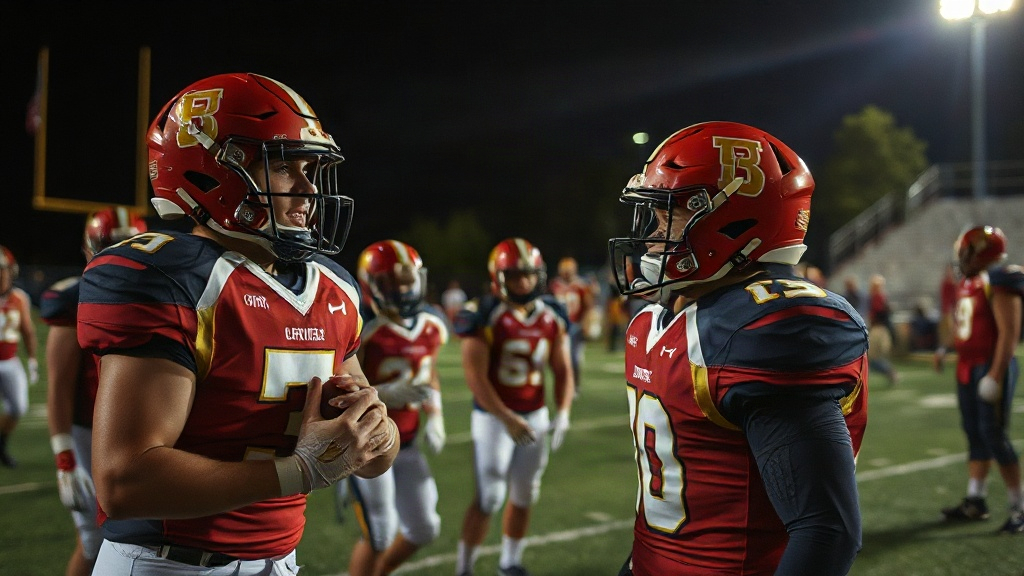
WINNEBAGO, Ill. — The Winnebago [High School football](/arkansas-high-school-football-reshapes-playoff-races-7573) team will host its first on-campus postseason game in more than a decade this weekend, ending a drought that dates back to the autumn of 2013.
The Indians earned the post-season seeding necessary to stage the contest at home following a regular-season campaign marked by disciplined offensive execution and physical defensive stops across the Big Northern Conference. As confirmed by local regional coverage from a Rockfordnewsfirst.com dispatch, athletic administrators and tournament officials verified the matchup schedule early this week, prompting an immediate surge in ticket inquiries across the village of Winnebago.
For the student-athletes, coaching staff, and community supporters who have followed the program through several rebuilding cycles, the return of playoff football to their home turf represents tangible progress. Ten seasons of road playoff journeys, narrow misses, and non-qualifying campaigns preceded this weekend's contest, transforming the upcoming fixture into a major sports milestone for the district.
Ending an Eleven-Year Wait on Winnebago Turf
High school post-season football in Illinois relies on a strict formula administered by the Illinois High School Association. Qualification and hosting rights depend on regular-season win totals and opponent seed points accrued throughout the nine-week regular season.
Winnebago last hosted a post-season game in November 2013, a season that marked one of the deepest playoff runs in program history. In the years following that campaign, roster turnover, regional redistricting, and formidable competition across the northern tier of the state repeatedly relegated Winnebago to visiting status during the opening rounds or kept them out of bracket qualification altogether.
Securing a home contest requires more than just meeting the five-win playoff eligibility baseline. Higher seeds are awarded hosting privileges in the opening round of the state bracket, ensuring that the team earning the superior regular-season ledger gets the immediate advantage of campus locker rooms, familiar turf conditions, and a local crowd.
School athletic officials confirmed that field preparations, safety protocols, and volunteer assignments began immediately upon official confirmation from the state athletic association. For the current senior class, who entered high school during seasons characterized by road travel, stepping onto their own field in November offers a rare opportunity to compete before a hometown grandstand.
Tactical Growth in the Big Northern Conference
The road back to hosting postseason games required steady tactical development throughout a grueling conference schedule. The Big Northern Conference remains one of the most competitive small-school football leagues in Illinois, regularly producing state finalists and multi-round playoff contenders.
Facing regional powers week after week tests offensive lines, defensive depth, and late-game time management. According to game tape reviews documented across northern Illinois sports outlets and reported by local sports reporting from WIFR, Winnebago’s coaching staff emphasized line-of-scrimmage control and mistake-free football to navigate key league matchups.
Turnover reduction played a central role in the team's ability to maintain high seeding throughout the regular season. Coaching evaluations noted that in tightly contested third-quarter possessions, the offense minimized penalties while the defensive secondary forced crucial stops against run-heavy divisional opponents.
Sustained drives allowed Winnebago to dictate the tempo of games against conference rivals who traditionally rely on explosive perimeter plays. By maintaining ball control and extending offensive possessions, the team preserved defensive stamina for high-leverage situations in the fourth quarter.
The Economic and Community Footprint of Postseason Games
A home playoff contest creates immediate logistical and financial activity across small school districts like Winnebago. Unlike away games that draw resources toward travel buses, away accommodations, and road meal stipends, a home event channels athletic activity directly into the local tax base and campus booster organizations.
District administrators, municipal personnel, and volunteer booster clubs spent the early part of the week coordinating gate management, parking facilities, and field maintenance. Revenue from concessions, local retail spending, and verified ticketing receipts directly benefits district athletic programs and campus infrastructure projects.
Regional athletic directors frequently point out that hosting duties carry operational responsibilities. Game security, certified medical personnel, and chain crews must meet state athletic association operational benchmarks. The administrative team at Winnebago completed those logistical filings swiftly to ensure the stadium met full compliance standards.
Beyond administrative logistics, local businesses experience increased customer foot traffic during home playoff weekends. Diners, convenience stores, and family-owned restaurants along Route 20 and surrounding county roadways historically record notable upticks in business whenever high-stakes athletic events bring visiting delegations into town.
Program Evolution and Institutional Resilience
The gap between the 2013 home post-season fixture and this season's return highlights the natural cyclical challenges faced by public high school sports programs. Unlike private academies that can draw student-athletes from broad metropolitan areas, rural and suburban public programs must build through local youth leagues and multi-sport campus athletes.
Coaches at Winnebago have long encouraged student-athletes to participate in track, wrestling, basketball, and baseball to build overall athletic durability. That philosophy kept participation numbers steady even during seasons when the varsity football squad fell short of postseason qualification.
Archival game logs and program records cited in coverage of the Indians' football schedule show that the program maintained continuity on its staff throughout recent rebuilding efforts. Consistent coaching philosophies allowed younger players to enter varsity systems with an established understanding of scheme, communication, and conditioning expectations.
Players currently anchoring the offensive and defensive fronts developed chemistry playing together through middle school feeder leagues and junior varsity ranks. That collective continuity surfaced during key conference victories that elevated Winnebago into favorable playoff seeding territory.
Logistics, Weather Conditions, and Game Preparation
Preparing for November playoff football in northern Illinois presents immediate practical challenges that coaching staffs must manage. Rapidly dropping temperatures, brisk prairie winds, and unpredictable precipitation frequently alter game plans that succeeded during warm September afternoons.
Practice sessions this week centered on ball security and situational play-calling tailored for late-autumn weather. Quarterbacks and ball-carriers worked through drills designed to handle slick turf conditions and cold-weather football handling, while kicking units adjusted protection schemes against aggressive perimeter rushes.
Field maintenance crews worked to ensure the natural playing surface remained stable despite changing moisture levels. A dry, uniform playing field minimizes injury risk and allows faster skill players to maintain foot traction against heavier defensive packages.
The administrative staff also finalized ticketing access. Under state athletic association rules, digital ticketing platforms and gate admission rates follow standardized postseason structures, ensuring equitable access for both home supporters and traveling delegations.
The Path Ahead in the Postseason Bracket
While securing a home playoff appearance closes an eleven-year historical chapter, the coaching staff and roster have maintained focus on the immediate athletic challenge directly ahead. In single-elimination tournament football, regular-season seeding guarantees only geography, not competitive outcomes.
The visiting opponent brings a proven regular-season resume, disciplined defensive fronts, and specialized offensive sets that will test Winnebago’s preparation from the opening whistle. Opponents who travel well often eliminate home-field advantages by establishing early offensive momentum and disrupting cadence at the line of scrimmage.
Winnebago's strategy relies on building an early rhythm, utilizing their familiar surroundings to execute plays with precision, and relying on defensive discipline to prevent big plays in space. Coaches spent late-night sessions breaking down visiting personnel packages and setting defensive assignments to counter perimeter running schemes.
The opening kickoff this weekend represents an earned reward for a decade of patient program construction. As fans take their seats under the Friday night lights, Winnebago High School steps into the next phase of its football history with home-field advantage firmly in hand.