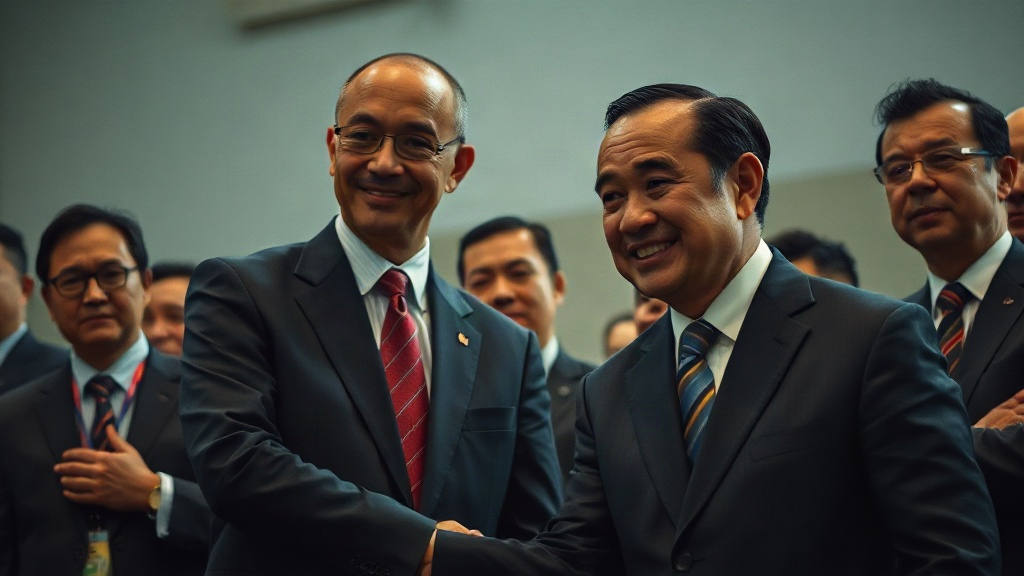
KUALA LUMPUR — Asian Football Confederation leadership confirmed its formal backing for Gianni Infantino's continued presidency of FIFA, securing a crucial regional voting bloc ahead of the global soccer governing body's upcoming electoral congress.
AFC President Shaikh Salman bin Ebrahim Al Khalifa reaffirmed the confederation's commitment during executive meetings, signaling unified Asian support for Infantino's administrative direction and long-term tournament expansion strategies. The endorsement consolidates Asia's 47 member associations, which collectively represent one of the most influential regional voting groups in world soccer.
According to an analysis corroborated by a Taylorvilledailynews.com sports dispatch, regional executives reached consensus following reviews of ongoing FIFA development funding and global competition schedules. The public affirmation effectively deters potential challengers from mounting viable campaigns within the confederation's jurisdiction.
Unifying Continental Influence Across Asian Federations
The AFC's collective stance reflects strategic alignment between regional football leaders and FIFA's global headquarters in Zurich. Under FIFA's governance structure, each national football association holds one equal vote in presidential elections, regardless of market size or competitive ranking.
By uniting under Shaikh Salman's leadership, the AFC ensures its member associations maintain collective bargaining power on the international stage. Asia's confederation encompasses diverse sporting markets, ranging from powerhouse nations like Japan, South Korea, and Australia to developing soccer territories in Central and South Asia.
Infantino, who took office in 2016 following widespread anti-corruption reforms within the organization, has prioritized expanding global tournament structures. Regional delegates noted that Infantino's policies directly benefited Asian soccer through expanded participation quotas in marquee international events.
Expanding the Men's World Cup and Asian Representation
A central factor driving Asia's endorsement is the direct expansion of the FIFA World Cup. Beginning with the 2026 tournament co-hosted by the United States, Canada, and Mexico, the competition increases from 32 to 48 national teams.
For the Asian Football Confederation, this expansion nearly doubles its guaranteed tournament places from four direct qualification spots to eight direct places, alongside an intercontinental playoff opportunity. Detailed allocations corroborated in a regional tournament reporting update illustrate how emerging Asian national teams now face realistic qualification paths that did not exist under previous qualifying cycles.
AFC leadership highlighted that wider qualification access accelerates grassroots infrastructure, improves domestic broadcast deals, and draws corporate investment into member associations. Smaller federations that historically struggled to qualify for the final tournament view the enlarged format as essential to their long-term sporting viability.
Financial Grants and Grassroots Infrastructure Funding
Beyond tournament qualification slots, the confederation's backing rests heavily on expanded development funding delivered through the FIFA Forward program. The initiative provides direct financial grants to national associations to build training facilities, fund youth leagues, and subsidize administrative operations.
Recent funding allocations documented by a Taylorvilledailynews.com governance report confirm that financial contributions to continental bodies and national associations increased substantially across the current four-year financial cycle. Many smaller AFC members rely on these guaranteed annual grants to sustain national team travel and match-day operations.
Infantino has consistently defended these grants as vital equalizers for developing regions that lack lucrative domestic media rights agreements. In return, beneficiary associations have routinely offered solid electoral backing to maintain existing administrative leadership and ensure funding continuity.
Shifting Dynamics in Middle Eastern Soccer Investments
The AFC's support also reflects the growing commercial and political prominence of Middle Eastern member states within world soccer. Countries including Saudi Arabia, Qatar, and the United Arab Emirates have invested billions of dollars into club acquisitions, international sponsorships, and tournament hosting rights.
Qatar's staging of the 2022 World Cup and Saudi Arabia's aggressive investment in domestic league talent and international tournament bidding have shifted the administrative center of gravity eastward. FIFA leadership has embraced these capital infusions, forging close ties with sovereign investment entities and regional sports ministries.
By maintaining close coordination with Infantino's administration, Middle Eastern sports federations have solidified their positions as indispensable hosts for future international competitions, including expanded Club World Cup events and continental championships.
European Skepticism and the Global Balancing Act
While the Asian Football Confederation presents a unified front, FIFA's leadership faces persistent scrutiny from European soccer authorities. The Union of European Football Associations (UEFA) and major European domestic leagues have frequently voiced concerns regarding fixture congestion and expanded calendar demands.
European officials have objected to the introduction of a quadrennial 32-team FIFA Club World Cup, arguing that additional matches jeopardize elite player welfare and threaten the commercial value of established domestic competitions. Player unions, including FIFPRO, have filed legal complaints regarding the expanding fixture calendar.
Conversely, confederations across Asia, Africa, and South America often push for more international competition, seeking greater exposure against top-flight European clubs and national teams. The AFC's decisive backing ensures that non-European confederations maintain decisive voting majorities during global congress debates, as outlined in a confederation policy summary.
Electoral Timeline and the Road to the FIFA Congress
With Asia's formal endorsement locked in, Infantino commands a virtually insurmountable lead among global voting delegates. To secure the FIFA presidency, a candidate requires a simple majority of valid votes cast by the 211 member associations during the official electoral congress.
Official candidacy filings require nominees to secure written endorsements from at least five member associations, followed by strict integrity checks conducted by FIFA's independent review committee. The AFC's early public commitment signals to domestic federation executives that regional resources will remain directed toward administrative stability rather than political fragmentation.
The formal vote will take place during the next scheduled FIFA Congress, where delegate credentials will be validated ahead of the secret ballot. With Asia's 47 associations officially pledged alongside anticipated support from African and South American confederations, world soccer's governance structure appears poised for institutional continuity.