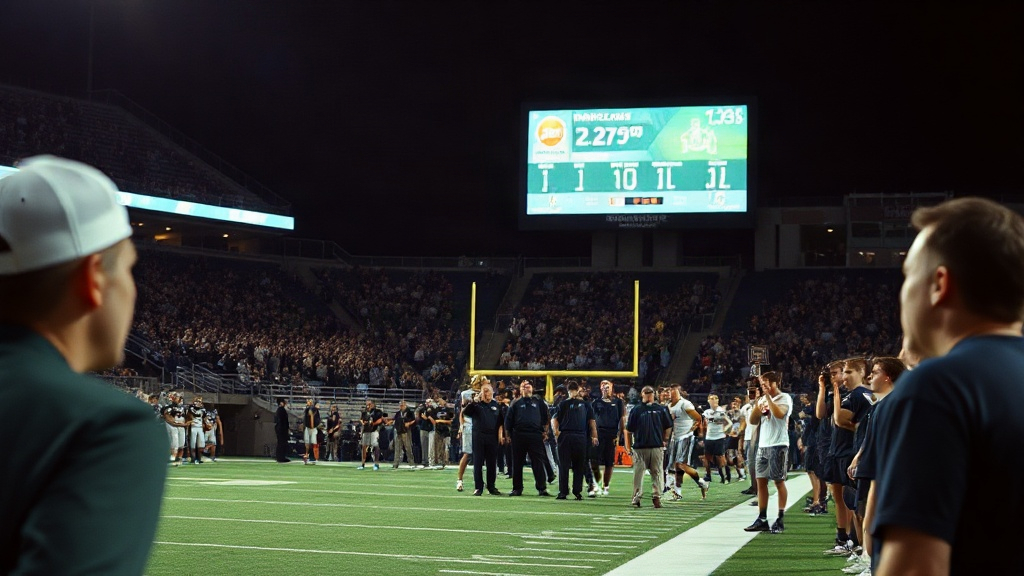
[High school football](/arkansas-high-school-football-reshapes-playoff-races-7573) programs across North Texas and Southern Oklahoma entered Week 9 of the regular season on Friday night, launching a critical slate of district matchups that will directly determine playoff seedings and postseason qualification.
From Class 5A showdowns in Wichita Falls to rural eleven-man and six-man clashes across surrounding counties, the action marks the penultimate phase of the autumn campaign. According to ongoing reporting tracked by the Times Record News sports desk, teams across District 4-5A, District 3-4A, and various Oklahoma secondary school brackets face immediate elimination scenarios if they fail to secure victories during this final stretch of October competition.
Friday night fixtures carry heightened consequence under University Interscholastic League (UIL) and Oklahoma Secondary School Activities Association (OSSAA) guidelines. With only two regular-season weeks remaining before bi-district playoffs begin, point differentials, head-to-head tiebreakers, and district standings dictate which programs extend their seasons into mid-November.
High Stakes Across Greater Wichita Falls and Surrounding Districts
The geographic corridor known as Texoma bridges North Texas communities along the Red River valley with southern Oklahoma towns, creating an interconnected high school football culture governed by divergent state formats. Texas public schools compete under UIL alignment, while programs north of the border battle within OSSAA districts.
Despite the differing state administrations, the pressures confronting coaching staffs in late October remain virtually identical. A single turnover or missed conversion in Week 9 can displace a team from second place to fifth in a six-team district, instantly extinguishing hopes for a state championship run. Friday night scoreboards monitored via the Times Record News regional coverage portal reflect an intense fight for field position, clock management, and survival across all classifications.
Larger schools around the urban core of Wichita Falls face rigorous tests against regional rivals who have traded victories over decades of competition. Coaches emphasize that execution errors in late October become exponentially more costly than early-season non-district stumbles, as scouting reports are now deep and defensive units have adjusted to opposing offensive tendencies.
Small-School Dominance and Rural Matchups Define the Corridor
While metropolitan regions focus largely on Class 6A and 5A powers, rural Texoma draws immense community engagement from Class 3A, Class 2A, and six-man programs. Communities in Clay, Montague, Archer, Wilbarger, and Young counties regularly empty storefronts on Friday afternoons to travel dozens of miles along two-lane highways in support of local varsity rosters.
In Class 2A and 3A districts, rosters rarely exceed thirty players, forcing top athletes to play both offensive and defensive snaps without relief. Conditioning and sideline depth become the defining elements of late-season games, particularly when teams encounter cold autumn fronts or slick field conditions. Injury reports recorded by coaches over the previous eight weeks often dictate tactical shifts, prompting teams to rely heavily on ground-and-pound rushing attacks to protect physical stamina.
Six-man football matchups in smaller rural outposts offer a stark tactical contrast to traditional eleven-man systems. Featuring an 80-yard field and rules mandating that the football must travel past the line of scrimmage on every snap, these high-scoring contests frequently produce scores exceeding seventy points. In six-man district races, defensive stops are rare, meaning an unforced turnover in the fourth quarter often acts as the definitive blow to a team's playoff aspirations.
The Mechanics of Playoff Qualification and Tiebreakers
For Texas schools, UIL rules govern precisely how four teams emerge from each district to enter the state playoff bracket. The top four finishers in each eleven-man district advance to the postseason, where they split into Division I and Division II brackets based on certified school enrollment numbers submitted during biannual reclassification.
Week 9 fixtures frequently trigger complicated multi-team tiebreaker formulas. When three teams finish district play with identical records, administrators turn to positive and negative point differentials recorded in head-to-head matchups. A team trailing late in a Week 9 contest cannot simply concede defeat; scoring a late touchdown can salvage precious point margin needed to break a tie after Week 10 concludes.
For Oklahoma schools, OSSAA rules award playoff seeding through district point ratings that cap victory margins. Every offensive drive throughout Week 9 carries mathematical weight, forcing head coaches to maintain aggressive play-calling well into the final quarter. Real-time updates delivered across the Times Record News high school football scoreboard give athletic directors and fans instant visibility into how live score shifts alter regional bracket projections.
Community Impact and Friday Night Traditions in North Texas
High school football in Texoma represents far more than an athletic extracurricular; it functions as a principal driver of local civic life, regional commerce, and community cohesion. Local businesses, booster clubs, and municipal emergency services coordinate extensively throughout the autumn months to host home games that draw thousands of spectators to municipal stadiums.
Stadium concessions, local restaurant traffic, fuel sales, and lodging revenues all surge during home game weekends, especially when visiting rivals travel significant distances. High school bands, cheer squads, drill teams, and student broadcast crews spend months preparing routines that parallel the dedication of the varsity players on the turf. For senior student-athletes, Week 9 frequently serves as their final guaranteed home appearance before graduation, adding sentimental weight to the tactical demands of the game.
School districts also maintain strict security, sportsmanship, and weather-monitoring protocols to ensure player and spectator safety. Athletic trainers closely monitor player fatigue and head injuries, enforcing concussion clearance standards that supersede any competitive requirement on the field. Officials manage sideline decorum and penalty standards firmly, understanding that regional rivalries can boil over during heated fourth-quarter sequences.
Next Steps as the Regular Season Approaches Its Climax
With Week 9 contests settling final results across Texoma, coaching staffs immediately turn their attention toward film study, roster recovery, and the upcoming Week 10 regular-season finales scheduled for the first week of November.
By early Sunday morning, district executive committees throughout North Texas and Southern Oklahoma will review official officiating reports, certify final scores, and update district standing tables. Teams that clinched playoff spots on Friday night will begin preliminary logistical planning for neutral playoff sites, ticket distributions, and practice schedules, while programs on the bubble prepare for do-or-die matchups next week.