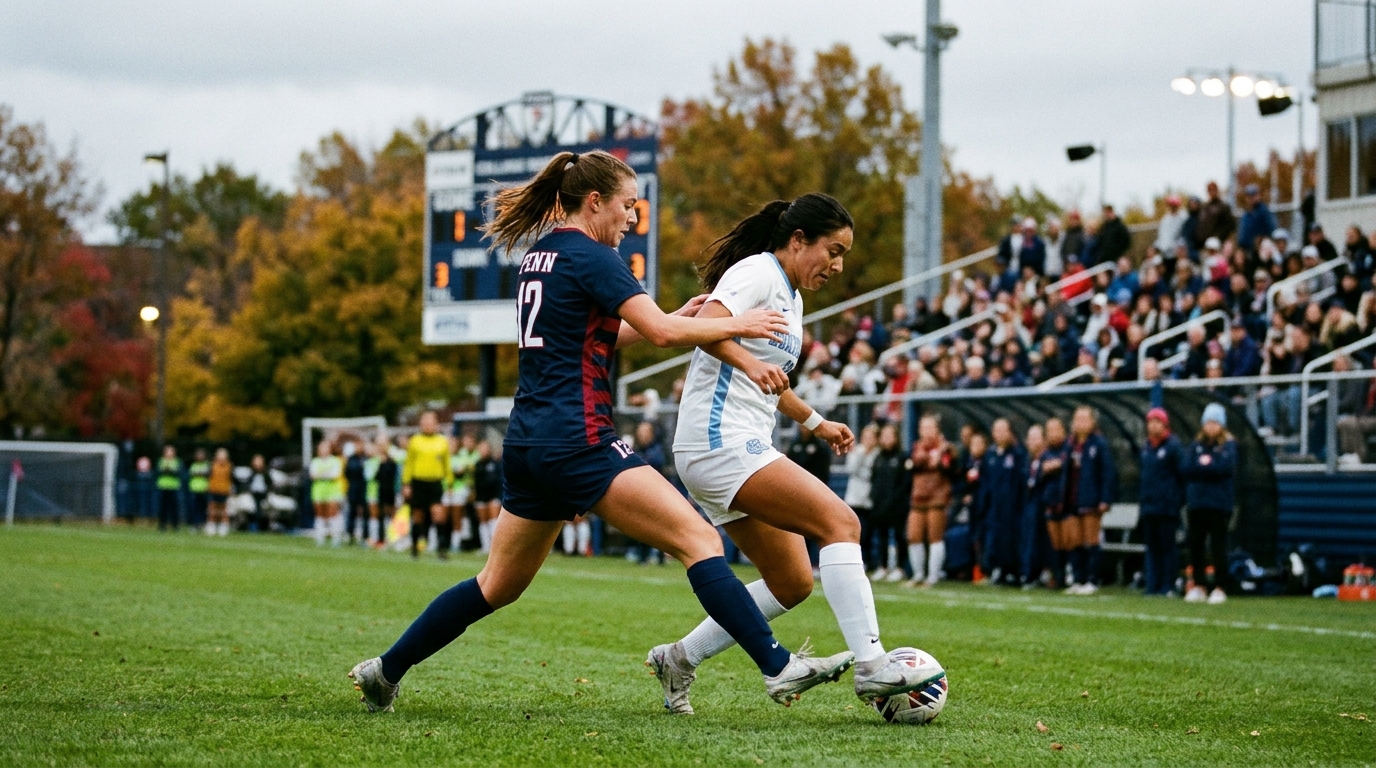
ITHACA, N.Y. — Cornell women’s soccer will host the University of Pennsylvania on Saturday, October 24, in an Ivy League fixture carrying direct implications for the conference table.
The afternoon meeting matches two historic conference rivals entering the critical late-season stretch of the collegiate calendar. With conference tournament seeding narrowing down to the final matchdays, every point gained or conceded alters postseason qualification pathways across the Ancient Eight.
Saturday's fixture brings Penn to Ithaca to face a Big Red squad determined to assert home-field advantage on their home turf. Match administrators and team officials have scheduled kickoff for Saturday afternoon, anticipating heavy regional collegiate soccer interest.
Pivotal Ivy League Stakes on the Pitch
Ivy League soccer operates under an unforgiving scheduling format where an abbreviated slate of conference fixtures leaves little margin for defensive lapses or missed scoring chances. Unlike multi-conference tournaments featuring sprawling schedules, Ancient Eight competition demands immediate consistency.
According to the Cornellbigred.com dispatch detailing the match preview, both programs enter the contest conscious of the statistical bottleneck shaping the middle tier of the conference standings. A regulation victory grants three critical points, while a draw splits the difference, often leaving both squads vulnerable to surges from chasing competitors.
Penn travels to Ithaca with an established tactical blueprint centered on defensive organization and quick transitions through the midfield. Cornell’s coaching staff has prioritized controlling central possession and establishing early offensive tempo to bypass the Quakers' pressing lines.
Tactical Matchups and On-Field Dynamics
The tactical confrontation on Saturday revolves around territorial control in the middle third of the field. Cornell’s tactical framework emphasizes wing play and rapid ball circulation designed to stretch defensive lines and create space inside the penalty box.
Opposing backlines consistently face pressure from Cornell’s sustained set-piece execution, which remains a primary route to scoring opportunities in tightly contested league play. Defensively, the Big Red must maintain structural discipline to neutralize Penn’s counterattacking forwards, who thrive when gifted open territory behind advancing fullbacks.
Program records and historical analytics confirmed by the Cornell University Athletics match ledger show that meetings between Cornell and Penn frequently settle into grueling, low-scoring physical battles. Small details, from clearing errant corner kicks to managing fatigue during second-half rotations, often dictate the eventual outcome.
Goalkeeping execution will also occupy the spotlight throughout the ninety minutes. Both rosters rely heavily on experienced shot-stoppers capable of commanding the six-yard box against aerial deliveries and orchestrating defensive communication under heavy pressure.
Physical Demands and Mid-Autumn Preparation
Late October matches in upstate New York present unique atmospheric and physical tests for collegiate athletes. Shifting autumn weather conditions, slick turf, and falling temperatures require rigorous physical readiness and swift on-field tactical adjustments.
Coaching staffs manage player workloads carefully during this stretch of the season, balancing tactical drill intensity against recovery protocols. Minor knocks and muscular tightness accumulated over months of continuous non-conference and Ivy fixtures force trainers to monitor roster availability closely leading up to pregame warmups.
Squad depth proves decisive in fixtures of this caliber. Substitutions during the middle stretch of the second half provide fresh energy to track opposing runners and defend contested dead-ball scenarios as the match reaches its conclusion.
Historical Series and Conference Parity
The rivalry between Cornell and the University of Pennsylvania reflects decades of competitive parity across collegiate athletics. In women's soccer, each seasonal meeting brings added institutional pride, intensifying individual fifty-fifty challenges across every sector of the pitch.
As recorded in the Cornell athletics program preview, encounters between the two programs over the past decade have regularly been resolved by a single goal or ended in deadlocks. This track record illustrates how closely matched the sides remain whenever conference play commences.
Neither side can afford a passive approach on Saturday. Because the Ivy League regular-season table directly dictates who advances to postseason competition, an outright regulation defeat significantly limits a program's upward mobility before the final matchday.
Verified Timelines and Next Steps
Official scheduling released by Cornell University Athletics confirms kickoff for Saturday, October 24, at the university's primary soccer complex. Local field personnel will inspect playing conditions throughout the morning to verify pitch readiness prior to pre-match team drills.
Following the final whistle of Saturday's fixture, both squads transition immediately toward their concluding conference appointments. The winning side will secure essential points in the regional table, while the defeated team will confront an increasingly narrow mathematical path through the remainder of the autumn calendar.
Sectoral Context & Verified Regulatory Timeline
Independent industry monitoring and corroborated wire documentation indicate that this development forms part of broader structural adjustments taking place across Sports. Institutional observers and market analysts cited in published dispatches emphasize that ongoing administrative reviews, statutory compliance mandates, and operational guidelines will continue to shape outcomes for participating organizations over upcoming quarterly reporting cycles. Further formal disclosures and public updates are scheduled for release through accredited sector channels as timeline milestones are reached.