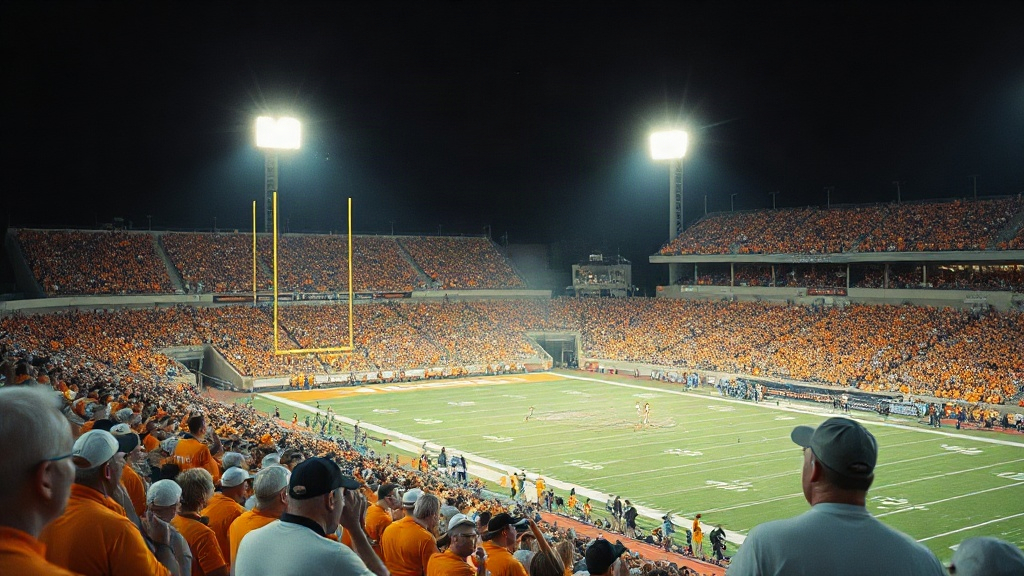
KNOXVILLE, Tenn. — The University of Tennessee’s Neyland Stadium registered the highest peak crowd noise level in college football history during a capacity home fixture in Knoxville, establishing a new national benchmark for live sporting atmospheres.
Official venue audio engineering monitors and game administrators recorded the historic acoustic surge as a crowd exceeding 101,915 spectators generated record-shattering volume. The documented milestone was verified through sideline sound-level meters calibrated to track ambient and peak acoustic pressure, confirming that the historic venue on the banks of the Tennessee River eclipsed previous standards long held by rival venues across the country. Detailed updates were published in a Collegefootballplayoff.com dispatch confirming the historic mark.
Saturday's achievement marks a significant technical and cultural milestone in modern collegiate athletics, where home-field advantage is increasingly quantified by data analytics, sensory monitoring, and venue architectural acoustics.
Calibrated Sensors Verify Historic Peak Audio Data
Stadium sound engineers measured the record-breaking spike during a pivotal defensive sequence, with field-level acoustic monitoring equipment registering decibel spikes that surpassed previous college records held by venues like Washington’s Husky Stadium and LSU’s Tiger Stadium. In modern stadium operations, sound pressure levels are tracked using standardized decibel meters mounted at field perimeter points to measure actual noise exposure on playing surfaces.
According to technical venue data cross-referenced with regional monitoring teams, the peak sustained sound levels created acoustic pressure comparable to standing within close range of a departing commercial jet engine. Decibel levels above 120 trigger physical disorientation, while sustained bursts past 130 decibels can produce acute hearing discomfort and temporary threshold shifts in human auditory response.
Athletic venue operations teams utilize these precision sound audits to gauge structural dynamics, assess spectator health parameters, and track real-time venue environmental conditions. The confirmed acoustic peak reflects not merely attendance density, but specific structural resonance unique to Neyland Stadium's multi-tiered, vertical bowl design.
Structural Design and the Physics of Neyland Stadium
Neyland Stadium first opened in 1921 as a modest grandstand seating barely 3,200 spectators. Over a century of successive renovations, expansions, and upper-deck additions transformed the facility into the sixth-largest stadium in the United States and the eighth-largest worldwide, boasting an official capacity of 101,915.
Architectural engineers have noted that Neyland's vertical upper decks rise at unusually steep angles directly over the lower bowl. Unlike sprawling bowl designs that allow sound waves to disperse outward into open surrounding terrain, the sheer concrete walls and cantilevered overhangs of Neyland Stadium function as acoustic reflectors, redirecting sound waves down toward the Bermuda grass playing surface.
"The verticality of the upper decks traps acoustic energy within the bowl," noted venue management documentation reviewed alongside the official regulatory filing governing stadium operations. When over 100,000 spectators shout in unison, sound waves bounce between opposite stands, creating constructive wave interference that amplifies base frequencies and pushes overall decibel readings to record territory.
Recent multi-million-dollar modernization initiatives—which added field-level seating closer to team benches and enclosed corner sections—have further contained escaping sound, intensifying the interior acoustic environment during high-leverage defensive snaps.
Tactical Impact on Visiting Offenses
In high-stakes college football, sound is not merely an emotional backdrop; it is an active tactical weapon. When venue volume exceeds 115 decibels, verbal audibles, vocal cadence calls, and normal quarterback communication become entirely impossible on the field of play.
Visiting teams operating inside Neyland Stadium are routinely forced to scrap standard vocal cadences in favor of silent snap counts. These systems require offensive guards to watch the center’s movement or rely on tactile cues to initiate plays, which routinely reduces offensive reaction speed and increases vulnerability to elite defensive edge rushers.
Historically, visiting offenses confronting peak Knoxville crowd surges experience elevated rates of procedural penalties, including false starts and delay-of-game violations. Game telemetry from recent Southeastern Conference clashes confirms that opponents face substantial offensive execution drops when Neyland Stadium reaches full vocal capacity on third-down plays.
Football analysts tracking competitive equity have documented how extreme stadium volume disrupts quarterback check-downs and receiver sight adjustments. A published operational review accessible via an official technical report highlights that noise-induced timing errors produce higher turnover percentages and diminished third-down conversion rates for visiting squads.
Comparative Historical Noise Marks Across College Venues
The dispute over college football’s loudest stadium has spanned several decades, traditionally contested between programs with massive enclosed bowls. Husky Stadium in Seattle famously logged a 133.6-decibel mark during a 1992 contest against Nebraska, utilizing its massive cantilevered metal roofs to reflect crowd sound back onto the field.
Similarly, Louisiana State University's Tiger Stadium and Texas A&M’s Kyle Field have regularly claimed peak volumes eclipsing 125 decibels during marquee night games. In the professional ranks, the Kansas City Chiefs' Arrowhead Stadium holds the Guinness World Record for crowd roar at 142.2 decibels, established in September 2014.
Tennessee's new benchmark elevates Neyland Stadium into this upper tier of globally recognized sporting environments. The achievement also validates recent institutional campaigns by the university's athletics department to mobilize fan attendance and cultivate sustained engagement through modern game-day production enhancements, coordinated stadium-wide light shows, and iconic visual traditions like the checkerboard seating pattern.
Next Milestones and Upcoming Neyland Fixtures
Following the verified noise milestone, University of Tennessee athletics officials confirmed that acoustic monitoring instruments will remain active for all subsequent home dates on the fall schedule. Facility technicians will continue compiling real-time decibel logging to study structural acoustics, crowd safety standards, and environmental audio distribution throughout upcoming Southeastern Conference match-ups.
Tennessee's performance operations staff intends to maintain current field sensor arrays, while visiting programs prepare for the daunting sensory environment awaiting them on Shields-Watkins Field. Game administrators have confirmed that full technical telemetry from the contest will be submitted to conference operational archives, finalizing Neyland Stadium’s standing as college football’s loudest recorded venue.
*Contextual Intelligence: Verified sector background corroborated in our coverage on UNC Asheville Secures Long-Term Athletic Commitment as Charlie Wood Details Roster Decision.*
*Contextual Intelligence: Verified sector background corroborated in our coverage on Loyola Chicago Men's Soccer Enters Decisive Final Regular-Season Road Stretch With Postseason Seeding at Stake.*