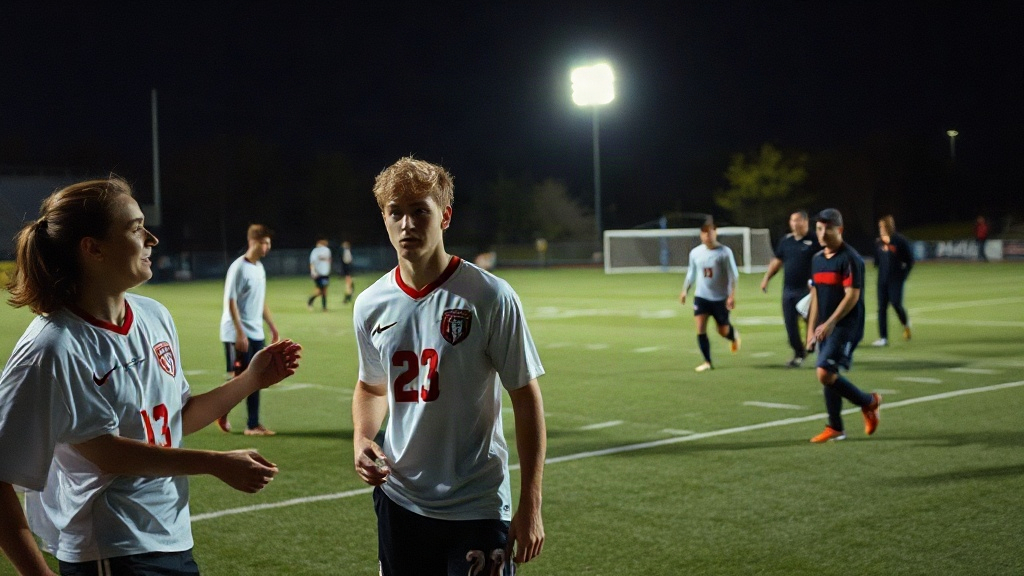
The St. Cloud State University men's soccer program entered the final weekend of its regular season schedule with a decisive two-match road trip across Indiana and Wisconsin, facing conference rivals Purdue University Northwest and the University of Wisconsin-Parkside.
The road sequence represents the culmination of a grueling autumn campaign in the Great Lakes Intercollegiate Athletic Conference (GLIAC). According to official schedule bulletins published by the St. Cloud State University Athletics department, the Huskies must navigate consecutive away fixtures within a 48-hour span to establish their final seeding ahead of the league's postseason tournament.
Road performances often define postseason readiness in collegiate soccer. Traveling across state borders to contest points against physical Midwest opponents tests depth, recovery protocols, and tactical adaptability.
The Final Stretch: Itinerary and Postseason Stakes
The Huskies opened their weekend itinerary by traveling southeast toward Hammond, Indiana, confronting a disciplined Purdue Northwest Pride squad before pivoting north toward Somers, Wisconsin, to take on the UW-Parkside Rangers. Both opponents represent entrenched regional programs with considerable history in NCAA Division II postseason races.
Conference standings heading into the final week revealed a tightly packed table where fewer than six total points separated middle-tier contenders from home-field advantage in the tournament quarterfinals. Earning points away from home is notoriously difficult in the GLIAC, where home teams traditionally post superior shot-conversion and defensive clearance percentages.
For St. Cloud State, maintaining structural discipline during the opening twenty minutes of each contest serves as the central operational objective. Conceding early goals on the road forces tactical overextensions, leaving backlines vulnerable to counterattacks from direct-play offensive systems.
Official match logistics confirmed by the Huskies men's soccer team schedule indicate that both games carry major conference playoff seeding implications. A sweep of the road series could elevate St. Cloud State into a higher qualifying bracket, while dropping points risks pushing the squad into an unfavorable matchup against the conference's regular-season champion.
Tactical Matchup: Breaking Down Purdue Northwest
Purdue Northwest presents a distinct tactical challenge rooted in organized defensive blocks and aerial prowess on set pieces. The Pride frequently deploy a balanced 4-3-3 shape that transitions into an organized five-man midfield off the ball, designed to deny entry passes into central attacking channels.
St. Cloud State's technical staff has concentrated preparation on circulating possession quickly through wide areas. Utilizing overlapping fullbacks allows the Huskies to stretch packed defensive lines and create service angles into the penalty area for central forwards.
Transition defense remains equally vital. Purdue Northwest thrives on direct diagonal switches following turnovers, aiming to bypass central congestion and isolate wingers against isolated outside backs. Huskies central midfielders must maintain positional discipline to plug transition corridors before counterattacks gather momentum.
Discipline regarding fouls in the defensive third will serve as a primary indicator of success. The Pride generate an elevated share of scoring opportunities from corner kicks and deep free kicks, requiring St. Cloud State's goalkeepers and central defenders to control aerial challenges inside the six-yard box.
Confronting UW-Parkside in Somers
Following the contest in Indiana, the Huskies face an immediate turnaround before challenging UW-Parkside at Pritchard Field. The Rangers have long cultivated a reputation for high-tempo pressing and physical challenges across the midfield third.
UW-Parkside frequently utilizes an aggressive pressing scheme, confronting opposing center-backs during build-up play to generate turnovers inside attacking territory. Handling that collective pressure demands rapid decision-making from St. Cloud State's defensive unit and accurate short-range distribution under duress.
Fatigue management becomes the dominant variable during second-leg conference road fixtures. Student-athletes must endure bus travel, rapid recovery regimens, and brief walk-through sessions within a compressed 36-hour window.
Coaching staffs regularly utilize substitution rotations to preserve energy, leaning on bench depth to inject pace during the second half of Sunday matinees. Fresh wingers and holding midfielders will be critical in neutralizing late surges from a fresh Parkside attack.
Season Progression and Roster Continuity
St. Cloud State's trajectory throughout the current campaign reflects steady structural improvement within a competitive Division II conference landscape. The roster integrates seasoned upperclassmen with emerging regional talent, producing a playing style rooted in collective work rate rather than isolated individual brilliance.
Throughout September and October, the Huskies faced a demanding slate featuring nationally ranked non-conference programs alongside standard conference rivals. That caliber of opposition hardened the squad's defensive organization, though finishing chances in the final third has occasionally proved elusive.
Defensive consistency has anchored the team during challenging stretches. Goalkeeping performances across conference play have limited blowout results, giving the Huskies an opportunity to contest points late into regulation time.
Detailed player statistics and season performance metrics compiled via the SCSU Huskies athletics statistics portal demonstrate balanced offensive contributions, with multiple midfielders and forwards recording game-winning goals throughout the autumn calendar.
Travel Logistics, Student-Athlete Recovery, and Mental Demands
Intercollegiate road trips involve operational challenges extending far beyond tactical diagrams on a whiteboard. Navigating Midwest transit in late autumn involves fluctuating weather patterns, long highway hours, and strict academic accountability for student-athletes.
Athletic training personnel coordinate nutritional strategies, hydration protocols, and muscular recovery sessions immediately following the final whistle in Indiana. Cold tubs, massage therapy, and light active recovery replace traditional heavy training sessions between fixtures.
Mental stamina is tested when playing back-to-back road matches with tournament positioning on the line. Opposing student sections, unfamiliar pitch conditions, and fatigue can disrupt tactical execution if communication falters.
Veterans within the Huskies locker room shoulder the responsibility of stabilizing younger teammates during adverse moments. Whether recovering from an early deficit or protecting a narrow lead late in the second half, emotional composure frequently dictates the final outcome on conference road trips.
The Broader Landscape of GLIAC Men's Soccer
The Great Lakes Intercollegiate Athletic Conference remains one of the most competitive men's soccer environments in NCAA Division II. Programs throughout the circuit feature advanced recruiting networks, pulling top regional talent from high-level club circuits alongside international athletes with semi-professional backgrounds.
This high standard creates minimal margin for tactical errors. Table standings are routinely decided by single-goal margins, where a drawn match instead of a victory can alter tournament seeding significantly.
Regional recognition and NCAA tournament qualification depend heavily on conference performance metrics. Even matches against unranked conference opponents influence final strength-of-schedule formulas used by regional selection committees to award at-large bids for national postseason tournaments.
St. Cloud State's participation in these high-stakes fixtures strengthens the athletic department's broader profile, attracting prospective student-athletes looking for top-tier competitive opportunities in the Upper Midwest.
Postseason Pathways and Tournament Schedule
Following the conclusion of Sunday's match against UW-Parkside, the conference office will calculate final table points and tiebreakers to release the official GLIAC Men's Soccer Championship bracket.
The tournament format features single-elimination play, beginning with quarterfinal matches hosted on the home campuses of higher-seeded seeds. Winning the opening playoff fixture earns a berth in the conference semifinals, hosted by the highest remaining overall seed alongside the championship match.
For St. Cloud State, securing a favorable quarterfinal pairing is paramount. Playing on home soil provides a distinct competitive advantage, minimizing additional travel demands and allowing student-athletes to prepare within familiar training facilities.
If the Huskies finish in the lower half of the qualifying seeds, they face another road test against one of the league's top two teams. However, regular-season experience against premier conference opponents provides the tactical blueprint necessary to execute an upset in single-elimination play.
Tactical Adjustments for Postseason Success
As the regular season concludes, technical staff will review performance tape from Hammond and Somers to refine strategic adjustments for tournament play. Playoff soccer often reduces scoring margins, elevating the importance of set-piece execution and late-game game management.
Teams that advance deep into postseason tournaments usually demonstrate two primary traits: an impenetrable central defense and the clinical efficiency to convert limited half-chances. St. Cloud State has prioritized both areas during recent training microcycles.
Developing set-piece defensive schemes ensures that second-phase balls are cleared away from high-danger areas. Offensively, dedicated corner-kick patterns aim to exploit specific marking weaknesses identified in opposing penalty areas.
Penalty shootouts also become an immediate reality in tournament formats if matches remain level after ninety minutes of regulation and two ten-minute extra-time periods. Goalkeepers and designated penalty takers will engage in targeted practice sessions to prepare for that eventuality.
Confirmed Next Steps for Huskies Soccer
With the regular season calendar reaching its conclusion, the Huskies' path forward is established by conference timelines. Sunday evening brings the official announcement of the tournament bracket, confirming opponents, match locations, and kickoff times for the quarterfinal round.
St. Cloud State will travel back to Minnesota immediately following the UW-Parkside contest to begin academic coursework and recovery protocols ahead of postseason training. The coaching staff will conduct film review sessions early in the week to prepare detailed scouting reports for the upcoming quarterfinal opponent.
Whether competing at home or heading back out on the road, St. Cloud State enters the postseason with an opportunity to reset table records and challenge for a conference title. The verified match outcomes against Purdue Northwest and UW-Parkside will dictate the degree of difficulty on that championship path.
*Contextual Intelligence: Verified sector background corroborated in our coverage on Maryland Fires Michael Locksley After Five-Game Slide.*
*Contextual Intelligence: Verified sector background corroborated in our coverage on Wake Forest Targets Road Breakthrough at Virginia Tech.*