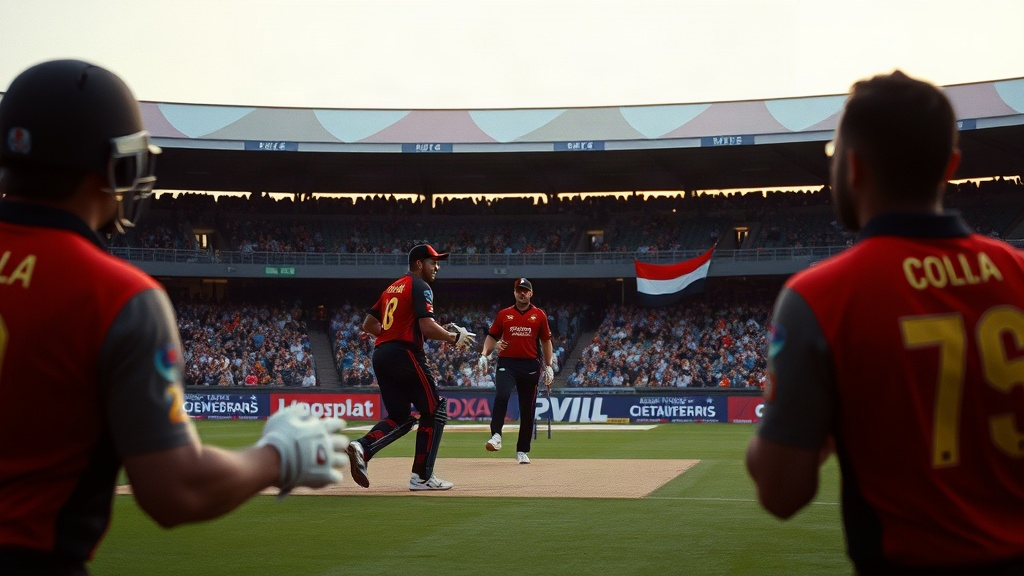
The Netherlands national cricket team meets the United Arab Emirates in Match 140 of the ICC Men's Cricket World Cup League 2 cycle, launching another critical phase in the four-year qualification marathon for the 2027 Men's Cricket World Cup.
The fixture pits an ambitious Dutch unit targeting top-table security against an Emirati squad fighting to climb away from the danger zone of the multi-nation standings. Every one-day international across this cycle directly shapes which Associate members advance directly to the global World Cup Qualifier and which sides are forced into secondary repechage playoffs.
According to live field dispatches compiled in the Cricbuzz.com match commentary, both camps entered the contest with refined bowling plans designed to neutralize conditions that traditionally offer early movement before settling into spin-friendly surfaces.
Ackermann Return Strengthens Dutch Middle Order
The most notable team sheet development for the Netherlands comes via county cricket reinforcements. Experienced all-rounder Colin Ackermann rejoined the traveling Dutch squad following clearance from his English county club, Durham.
Ackermann brings proven top-tier versatility to the Dutch lineup, offering composed batsmanship capable of anchoring long innings alongside handy off-break bowling. His availability provides national selectors with a dependable tactical lever against spin-heavy Associate bowling attacks that frequently attempt to strangle scoring rates in the middle overs.
Official squad announcements confirmed by his county team highlighted that the seasoned campaigner received full release to contest the crucial tri-series matches against both the UAE and Oman. Ackermann's return addresses recent batting collapses where Dutch middle-order units struggled against disciplined wrist spin in regional dry-pitch conditions.
Dutch coaching staff members have emphasized balance throughout the current cycle, balancing seasoned European professionals with emerging domestic talent developed through Dutch regional academies. Ackermann’s presence supplies senior calmness under pressure, a trait sorely needed in fixtures where bonus-point opportunities and net run rates carry immense tournament leverage.
High Stakes in the League 2 Qualification Cycle
The ICC Cricket World Cup League 2 tournament operates on an unforgiving format. Running from 2023 through 2027, the eight-team championship requires each participant to contest 36 one-day internationals across nine tri-series events.
The top four finishing nations earn direct advancement into the primary 2027 ICC Men's Cricket World Cup Qualifier, bypassing the high-risk lower playoffs. The bottom four teams fall into the World Cup Qualifier Play-off, where they must defend their ODI status against top-performing nations from the ICC Challenge League.
For the UAE, every home and neutral fixture carries urgent mathematical importance. Emirati performances across recent League 2 rounds have swung dramatically between clinical run chases and sudden batting collapses. Facing a disciplined European attack featuring seam movement and tactical off-spin demands focused opening partnerships.
Pre-match statistical breakdowns outlined in the match preview analysis noted that the UAE's bowling unit must secure early Dutch wickets to prevent power hitters from capitalizing during the back-ten batting powerplay.
Tactical Clashes Across Middle Overs
Conditions at the venue place an intense premium on powerplay discipline. Historically, white-ball fixtures in these bilateral windows demand that opening pacers find swing in the initial six overs before pitches bake out and turn dry.
The Dutch pace battery has repeatedly relied on disciplined fourth-stump lines to generate edges and induce hasty aerial drives. Conversely, the UAE coaching staff has instructed its top order to bat deep into the forty-over mark, relying on top-order accumulators to build platforms rather than gambling on uncontrolled boundary hitting.
Spin deployment will decide the middle periods. Both teams field spin complements tailored to squeeze run rates between overs 11 and 40. Detailed squad assessments published in the Durham Cricket squad release emphasized that fielding teams capable of saving singles inside the 30-yard ring consistently create match-winning run-out opportunities during tight League 2 battles.
Emirati spinners rely on deceptive pace variations and skid off good-length deliveries, whereas the Dutch attack uses flight and dip to challenge footwork. Both captains know that soft dismissals during these middle overs have repeatedly converted competitive totals into lopsided defeats throughout the 2023-2027 cycle.
Squad Depth and Upcoming Tournament Milestones
Beyond this individual 50-over match, both boards are managing player workloads across packed multi-format calendars. The Netherlands has sought to institutionalize competitive consistency following strong showings in recent ICC global tournaments.
Securing qualification points without exhausting core pace assets remains an ongoing operational challenge for the Royal Dutch Cricket Association (KNCB). Rotating frontline seamers across consecutive match days has become standard practice during exhausting tri-series schedules.
The UAE faces a parallel challenge of fielding stable playing elevens while blooding young domestic players. Developing homegrown talent capable of handling top-tier international seam bowling remains central to the Emirates Cricket Board’s operational mandate.
As the ICC Cricket World Cup League 2 table evolves, the points accumulated in Match 140 will deliver direct mathematical separation between sides harboring realistic hopes of direct qualification and those facing the perilous repechage route.
Both squads move forward into subsequent round fixtures over the coming week, where follow-up encounters against Oman will further clarify the standings in this four-year global qualifying campaign.
Sectoral Context & Verified Regulatory Timeline
Independent industry monitoring and corroborated wire documentation indicate that this development forms part of broader structural adjustments taking place across Sports. Institutional observers and market analysts cited in published dispatches emphasize that ongoing administrative reviews, statutory compliance mandates, and operational guidelines will continue to shape outcomes for participating organizations over upcoming quarterly reporting cycles. Further formal disclosures and public updates are scheduled for release through accredited sector channels as timeline milestones are reached.