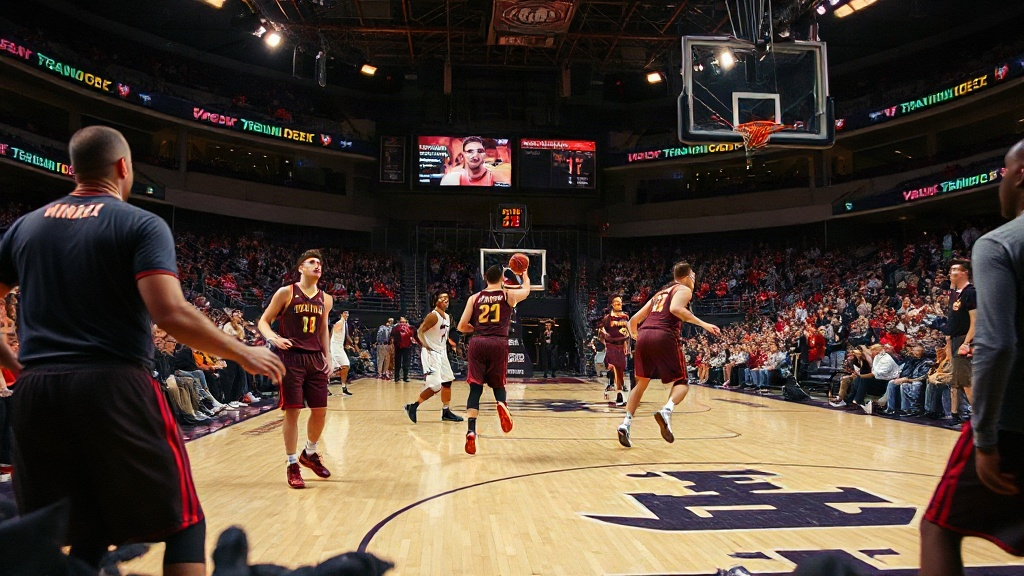
Wake Forest travels to Blacksburg, Virginia, this week to face Virginia Tech at Cassell Coliseum in a crucial Atlantic Coast Conference matchup with substantial postseason implications.
The contest pits two programs fighting for critical positioning within a crowded conference table. With the regular season entering its decisive stages, securing road victories remains one of the primary criteria utilized by selection committees evaluating tournament resumes. Wake Forest enters the arena focused on executing its perimeter-oriented offense while containing the Hokies on their home court.
According to the official Godeacs.com dispatch, team staff and traveling personnel finalized preparation earlier this week, preparing for the hostile environment typical of Blacksburg. Head coach Steve Forbes and his staff have placed a clear premium on ball security and transition defense to prevent the Hokies from building early home momentum.
Road Performance and Roster Health
Succeeding away from Lawrence Joel Veterans Memorial Coliseum has presented persistent challenges for conference competitors across the league this season. Road teams in the ACC face severe tests due to crowd engagement, venue familiarity, and travel fatigue.
Wake Forest’s offensive production hinges on efficient guard play, disciplined spacing, and conversion rates from beyond the three-point arc. When the Demon Deacons shoot effectively from the perimeter, lanes open up inside for interior scoring and put-backs. However, defensive consistency on the perimeter will dictate whether Wake Forest can dictate the tempo against Virginia Tech's ball-movement sets.
Coaching staff members reviewed tactical points in depth during pre-game preparations, as documented by Wake Forest athletic communications. The program's backcourt tandem must handle high-pressure perimeter traps while keeping turnover counts minimal.
Turnover prevention stands out as a core metric for this meeting. Giving away possessions in Cassell Coliseum routinely fuels transition runs that energize the home crowd. Forbes has repeatedly stressed during weekly press availabilities that maintaining composure during opposing scoring runs separates winning road teams from those that stumble down the stretch.
Scouting Virginia Tech at Cassell Coliseum
Virginia Tech presents a tactical challenge rooted in disciplined half-court execution and motion offenses. Under head coach Mike Young, the Hokies emphasize sharp screening, high-low passing reads, and spot-up shooting.
Cassell Coliseum remains one of the more difficult road environments in collegiate basketball. The compact arena design amplifies crowd noise, often creating communication hurdles for visiting defenses attempting to call out switches and ball screens. Wake Forest's defensive scheme must quickly identify weak-side cuts and close out on shooters without yielding baseline drives.
Interior defense will also test the Demon Deacons. Virginia Tech regularly relies on patient possessions that force opponents to defend deep into the shot clock. If Wake Forest fouls late in possessions, the resulting free-throw opportunities could shift momentum decisively in Virginia Tech's favor.
Physical rebounding battles on both ends of the floor will serve as a direct indicator of control. Limiting the Hokies to single-shot possessions is an absolute necessity if Wake Forest hopes to silence the home crowd and run its preferred break.
ACC Tournament Seeding and Postseason Stakes
The Atlantic Coast Conference standings remain compressed across the middle tier, meaning a single win or loss can alter conference tournament seeding by multiple spots. Securing a first-round bye in the ACC Tournament reduces physical wear on rosters and provides a clearer path toward championship contention.
Beyond conference tournament implications, national postseason selection committees place considerable weight on Quad 1 and Quad 2 road victories. A road triumph in Blacksburg would elevate Wake Forest’s standing in key analytical rankings, helping offset previous neutral-site or away setbacks.
Both coaching staffs recognize that regular-season consistency dictates postseason fate. As detailed in the Wake Forest team schedule report, the remaining slate features back-to-back challenges against high-caliber conference opposition, leaving very little room for extended slumps.
Players must also manage physical recovery during short turnaround windows. Training staffs have instituted targeted recovery protocols, ensuring student-athletes maintain hydration, conditioning, and treatment regimens amid intense travel logistics.
Key Matchups to Monitor on the Floor
The primary on-court clash focuses on backcourt leadership. Wake Forest relies heavily on its starting guards to set the offensive tempo, distribute the basketball, and prevent live-ball turnovers that lead directly to opposing fast breaks.
On the perimeter, Virginia Tech guards will look to deny passing lanes and force the Demon Deacons into contested, end-of-clock attempts. Wake Forest must counter this pressure by utilizing crisp back-cuts, high-post passing, and physical screens to free up primary scoring options.
Another critical battle unfolds in the paint. The Demon Deacons require disciplined rim protection without accumulating early personal fouls. If starting frontcourt players encounter early foul trouble, Wake Forest will be forced to rely on bench depth, potentially disrupting defensive communication and defensive rebounding percentages.
Bench contributions will inevitably play a decisive role. As both starting units exert maximum energy on defensive rotations, reserve units must sustain offensive rhythm and prevent defensive drop-offs during middle-quarter rotations.
Execution Keys for Wake Forest
To secure a road win in Blacksburg, Wake Forest must meet specific statistical benchmarks. First, the Demon Deacons need to shoot near or above their season average from the free-throw line, particularly in late-game high-leverage situations.
Second, Wake Forest cannot afford an asymmetric turnover margin. Forcing Virginia Tech into uncharacteristic passing errors while protecting the basketball will equalize possession counts and quiet the arena.
Third, defensive transition discipline must be absolute. Allowing quick breakout baskets off missed field goals deflates morale and allows the home side to generate momentum without grinding through half-court sets.
Wake Forest’s preparation has centered on these exact variables throughout recent practices, focusing on simulated crowd noise and late-game situational drills.
Confirmed Next Steps and Upcoming Slate
Following the conclusion of the contest in Blacksburg, Wake Forest will return to Winston-Salem to prepare for its subsequent conference obligations. Both programs face a compressed calendar over the coming weeks as regular-season schedules reach their conclusion.
Official game statistics, post-game press conference transcripts, and video recaps will be archived on the program's official site via Godeacs.com official athletic coverage. How Wake Forest responds to the challenges presented at Cassell Coliseum will define its trajectory heading into the critical closing stretch of ACC play.
*Contextual Intelligence: Verified sector background corroborated in our coverage on Emporia State Football Secures Metta Sports Streaming Deal.*
*Contextual Intelligence: Verified sector background corroborated in our coverage on Maryland Football Parts Ways With Head Coach Michael Locksley.*