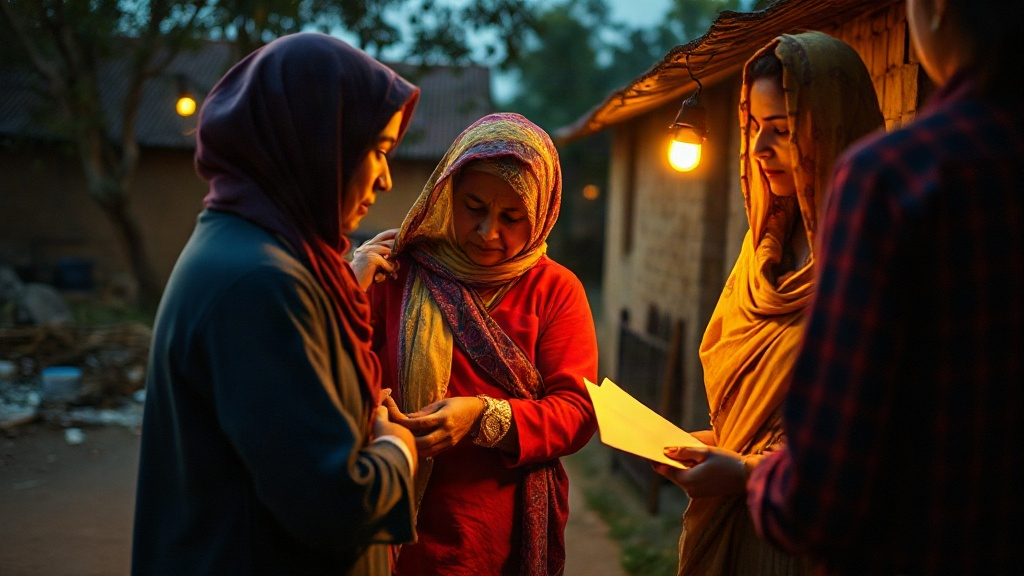
The Reserve Bank of India’s regional office in Jammu has initiated a field-level financial inclusion saturation campaign across rural villages in the Shamachak belt, starting with an operational drive at Gurha Singhu. The exercise aims to bring every eligible rural resident into the institutional financial grid, deploying commercial lenders, regional rural banks, and cooperative credit societies to eliminate local pockets of unbanked households.
Central bank officials, alongside public sector bank managers and local administrative delegates, conducted on-ground registration camps to evaluate credit availability and social security enrollment. Details confirmed through a Thekashmirhorizon.com dispatch show that the campaign focuses heavily on resolving persistent gaps in doorstep service delivery, digital transaction infrastructure, and financial literacy among agrarian and border-adjacent communities.
Financial inclusion drives in Jammu and Kashmir have historically faced operational hurdles, including uneven branch distribution in remote areas and intermittent digital connectivity. By targeting specific village clusters like Gurha Singhu, the central bank is executing a saturation model designed to audit every household’s access to basic banking, pension accounts, and low-cost insurance products.
Closing the Rural Banking Divide in Jammu
Financial inclusion represents more than the procedural opening of basic accounts; it establishes the legal foundation through which lower-income families protect assets, accumulate savings, and escape predatory non-institutional moneylenders. In semi-rural pockets around Shamachak, informal credit networks have often filled voids left by distant brick-and-mortar branches. Under this initiative, teams from regional banks established mobile customer service stations to issue no-frills accounts under the Pradhan Mantri Jan Dhan Yojana (PMJDY).
These zero-balance accounts provide rural households with direct links to government welfare transfers, eliminating middlemen from subsidy distributions. Field teams at the Gurha Singhu camp enrolled self-help group members, smallholder farmers, and landless agricultural workers into formal savings facilities, providing debit cards enabled for national automated clearing services.
Banking officers deployed during the outreach conducted live digital onboarding sessions, verifying biometric details via Aadhaar to generate instant account credentials. Central bank representatives stated that establishing initial customer accounts is only the baseline metric. The operational challenge lies in maintaining sustained account utility, which requires local micro-ATM machines and accessible Business Correspondent (BC) agents within walking distance of village centers.
Local administrative leaders emphasized that rural populations often incur high transport costs and forfeit daily wages simply to execute basic withdrawals at urban bank counters. Situating physical onboarding camps inside village boundaries reduces these transaction barriers, encouraging families to direct surplus agricultural earnings into interest-bearing bank balances rather than physical cash reserves.
Targeted Enrollment in Social Security Instruments
Beyond basic deposit accounts, the saturation program emphasizes high-density enrollment across core federal social protection plans. These include the Pradhan Mantri Suraksha Bima Yojana (PMSBY), which provides accidental death and disability coverage for an annual premium of twenty rupees, and the Pradhan Mantri Jeevan Jyoti Bima Yojana (PMJJBY), offering term life insurance for 436 rupees per year.
For agrarian households operating on thin margins, unexpected medical emergencies, accidents, or the loss of a primary breadwinner can trigger immediate debt cycles. By linking micro-insurance plans to newly opened or previously dormant deposit accounts, bank officers aim to provide an institutional safety net against catastrophic financial loss. Registration forms and automated annual premium deduction mandates were processed on-site during the Gurha Singhu camp.
Central bank executives also registered older agricultural laborers for the Atal Pension Yojana (APY), a government-backed periodic pension program designed to offer guaranteed monthly payouts to workers in the unorganized sector. The operational priority during the camp was clarifying how modest, recurring contributions during a worker's earning years translate into guaranteed retirement income after age 60.
According to monitoring documents cited in the regional media report, Central Bank supervisors reviewed active accounts to identify individuals who held savings accounts but remained unprotected by life and accident insurance. Field workers subsequently completed the documentation needed to correct these portfolio shortfalls.
Operational Challenges for Banking Correspondents
While high-visibility rural camps generate substantial initial enrollments, the durability of rural financial architecture depends on the operational health of Business Correspondents. These individuals, typically drawn from local communities, operate point-of-sale terminals and handheld micro-ATMs to provide cash-in and cash-out services outside traditional bank branches.
Central bank authorities used the Shamachak meeting to inspect localized terminal connectivity and review transaction failure rates caused by telecommunication dropouts. When rural customers encounter repeated technical failures at micro-ATM stations, confidence in formal systems erodes, driving cash back into physical holding. Officers instructed commercial bank representatives to ensure adequate liquidity at every correspondent point across the Shamachak administrative zone.
Furthermore, rural bank correspondents face ongoing security and capital float challenges. To service cash withdrawals during peak harvest seasons or direct benefit transfer distribution windows, an agent must maintain sufficient personal working capital across multiple accounts. The central bank's supervisory teams directed district credit coordinators to conduct regular technical reviews and establish immediate cash replenishment protocols for frontline agents.
These operational instructions reflect structural lessons documented across public banking networks. When banking touchpoints fail to provide reliable cash liquidity within standard village business hours, customers often return to unregulated non-bank brokers. The current saturation campaign attempts to address this breakdown by institutionalizing weekly inspections of correspondent terminals.
Enhancing Literacy to Combat Rural Financial Fraud
Digital inclusion brings elevated exposure to payment scams, particularly among new account holders unfamiliar with two-factor authentication or one-time password security protocols. Unscrupulous actors frequently target agrarian communities through deceptive telephone calls claiming to represent central banking institutions or lottery administrators.
During the Gurha Singhu event, dedicated literacy teams conducted demonstrations warning villagers against sharing private personal identification numbers (PINs) or identity documentation with unverified callers. Officers emphasized that neither the Reserve Bank nor commercial financial entities solicit passwords or account credentials over telephone calls.
Field facilitators distributed printed advisory materials written in local vernacular dialects, clarifying procedures for reporting unauthorized digital debits. The awareness sessions stressed the significance of maintaining mobile number linkages with deposit accounts to ensure real-time transaction tracking through automated text notifications.
As confirmed by the community reporting coverage, these consumer protection briefings targeted women’s community collectives. Women often oversee daily household finances in these village economies, making their digital awareness a primary defense against coordinated cyber fraud and predatory informal lending schemes.
Credit Access for Marginal Farmers and Small Businesses
Account generation and basic insurance represent the first phase of central bank intervention; the decisive measure of regional economic mobility is access to institutional credit. Smallholder farming families in Jammu require seasonal production capital to purchase seeds, fertilizer, and irrigation equipment without resorting to informal commission agents who demand exorbitant monthly interest rates.
Central bank officials instructed local bank managers to accelerate the processing of Kisan Credit Cards (KCC), an instrument designed to deliver short-term crop loans at subsidized interest rates. The campaign allowed marginal farmers who previously lacked collateral documentation to submit standardized loan requests under formal priority sector lending rules.
Officers also collected loan proposals under micro-enterprise credit schemes, including the Mudra program, which provides non-collateralized business credit up to ten lakh rupees for micro-scale manufacturing, processing, and retail activities. By channeling working capital directly into village enterprises, the central bank aims to stimulate local employment and curb distress migration toward urban industrial sectors.
Commercial bank managers were given explicit directives to clear backlogged loan requests within established statutory turnaround limits. Central bank regulators reinforced that unwarranted delays or unreasonable paperwork demands violate consumer charters and undermine public confidence in institutional credit networks.
Verification Deadlines and District Compliance Tracking
The central bank will not assess the Gurha Singhu and Shamachak campaigns solely on attendance figures. Regional district consultative committees, chaired by district development commissioners and lead bank managers, have been instructed to conduct monthly audits of all new accounts registered during this outreach initiative.
These internal audits will evaluate active account usage ratios after ninety days, verify that insurance premiums are processing correctly via automated clearinghouses, and track the flow of microcredit directly to registered beneficiaries. Bank branches that fail to meet minimum service delivery standards or leave accounts inactive will face formal scrutiny during regional state-level bankers' committee reviews.
Field monitoring units are scheduled to revisit the Shamachak cluster before the end of the current financial quarter to audit correspondent uptime, verify ATM functionality, and ensure that every eligible household identified during the Gurha Singhu camp maintains active access to banking services.
*Contextual Intelligence: Verified sector background corroborated in our coverage on RBI Jammu Launches Financial Inclusion Drive in Shamachak.*
*Contextual Intelligence: Verified sector background corroborated in our coverage on Indonesia Rebuffs Market Downgrade Threat as Growth Holds.*