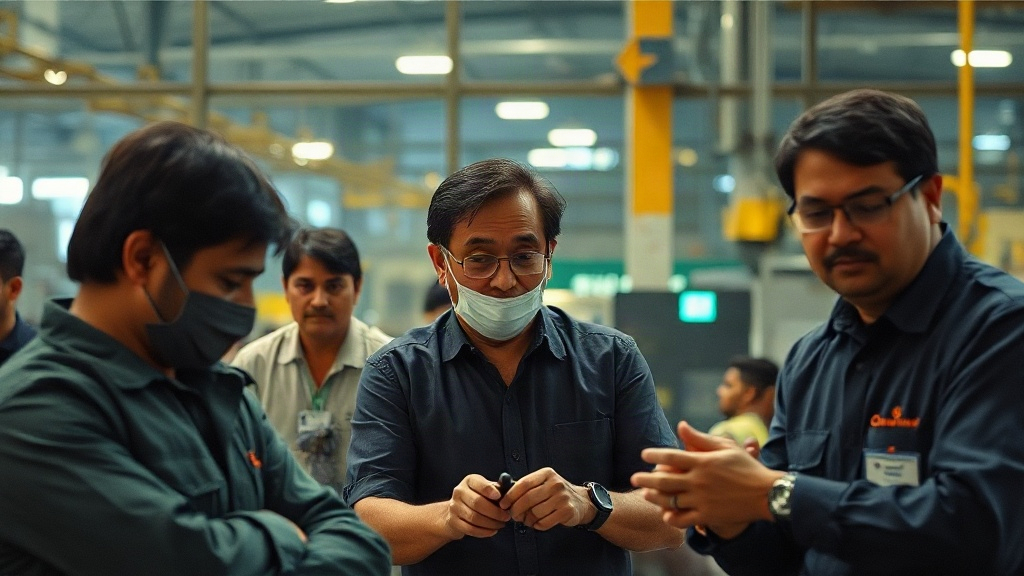
The Reserve Bank of India’s regional office in Jammu rolled out an intensive financial inclusion saturation campaign at Gurha Singhu in the Shamachak belt, directing commercial lenders and cooperative credit institutions to bring every unbanked household in the sector into the formal financial system.
The field initiative, verified in a comprehensive Thekashmirhorizon.com dispatch, seeks to resolve persistent gaps in rural banking coverage across Jammu and Kashmir. Rather than relying on passive branch counters, central bank supervisors dispatched dedicated operational teams directly to agrarian communities. The objective centers on ensuring total household enrollment across essential transaction accounts, credit linkages, micro-insurance coverage, and government-backed pension programs.
Financial inclusion campaigns organized by regulatory authorities represent systematic efforts to bring marginalized or remote populations into regulated banking networks. The term saturation describes an operational threshold where field officers attempt to reach one hundred percent of eligible adult residents within a targeted village, leaving zero unbanked households behind.
Closing the Rural Coverage Deficit in Shamachak
Gurha Singhu and its surrounding hamlets in Shamachak house a predominantly agrarian workforce alongside small retail shop owners and daily wage laborers. While branch banking in urban Jammu has expanded swiftly, peripheral agrarian clusters face structural obstacles to reliable financial engagement. Transportation costs, working-day wage losses, and complex paperwork historically discouraged rural households from visiting distant brick-and-mortar branches.
Central bank officials structured the Shamachak program to dismantle these structural barriers by establishing interactive enrollment desks directly on village grounds. Regulated commercial lenders, regional rural banks, and district cooperative institutions deployed customer service representatives equipped with handheld biometric authentication terminals. These devices allow villagers to open valid transaction accounts in minutes using national digital identity credentials.
Establishing an active bank account serves as the foundational architecture for modern economic survival. Without an account held in a regulated institution, wage earners remain excluded from direct benefit transfers, state subsidies, and institutional crop credit. These unbanked individuals routinely find themselves forced to rely on cash transactions, making them susceptible to theft, loss, and predatory local moneylenders.
Informal rural lenders across rural India typically levy monthly interest rates ranging from 3 percent to 5 percent, which translates to compounded annual percentage rates exceeding 36 to 60 percent. In contrast, institutional agricultural credit provided through formal banking channels carries regulated interest rates starting at approximately 7 percent per annum, with subventions dropping the effective rate even lower for disciplined borrowers.
Deploying the Social Security Architecture
The central bank's saturation mandate extends well beyond opening basic transaction accounts. Field teams at Gurha Singhu concentrated on enrolling household heads and earning dependents into low-cost insurance and retirement protection plans established under national policy frameworks.
Operational guidelines presented during the drive prioritized enrollment into the Pradhan Mantri Jeevan Jyoti Bima Yojana, a renewable annual life insurance policy providing coverage for untimely death, and the Pradhan Mantri Suraksha Bima Yojana, which covers accidental death and permanent disability. Both facilities require nominal annual premiums deducted automatically from verified bank accounts, ensuring low-income families maintain life safety nets without facing bureaucratic hurdles.
Field teams also introduced the Atal Pension Yojana to informal sector workers. This voluntary retirement scheme guarantees a predictable monthly pension ranging from one thousand to five thousand rupees upon reaching sixty years of age, depending on contribution tiers chosen by participants. For agricultural day workers whose daily cash flows fluctuate wildly based on harvest cycles, predictable old-age financial support prevents sudden descents into absolute poverty.
Rural economic stability depends on insulating vulnerable families from acute health and occupational shocks. When an uninsured breadwinner suffers a debilitating injury or passes away, surviving family members frequently exhaust accumulated savings or liquidate productive agricultural assets to survive. By systematically weaving insurance and pension enrollments into the account opening protocol at Gurha Singhu, field teams effectively secured community balance sheets against personal disaster.
District banking coordinators confirmed during operational presentations that local branches will maintain weekly reconciliation registers to monitor whether accounts opened during the saturation drive remain actively utilized or slip into dormant status.
Expanding Micro-Credit Lines for Village Enterprises
Reliable personal savings tools provide household security, but sustained rural wealth creation requires timely access to working capital. During the outreach drive in Shamachak, banking executives and central bank officers held open discussions regarding underutilized credit programs tailored for small-scale agrarian producers and allied rural enterprises.
Field supervisors directed branch managers to process streamlined Kisan Credit Card facilities for local farmers and animal husbandry operators. The Kisan Credit Card system provides farmers with flexible, pre-sanctioned revolving credit limits based on operational landholding size and anticipated crop cultivation cycles. Instead of submitting exhaustive loan applications for every sowing season, registered farmers draw funds down as input requirements arise and repay after market realization.
Regulators stressed the need to accelerate lending under micro-enterprise financing schemes, including collateral-free loans for micro-merchants and cottage industrial units. Small tradespeople operating in Shamachak, ranging from carpenters and welding shops to local grocery stores, often require short-term working capital between fifty thousand and five hundred thousand rupees. In the absence of institutional micro-lending, these family businesses struggle to procure inventory in bulk or invest in basic processing machinery.
Central bank representatives instructed lending officers to refrain from requesting unnecessary documentation or requiring informal collateral pledges from micro-borrowers who satisfy regulatory identity and business operational checks. Senior supervisors cautioned that administrative red tape at local branch levels undermines public confidence in the formal credit network, pushing vulnerable borrowers straight back toward unregulated informal loan sharks.
To ensure transparency, credit application counters operated alongside identity verification booths, permitting villagers to file credit requests directly with regional bank managers without utilizing third-party middlemen or unregistered financial agents.
Digital Financial Literacy and Fraud Prevention
Expanding digital financial channels into rural environments introduces significant transactional efficiency, but it also exposes inexperienced users to sophisticated electronic fraud. Recognizing this threat, RBI Jammu embedded an exhaustive financial literacy and digital protection curriculum into the Gurha Singhu deployment.
Central bank resource persons demonstrated the safe operation of unified payments interfaces, mobile banking applications, and biometric automated teller terminals. Officials specifically targeted elderly residents, women household managers, and marginal farm workers, explaining how digital transactions eliminate middleman fees and provide instant transaction receipts on standard mobile phones.
Instructional teams conducted detailed threat briefings regarding electronic scams and telephone fraud. Officers warned attendees never to share one-time authentication passwords, card verification values, or biometric codes with individuals claiming to represent banking corporations, lottery agencies, or government ministries. Field educators demonstrated real-world examples of phishing calls where fraudsters threaten imminent account suspension to coerce villagers into surrendering sensitive credentials.
Educating rural account holders regarding their digital statutory rights serves as an essential counterpart to onboarding drives. Under established central bank consumer protection mandates, customers who notify their banks of unauthorized electronic transactions within three business days face zero financial liability. However, when rural citizens lack awareness of these regulatory safeguards, they routinely fail to file required disputes within mandatory reporting windows, absorbing unwarranted economic losses.
Interactive literacy sessions in Shamachak also addressed formal consumer grievance procedures. Residents learned how to escalate unresolved service deficiencies from village branch managers up to the independent Banking Ombudsman, an institutional watchdog appointed by the Reserve Bank to resolve customer grievances without legal expenses.
Institutional Oversight and Forward Milestones
The saturation drive at Gurha Singhu represents one phase of a broader multi-district operational schedule being executed across Jammu and Kashmir by the central bank's regional administration. State-level bankers' committees, working in tandem with district consultative bodies, have established rolling quarterly targets to monitor regional coverage improvements.
Lead District Managers must aggregate verified account data from all participating commercial and regional lenders operating across the Shamachak belt. Regulators established a 45-day review milestone to verify that accounts opened during the event are fully funded, mapped to central identity databases, and actively receiving legitimate transfer payments. The verification protocol includes physical sample audits conducted by central bank inspectorial staff to confirm that branch staff are processing transactions without administrative delays.
Lenders operating in the jurisdiction must also report specific credit disbursement figures linked directly to applications collected during the Gurha Singhu camp. These institutional scorecards track how many micro-credit lines, Kisan Credit Cards, and social security applications were approved, disbursed, or rejected, with branch managers legally required to provide written justifications for any rejected application.
By executing structured saturation initiatives directly within agricultural communities, the central bank aims to transition the regional rural economy from unrecorded, cash-based exposure into an organized, insured, and capital-resilient system. The true metric of success for the Gurha Singhu initiative will emerge not from the immediate crowd tally at enrollment tents, but from whether newly established accounts remain permanently active, commercially utilized, and insulated from informal debt exploitation over the coming years.
*Regulatory Context: Formal statements and official disclosures corroborated via the authoritative sector ledger.*
*Contextual Intelligence: Verified sector background corroborated in our coverage on Indonesia Rebuffs Market Downgrade Threat as Growth Holds.*
*Contextual Intelligence: Verified sector background corroborated in our coverage on Olenox Expands Bitcoin Mining in Energy Strategy Push.*