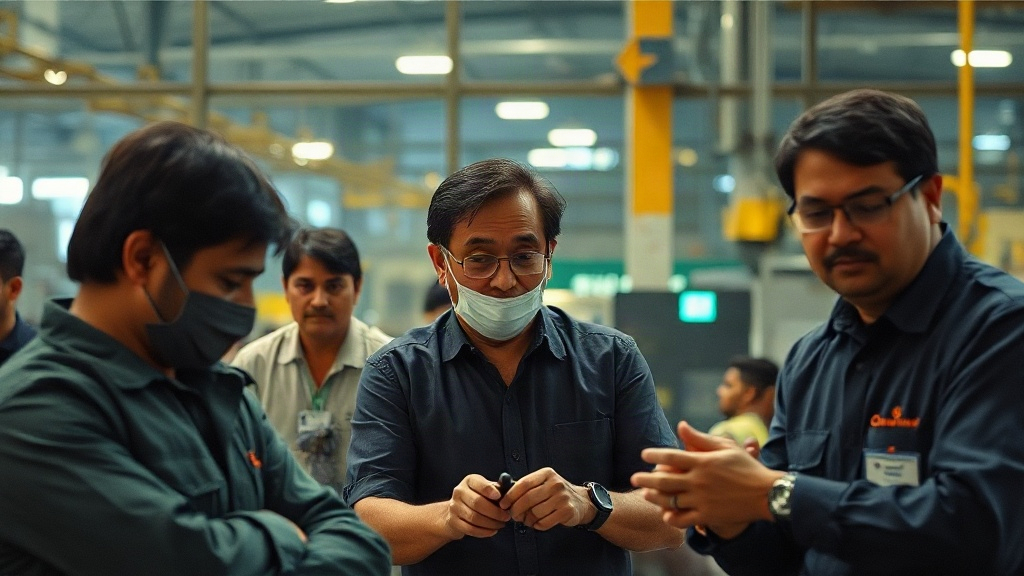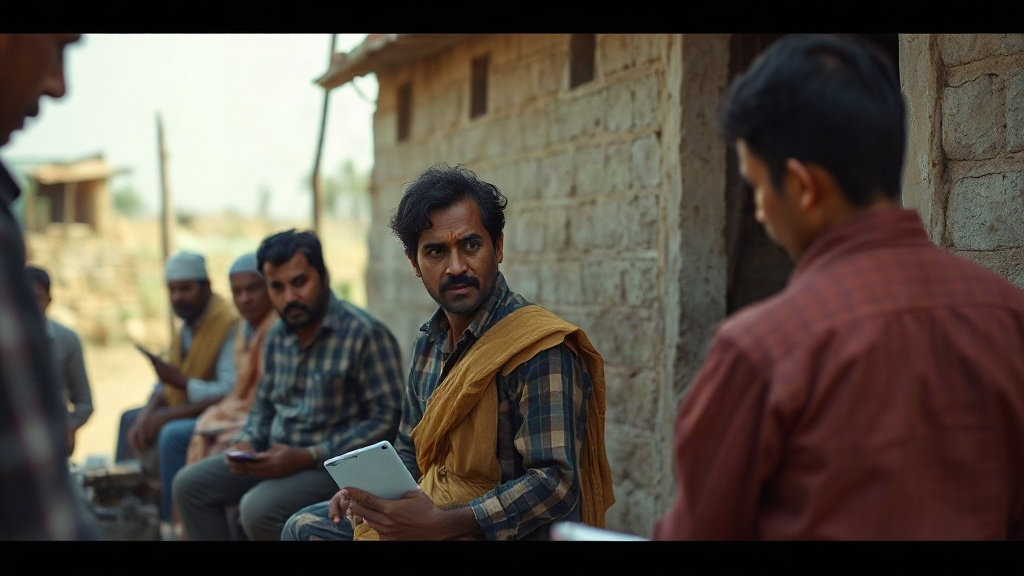
The Reserve Bank of India launched a targeted financial inclusion campaign in a village in Jammu on Tuesday, dispatching regulatory field officers and institutional lenders to enroll unbanked residents directly into the formal financial sector. The outreach targets agricultural workers, rural artisans, and small-scale vendors who historically relied on cash-driven, informal credit arrangements.
Central bank representatives structured the village camp to provide immediate verification and enrollment for basic savings accounts, government-backed micro-insurance policies, and digital payment infrastructure. According to a Kashmirnewsobserver.com dispatch, the field intervention forms part of the central monetary authority’s broader rural penetration strategy across the Union Territory of Jammu and Kashmir, designed to dismantle barriers to formal banking in geographically isolated pockets.
By establishing a physical presence inside the village, the central bank aims to bridge the persistent gap between urban institutional banking and peripheral rural habitations, where bank branch density remains significantly lower than national metropolitan averages.
Dismantling Informal Credit Networks in Rural Hamlets
Rural households across peripheral districts often encounter severe friction when seeking credit from commercial banks. Traditional lending operations require collateral, audited income histories, and extensive documentation—standards that subsistence farmers, seasonal manual laborers, and micro-entrepreneurs cannot meet. In the absence of institutional backing, rural borrowers turn to non-institutional lenders, commonly local moneylenders or commission middlemen, who charge interest rates frequently exceeding 36 to 60 percent annually.
These non-institutional arrangements extract capital from vulnerable rural communities, trapping multi-generational families in cycles of compounding interest. An emergency medical expense or a crop failure caused by untimely weather often forces smallholders to pledge their land or future crop yields under terms heavily favoring the lender.
The RBI intervention directly counters this vulnerability. Central bank officials instructed scheduled commercial banks and regional rural institutions operating in the Jammu district to accept simplified Know Your Customer (KYC) documents to open basic accounts immediately. By securing access to institutional micro-credit lines, smallholders can purchase certified seeds, micro-irrigation equipment, and agricultural inputs without liquidating family assets or accepting exorbitant informal debt terms.
Regulatory teams on the ground highlighted that bringing households into formal banking rosters also establishes credit histories. Over time, reliable transaction histories allow regional rural lenders to issue formal credit facilities, such as the Kisan Credit Card, which provides low-interest short-term loans for agriculture and allied activities.
Delivery of Core Welfare Programs and Social Security Nets
During the village outreach camp, field personnel prioritized enrolling eligible residents in primary statutory insurance and pension systems. Officials coordinated with local administrative heads, known as panchayat representatives, to assemble residents at common community facilities for on-the-spot processing.
Residents received expedited enrollment under the Pradhan Mantri Jan Dhan Yojana (PMJDY), which guarantees basic savings bank deposit accounts without minimum balance penalties. Field teams also facilitated documentation for the Pradhan Mantri Suraksha Bima Yojana (PMSBY), which provides accidental death and disability coverage for an annual premium of 20 Indian rupees (approximately $0.24), and the Pradhan Mantri Jeevan Jyoti Bima Yojana (PMJJBY), which offers term life coverage for 436 Indian rupees (approximately $5.25) annually.
Data and procedures documented in the coverage by Kashmir News Observer emphasize that central bank monitors placed special emphasis on bringing rural women and elderly residents into the social safety net. Officers processed applications for the Atal Pension Yojana, an institutional pension vehicle targeted at workers in the unorganized labor market that delivers guaranteed monthly payouts upon reaching retirement age.
Providing statutory social security prevents sudden family shocks from degenerating into total household destitution. When a primary earner suffers an incapacitating injury or sudden death, life and accident insurance settlements offer a financial bridge that prevents surviving family members from selling productive livestock or fertile agricultural land to survive.
Institutionalizing Digital Transactions and Anti-Fraud Safeguards
While expanding basic accounts represents the baseline requirement of the initiative, the Reserve Bank focused substantial operational resources on building functional digital financial literacy. Central bank officers conducted live demonstrations of the Unified Payments Interface (UPI) and Aadhaar-enabled Payment Systems (AePS), teaching villagers how local convenience stores and mobile handsets can function as financial transaction terminals.
Digital literacy officers demonstrated how mobile point-of-sale systems eliminate the necessity of traveling long distances to urban bank branches. In rural Jammu, commuting to a fully staffed commercial bank branch often requires rural workers to forfeit a full day’s wages in transit costs and lost labor time. Digital tools and local banking correspondents allow households to make payments, receive direct remittances from family members working in urban industrial centers, and check account balances within their own settlements.
However, expanding digital interfaces without foundational safety training leaves first-time users exposed to digital financial crime. Central bank field officers warned attendees about prevalent rural cyber fraud techniques, including fraudulent phone calls requesting one-time passwords (OTPs), fake lottery notifications sent through text messages, and unauthorized biometric identity collection.
Trainers instructed residents never to share personal identification numbers, account security codes, or debit card verification credentials with anyone, including individuals claiming to represent commercial banks or government departments. Officials explained the official grievance redressal mechanism, outlining clear escalation paths for disputing failed electronic fund transfers, reporting unauthorized account withdrawals, and contacting the RBI Banking Ombudsman if a commercial lender fails to resolve a valid fraud complaint.
Regional Banking Infrastructure and Structural Challenges
Jammu and Kashmir’s regional geography poses logistical difficulties for universal retail banking. Mountainous terrain, fragmented rural settlements, and severe seasonal weather complicate the construction and daily staffing of brick-and-mortar branch networks. Regional banks face high overhead costs per operating branch while managing relatively low deposit balances across sparsely populated border and highland communities.
To bridge this infrastructure deficit, the Reserve Bank relies on the Business Correspondent (BC) model. Business Correspondents are authorized local agents equipped with handheld biometric authentication devices and internet-enabled tablets who act as human automated teller machines and basic account representatives within rural localities. Local schoolteachers, small retail shop owners, and village administrative workers often fulfill these correspondent roles, earning commission fees on verified account actions.
Regulatory reporting outlined in regional administrative updates indicates that rural inclusion initiatives in Jammu require ongoing oversight to ensure that accounts remain genuinely active. Across various financial inclusion programs in the country, public audit reports have periodically noted that millions of basic rural accounts lapse into dormancy after initial enrollment because account holders lack recurring cash flows or return to cash habits due to local merchant resistance.
To prevent newly registered village accounts from becoming inactive records, the central bank’s regional office in Jammu mandated that district lead banks implement periodic field checkpoints. Local bank managers must track whether accounts created during outreach camps receive incoming direct benefit transfers (DBT) from public welfare schemes, agricultural crop insurance payouts, and rural employment guarantee wages.
Account Activity Metrics and Regulatory Milestones
The Reserve Bank’s Jammu campaign establishes concrete performance indicators for commercial institutions operating within the district. District lead bank officers were instructed to monitor active account utilization metrics over the next two financial quarters rather than relying solely on gross registration numbers as a metric of campaign success.
Banking representatives are scheduled to return to the village over the coming months to review customer complaints, inspect the operational uptime of biometric micro-ATMs managed by local correspondents, and verify whether local merchants accept non-cash transactions for routine domestic purchases. Lenders must submit updated balance, deposit, and digital transaction data to the regional lead bank committee, which coordinates economic development strategies across Jammu.
The regulatory authority’s intervention demonstrates that expanding financial access requires direct institutional presence rather than passive branch operations. By deploying regulatory monitors directly into village halls, the central bank aims to embed formal credit, consumer protections, and verified transaction pathways into rural Jammu, testing whether hands-on field intervention can permanently dismantle the hold of informal, unregulated credit markets.
*Contextual Intelligence: Verified sector background corroborated in our coverage on U.S. Drops Select Canada Tariffs Amid Looming Trade War.*
*Contextual Intelligence: Verified sector background corroborated in our coverage on RBI Jammu Expands Village Banking Access in Border Drive.*