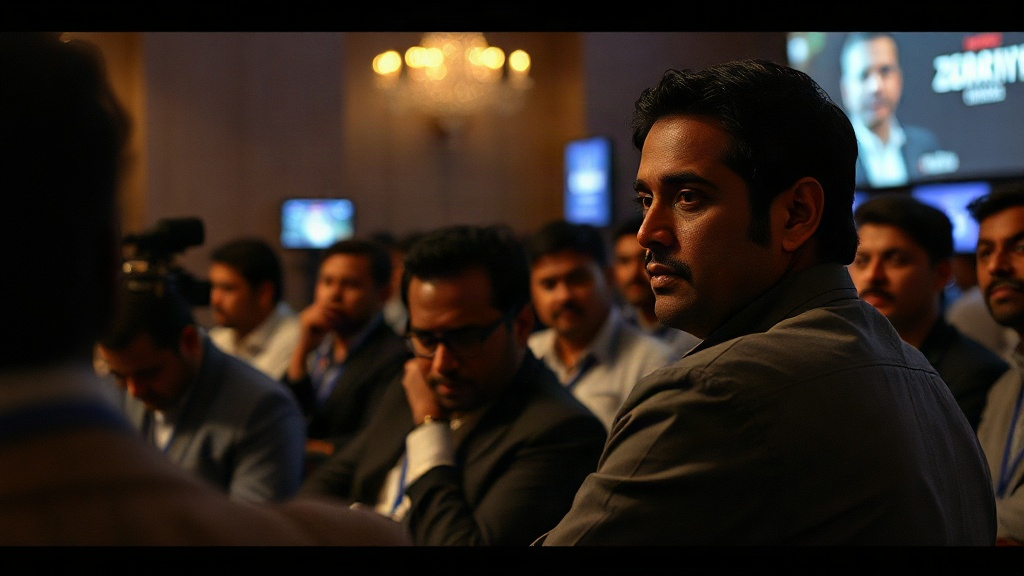
Zerodha co-founder Nikhil Kamath announced at the NDTV World Summit in New Delhi that his emerging media ventures will strictly avoid conventional news reporting, focusing instead on alternative knowledge and engagement platforms.
Addressing delegates, investors, and entrepreneurs, Kamath drew a clean distinction between current affairs coverage and non-news digital content. "With media we do have aspirations, but I don't think it's covering the news kind of media," Kamath said during his summit remarks, as reported by the NDTV World Summit dispatch.
The clarification establishes strategic boundaries for one of India's most closely monitored retail finance entrepreneurs. Over the last three years, Kamath has built a substantial media profile through his business podcast "WTF is?", leading industry observers to debate whether his capital allocations would eventually fund a direct journalism enterprise. His categorical exclusion of traditional news delivery answers those market speculations.
The Commercial Divide Between News and Long-Form Information
Traditional news organizations operate under rigorous continuous publication deadlines, substantial newsroom staffing requirements, and complex regulatory environments. India's digital media landscape has seen mounting operating expenses alongside downward pressure on advertising yields.
Non-news informative content—covering long-form podcasts, industry roundtables, educational masterclasses, and specialized financial research—operates under an entirely different economic logic. These platforms deliver durable evergreen viewership, command higher-value enterprise sponsorships, and foster personal brand equity without the legal and political exposures inherent in daily political reporting.
Kamath's public positioning aligns directly with how venture-funded operators approach the media sector in Bengaluru and Mumbai. Modern media consumers increasingly bypass traditional news desks in favor of domain experts and industry operators who deconstruct complex topics through unhurried conversational formats.
By distinguishing his media objectives from daily news desks, Kamath sidesteps compliance mechanisms governing foreign direct investment in digital news, editorial ethics codes enforced under India's Information Technology Rules, and extensive verification infrastructures necessary for legal defensibility.
Evolution of Zerodha's Content and Founder-Led Influence
Kamath and his brother Nithin Kamath co-founded Zerodha in 2010. The discount retail stockbroking firm grew into India's largest retail brokerage by client count without spending institutional capital on television or print advertising.
Zerodha relied from its inception on financial education initiatives such as Varsity, an open-access platform covering securities analysis, options strategies, and macroeconomic fundamentals. Varsity proved that structured, educational non-news material creates durable customer acquisition funnels for complex financial products.
Kamath's individual media presence expanded through his episodic podcast, where he hosts institutional founders, public policy experts, and entertainment industry leaders to debate industrial trends. These broadcasts routinely log millions of viewing hours, underscoring consumer preference for contextual exploration over rolling breaking news bulletins.
According to analysis in the NDTV summit coverage, building media infrastructure that bypasses legacy broadcast setups allows modern founders to engage retail audiences directly on digital video and audio networks.
Regulatory Landscape and the Digital Media Economy
India's media sector has experienced substantial structural shifts over the past five years. The Ministry of Information and Broadcasting enforces distinct regulatory expectations between digital publishers publishing current affairs and digital publishers focusing strictly on entertainment or educational content.
Operating a general news platform in India requires navigating strict compliances, such as the 26 percent foreign direct investment ceiling applicable to digital news entities uploading current affairs coverage. In contrast, educational channels, creator networks, and specialized streaming programs face fewer sovereign investment restrictions and less operational oversight.
Industry investment patterns further explain Kamath's strategy. Traditional online newsrooms confront declining programmatic ad rates and dependency on algorithmic shifts from global technology intermediaries. Meanwhile, specialized content platforms secure sustainable revenue via direct brand collaborations, subscriptions, and affiliate distribution ecosystems.
As recorded in recent industry commentary summarized across the NDTV enterprise news wire, enterprise executives increasingly perceive the daily news race as low-margin, pivoting instead toward platforms that cultivate specific consumer communities around technology, philosophy, wealth generation, and physical wellness.
What Kamath's Non-News Blueprint Means for Media Ventures
Kamath's statements signal where private capital from India's tech ecosystem is likely to head next. Rather than buying struggling regional newspapers or launching digital news websites, young family offices are investing heavily in creator houses, specialized audio networks, documentary production studios, and proprietary intelligence networks.
This approach mirrors developments across the United States and Europe, where technology leaders systematically build out direct-to-consumer media properties while avoiding the day-to-day liabilities of hard investigative journalism.
Key characteristics of this evolving non-news media category include:
By formally excluding news coverage, Kamath is positioning his future media projects to operate with higher margins, minimal regulatory friction, and direct cultural resonance among India's rising generation of digitally connected professionals.
- Curated Long-Form Dialogues: Deep, multi-hour explorations of specific industry problems, replacing rapid soundbite panels.
- Audience Alignment Over Mass Reach: Prioritizing niche, highly engaged professional and retail investor segments rather than chasing generic mass pageviews.
- Operational Agility: Small, specialized production units that produce high-production video without maintaining regional reporting bureaus.
- Cross-Pollination with Venture Ecosystems: Content engines that surface private investment deals, founder narratives, and technical market insights.
Confirmed Next Steps and Implementation Horizons
Kamath did not detail specific incorporation dates, executive hires, or vehicle names for the planned media initiatives during his summit appearance. However, corporate filings and recent private market deployments from his investment vehicle Gruhas indicate sustained capital allocations toward consumer tech, creator infrastructure, and entertainment properties.
Representatives for Kamath's ventures have indicated that upcoming content projects and production alliances will unfold over the next two fiscal quarters. These programs will continue prioritizing educational discussions, entrepreneurship toolkits, and macroeconomic debates while maintaining a complete distance from the breaking news beat.
*Contextual Intelligence: Verified sector background corroborated in our coverage on KPSC Paper Leak: Karnataka CM Sanctions IAS Officer Prosecution.*
*Contextual Intelligence: Verified sector background corroborated in our coverage on Philippine Air Force Plane Crash Kills 4 Military Pilots.*


