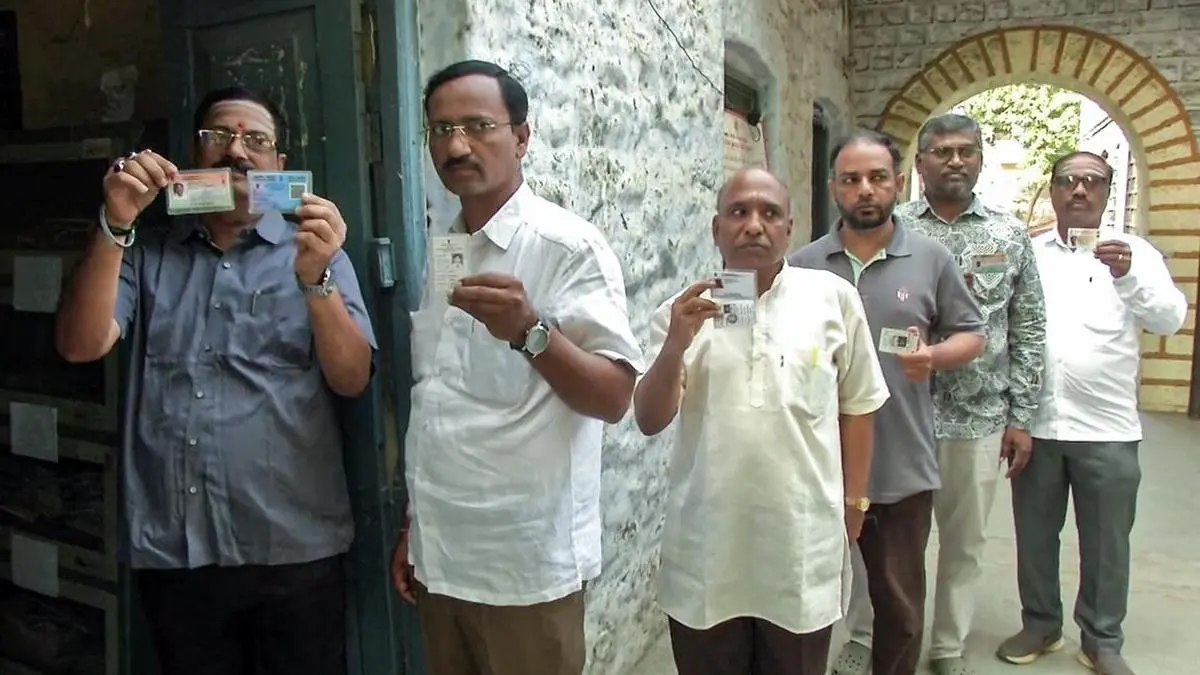
Official counting of ballots cast in four crucial graduates' and teachers' constituencies of the Karnataka Legislative Council commenced on Tuesday morning, setting the stage for decisive Upper House results. Across the four electoral divisions, 43 candidates are vying for election, including three incumbent legislators seeking to retain their legislative positions.
According to official election reporting published by The Hindu, approximately 2.01 lakh voters exercised their franchise out of an eligible voter base of 3.43 lakh registered graduates and teachers during polling held on the preceding Friday. The counting exercise will finalize representation for the Bangalore Teachers', Karnataka South East Graduates', Karnataka West Graduates', and Karnataka North East Teachers' constituencies.

The Electoral Battleground and Coalition Dynamics
The Upper House currently features a narrow balance of power across party lines. The ruling Indian National Congress controls 38 seats in the 75-member Council, sustaining a working majority. In contrast, the National Democratic Alliance (NDA) features 24 seats held by the Bharatiya Janata Party (BJP) and six seats held by the Janata Dal (Secular) [JD(S)]. The remaining composition includes one seat held by the Chairman, one by an Independent, and five vacant seats designated for government nomination.
Under their alliance pact, the BJP contested three seats while ceding the Bangalore Teachers' constituency to the JD(S). The ruling Congress mounted an aggressive statewide campaign, fielding candidates across all four open seats. Key contests include Bangalore Teachers', where five-time MLC and former Deputy Chairman Puttanna is contesting on the Congress ticket. In the remaining three constituencies historically held by the BJP, sitting legislators S.V. Sankanur (West Graduates') and Sashil Namoshi (North East Teachers') are defending their seats against challenging contenders, while the South East Graduates' seat saw BJP's K.M. Suresh run against Congress candidate Shashi Hulkuntemutt following the departure of incumbent Chidanand Gowda.
Legislative Balance Overview
| Political Bloc / Representation | Current Seats Held | Candidates Contesting | Target Constituencies |
|---|---|---|---|
| Indian National Congress (INC) | 38 | 4 | All 4 Constituencies |
| Bharatiya Janata Party (BJP) | 24 | 3 | SE Graduates, West Graduates, NE Teachers |
| Janata Dal (Secular) [JD(S)] | 6 | 1 | Bangalore Teachers |
| Independent / Chairman / Vacant | 7 (5 Vacant) | N/A | N/A |
Civic and Governance Implications
These MLC outcomes carry immediate legislative consequences for state governance, determining the ruling party's legislative agility in reviewing and passing statutory measures. With five nomination vacancies still open, the outcome of these four contested seats dictates whether the treasury benches consolidate an outright working cushion or whether the combined opposition retains significant leverage to delay or scrutinize government legislative agendas in the Upper House.
Frequently Asked Questions
How many candidates are contesting in the Karnataka MLC elections?
A total of 43 candidates contested across the four legislative council seats, including three sitting members seeking re-election.
What was the final voter turnout across the four constituencies?
Out of 3.43 lakh enrolled voters across the graduates' and teachers' segments, approximately 2.01 lakh voters cast ballots in the election.
What is the current seat distribution in the Karnataka Legislative Council?
The 75-member council includes 38 Congress members, 24 BJP members, six JD(S) members, one Chairman, one Independent, and five government-nominated vacancies.