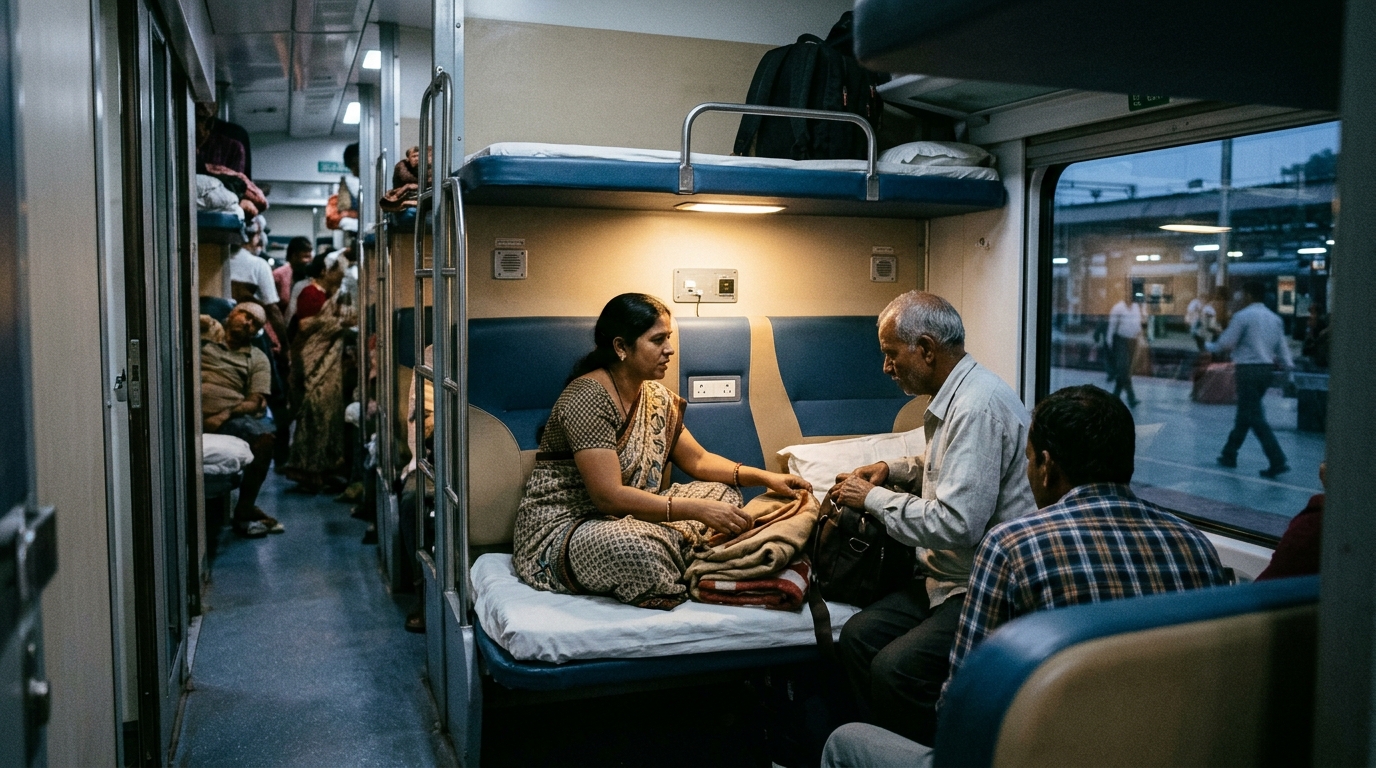
NEW DELHI — Indian Railways plans to inaugurate its new semi-high-speed Vande Bharat sleeper service connecting Bengaluru and Mumbai on Nov. 1, expanding overnight long-distance travel across southern and western trade corridors.
The operational blueprint targets regular commercial passenger transit across Karnataka, Andhra Pradesh, and Maharashtra. As detailed by a Telugu.news18.com operational dispatch, rail officials have outlined key technical milestones, tentative stop schedules, and preliminary fare structures ahead of the rollout.
Overnight Transit Between Southern Tech and Financial Hubs
The planned corridor links Bengaluru, India's premier information technology center, directly with Mumbai, the nation's commercial capital. The service addresses high-density intercity passenger traffic that currently relies heavily on congested flight paths and slower conventional express rail routes.
According to regional reporting confirmed by Hindustan Times Telugu route disclosures, the alignment includes transit intermediate corridors through Andhra Pradesh. This routing provides fast interstate connectivity for smaller regional industrial towns situated along the interstate border.
The introduction of overnight sleeper configurations marks a deliberate shift from the original daytime chair-car design of the Vande Bharat fleet. These overnight rakes are engineered specifically to cover distances exceeding 1,000 kilometers within a single evening-to-morning window.
Rolling Stock Engineering and Cabin Specifications
The Vande Bharat sleeper rakes feature aerodynamically contoured stainless steel and aluminum bodies designed for operational speeds up to 160 kilometers per hour. The coaches include integrated crash-mitigation systems, automatic exterior doors, and vacuum toilet modules modeled after commercial aviation standards.
Unlike traditional three-tier non-air-conditioned rail coaches commonly deployed in overnight services, the Vande Bharat sleeper consists entirely of air-conditioned accommodations. The rake configuration provides AC First Class, AC Two-Tier, and AC Three-Tier berths equipped with specialized noise dampening and upgraded suspension to reduce passenger fatigue on long runs.
Rail authorities have planned intermediate halts at key industrial and interchange junctions to balance high-speed travel with regional accessibility. Operational parameters emphasize minimal dwell times at stations to preserve total journey savings.
Economic Context and Market Positioning
The expansion into premium overnight sleeper services represents a central strategy by the Ministry of Railways to reclaim market share from regional aviation carriers. Rising domestic airfares on the Bengaluru-Mumbai route have increased demand for dependable, full-service overland alternatives among business and corporate travelers.
Financial details highlighted in regional press reports indicate that ticket pricing will sit between conventional premium Rajdhani fares and entry-level economy airline rates. Additional market monitoring reported in a Goodreturns regional transit analysis highlights that business commuters prioritize nighttime productivity, predictable arrival times, and onboard amenities.
Freight and passenger logistics analysts observe that semi-high-speed rail infrastructure plays a dual role in modernizing network performance. Introducing dedicated trainsets capable of rapid acceleration reduces overall track occupancy windows, allowing rail traffic controllers to manage high-speed and freight traffic with greater efficiency.
Safety Inspections and Upcoming Deployment Milestones
Ahead of commercial commissioning on Nov. 1, the rake must complete mandatory oscillating trials, braking verifications, and route clearance certificates issued by the Commissioner of Railway Safety (CRS). These statutory tests verify stability over varying track conditions and validate modern automatic train-protection signaling systems such as Kavach.
Railway zones overseeing Karnataka, Andhra Pradesh, and Maharashtra must also finalize platform track reservations, electrical traction line maintenance, and maintenance terminal assignments at terminus points. Indian Railways plans to publish the confirmed stoppage timetable, reservation availability, and precise ticketing tiers through its centralized online booking portal in the final weeks preceding launch day.


