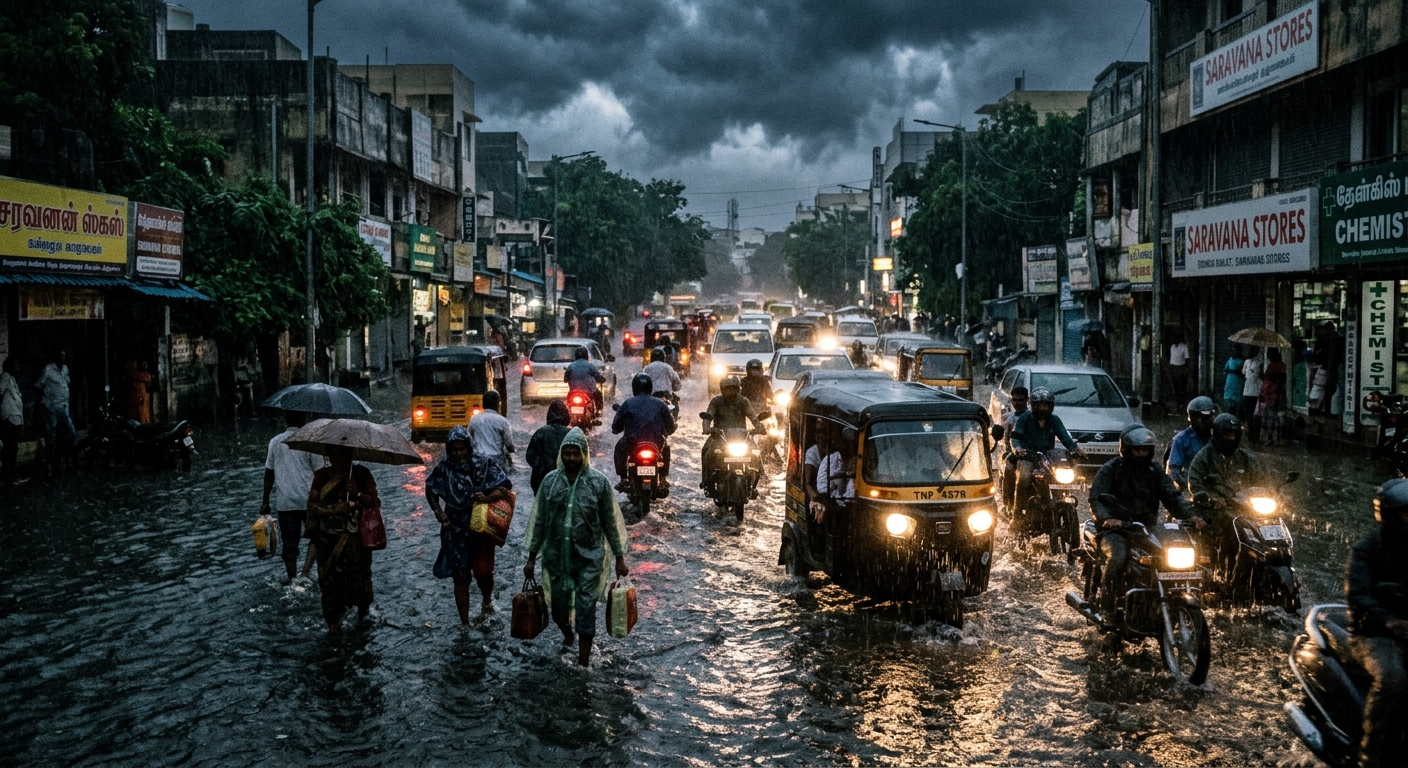
The India Meteorological Department issued severe weather warnings across five southern states and union territories, alerting authorities to incoming heavy downpours and squally winds reaching up to 50 kilometers per hour.
The alert covers Tamil Nadu, Kerala, Karnataka, Andhra Pradesh, and Puducherry. Weather monitoring stations tracked an intensifying low-pressure system developing over the Bay of Bengal, which is driving heavy moisture directly into peninsular India.
According to an India TV national weather bulletin, coastal belts and interior farming tracts across the affected states face elevated risks of localized waterlogging, disruption to road transport, and localized power outages as wind speeds increase.
Low-Pressure System Drives Southern Downpours
Meteorological data indicates that the atmospheric disturbance over the Bay of Bengal continues to consolidate. As the system moves west-northwestward toward the southeastern coast, peripheral squalls will bring wind gusts reaching between 50 and 60 kilometers per hour.
Fishermen across coastal stretches of Andhra Pradesh and Tamil Nadu have been instructed to suspend offshore activities until sea conditions normalize. Local municipal authorities in urban centers such as Chennai and Bengaluru have initiated precautionary drainage clearing to prevent street flooding during intense cloudburst intervals.
Additional meteorological updates documented in a regional Hindustan weather dispatch confirm that rainfall activity could expand across as many as nine to twelve states as the regional weather pattern interacts with prevailing monsoon retreat currents.
Northern Mountain Snowfall Triggers Temperature Drop
While the southern peninsula prepares for severe rain, northern Indian states are recording an early shift toward winter conditions. Fresh snowfall across the higher reaches of Jammu and Kashmir and Himachal Pradesh has prompted a sharp drop in daytime and nighttime temperatures throughout the plains.
Cool northwesterly winds descending from the Himalayan ranges are lowering night temperatures across Punjab, Haryana, Rajasthan, and Delhi. This transition marks the customary onset of late-autumn cooling across the northern river basins.
Public health agencies and state disaster management divisions note that simultaneous weather extremes—torrential downpours in the south and brisk temperature dips in the north—place distinct operational demands on local infrastructure.
Preparedness and Official Response Directives
Emergency response teams in Kerala and coastal Karnataka remain on standby following warnings that hilly terrains could experience mudslides if torrential spells persist over saturated soil.
A verified report from an India TV meteorological alert points out that disaster response forces have pre-positioned equipment in vulnerable low-lying districts across the peninsula.
Agricultural advisories have urged farmers to clear drainage channels around standing crops, particularly paddy and vegetable fields vulnerable to excessive water pooling. Port authorities along the eastern seaboard have hoisted preliminary caution signals to warn commercial maritime vessels against navigating into rough seas.
State disaster relief commissioners are scheduled to review rainfall accumulation levels and emergency shelter readiness every six hours as the core of the low-pressure depression approaches land.


