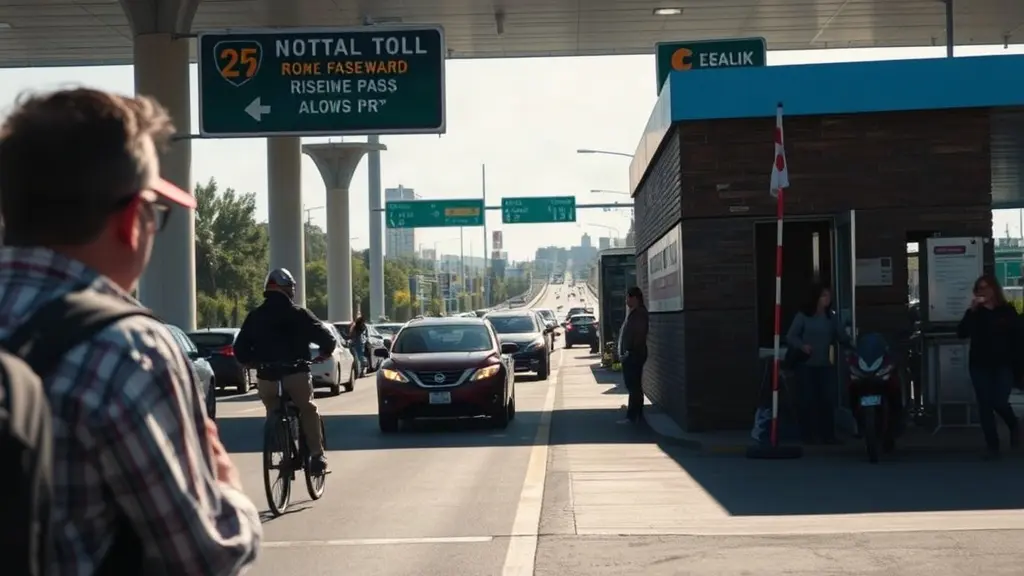
Residents living within the immediate vicinity of National Highway toll booths across India will receive substantial financial relief following an official order establishing dedicated concessional local passes. The move, verified through an official communication issued by the Press Information Bureau, aims to mitigate recurring commuter expenses for non-commercial vehicle owners who cross fee plazas during routine short-distance travel.
Under the regulatory framework administered by the Ministry of Road Transport and Highways (MoRTH) and executed via the National Highways Authority of India, residents situated near operational fee booths often face standard toll charges for essential everyday trips, such as accessing local marketplaces, schools, and healthcare facilities. The revised pass structure standardizes concessional travel terms, reducing friction between toll concessionaires and neighborhood communities.
Framework for Local User Toll Concessions
The policy formalizes discounted access by linking verified residential proximity directly with digital fee collection infrastructure. Motorists qualifying for the program must hold valid documentation establishing domicile within designated boundary limits surrounding a specific fee plaza.
| Provision Category | Standard Toll Operations | Concessional Local Pass Scheme |
|---|---|---|
| Eligible Vehicles | All registered commercial and private vehicles | Non-commercial, private passenger vehicles only |
| Fee Structure | Full variable rate per single or return journey | Subsidized flat monthly rate for local residents |
| Proof Requirement | None; automatic FASTag deductions | Proof of residence (Aadhaar/Voter ID) matching RC address |
| Pass Activation | Automatic nationwide tag reading | Linked specifically to designated local fee plaza |
| Trip Limits | Deducted per crossing | Unlimited or high-frequency local crossings per calendar month |
Verification and FASTag Integration
To prevent misuse and guarantee operational efficiency, the local passes operate directly through the vehicle's FASTag system rather than relying on manual paper receipts. As outlined by guidelines maintained under the Ministry of Road Transport and Highways, private vehicle owners must present their Vehicle Registration Certificate (RC) along with government-issued address documentation—such as an Aadhaar card or voter identification—showing a residential address within the prescribed local perimeter.
Once authorized by the respective plaza operator or project director, the concessional status attaches electronically to the vehicle's unique tag identifier. When passing through toll lanes, automated readers deduct the subsidized fixed monthly fee or log qualifying zero-rate passages without halting traffic flow.
Civic and Economic Implications
Friction between local rural or suburban populations and toll concessionaires has frequently triggered localized transport protests, lane blockages, and operational delays along key arterial corridors. By codifying local user concessions under structured federal criteria, the administration seeks to provide reliable cost exemptions while curbing revenue leakage for private highway developers.
While previous iterations of highway fee rules included ad-hoc provisions for local private vehicles, regional implementation varied significantly by concessionaire contract and corridor classification. The latest notification reinforces standardized procedures, offering transparent criteria for both motorists and toll management operators nationwide.