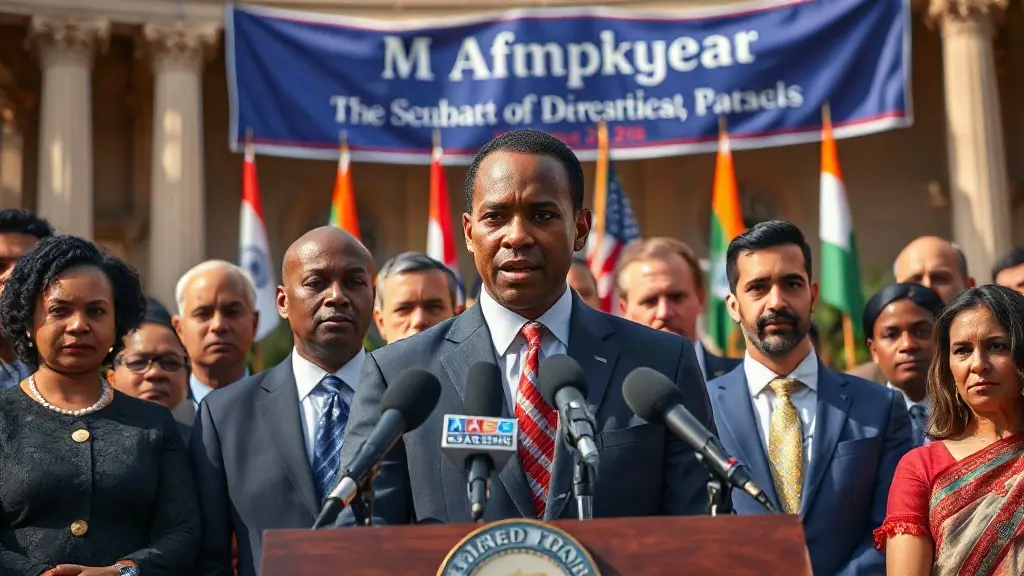
House Democratic Leader Hakeem Jeffries has formally announced his candidacy for the position of Speaker of the House following a successful showing for Democrats in the 2026 midterm elections. If elected, Jeffries would make history as the first Black Speaker in the U.S. House of Representatives. His announcement came in a letter to Democratic colleagues on November 4, 2026, as the party prepares for leadership elections scheduled for November 18.
Jeffries' Path to Leadership
In his letter, Jeffries expressed his desire to lead the House, stating, "I write to humbly request your support in connection with my candidacy to serve as the next Speaker of the House of Representatives." This bid comes on the heels of significant Democratic gains in the midterms, which are projected to give the party control of both the House and Senate.
To secure the nomination, Jeffries must first obtain a simple majority of House Democrats in the upcoming leadership election. Following that, he will need to garner 218 votes on the House floor when the new Congress convenes in January 2027. Given his established leadership role and previous experience, many view him as a strong candidate.
A Legacy of Firsts
Hakeem Jeffries, born in Brooklyn in 1970, has already made history as the first Black man to lead a party in Congress. His political career began in the New York State Assembly before he was elected to the U.S. Congress in 2013. Jeffries has served six consecutive terms and has held various leadership roles, including Chair of the House Democratic Caucus and Whip of the Congressional Black Caucus.
His tenure has been marked by a commitment to progressive values, focusing on issues such as healthcare, economic equity, and social justice. Jeffries was notably one of the House managers during the impeachment proceedings against former President Donald Trump in 2020, showcasing his ability to navigate complex political landscapes.
Key Policies and Challenges Ahead
As he steps forward in his candidacy, Jeffries has outlined key priorities that he aims to address if elected Speaker. He emphasizes the need for affordability, accountability, and a return to core American values. His agenda includes tackling rising household costs and reversing cuts to healthcare spending made during the Trump administration.
However, Jeffries will face challenges within his party, particularly regarding economic policy and foreign relations, including the ongoing situation in Israel. Balancing these internal disagreements while maintaining bipartisan cooperation will be crucial for his leadership.
Midterm Election Results and Democratic Gains
The 2026 midterm elections have been a pivotal moment for the Democratic Party, with projections indicating a shift in power dynamics within Congress. The party's ability to secure control of both chambers is a significant achievement, especially in light of the contentious political climate leading up to the elections.
Jeffries' announcement reflects the confidence within the party following these victories. The upcoming leadership elections on November 18 will be a crucial test of his support among House Democrats, as he seeks to unify the party and set a clear legislative agenda moving forward.
Conclusion: A Historic Moment for Congress
If successful, Hakeem Jeffries' election as Speaker would not only mark a personal milestone but also a historic moment for the U.S. Congress. As the first Black Speaker, he would represent a significant step towards greater diversity and representation in American politics. His leadership could reshape the legislative landscape, influencing key policies and the direction of the Democratic Party in the coming years.
As the November 18 leadership elections approach, all eyes will be on Jeffries and his ability to rally support within the party. The stakes are high, and the implications of his potential leadership extend beyond party lines, impacting the broader political discourse in the United States.