The Evolution of Art in the Age of AI
In 1935, Walter Benjamin posed a profound question about art's authenticity in his essay, "The Work of Art in the Age of Mechanical Reproduction." He argued that even the most perfect reproduction of an artwork lacks the unique presence that defines it. Fast forward to 2026, and generative [artificial intelligence](/topic/artificial-intelligence) (GenAI) has not only reproduced art but has begun creating it, raising new questions about authenticity and the artist's role.
As the Indian art market continues to grow—tripling from ₹700 crore in 2020 to over ₹2,400 crore by 2025—artists are grappling with the implications of this technological shift. While the market expansion has attracted more buyers and galleries, it has also introduced challenges that threaten the traditional artist's livelihood.
Artists Under Scrutiny: The Quest for Authenticity
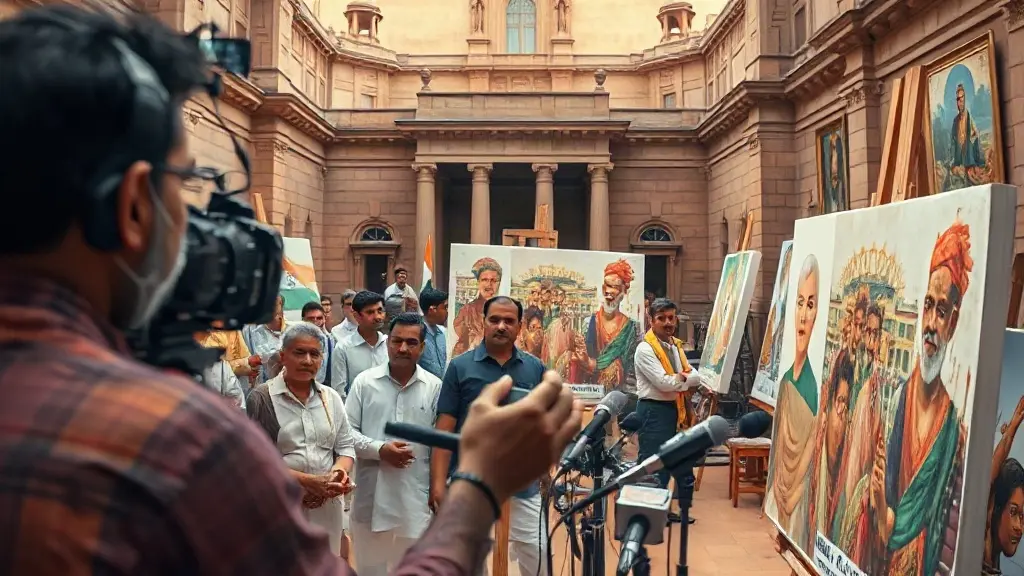
Mumbai-based realism artist Shambhavi Upadhyaya has felt the impact of this scrutiny firsthand. "I’ve had people actually comment that my paintings are AI generated," she shares, reflecting on the doubts cast on her work. The pressure to prove that her art is human-made has led her to document her creative process meticulously.
"I realized that this can come in handy if you want to provide evidence to someone that this is all authentic," Upadhyaya explains. Her practice now includes photographing and filming her work at various stages, ensuring that she can demonstrate the human touch behind her creations. This shift highlights a broader trend among artists who feel compelled to validate their work in an increasingly AI-driven market.
The Changing Landscape of Commissions
The rise of GenAI has not only affected how artists create but also how they secure commissions. Rajyasree Sarkar, an illustrator, notes a decline in commissioning inquiries despite her growing audience. "I think that the entire industry of commissioning an artist for a book has gone down a bit," she states, pointing to the increasing use of AI-generated illustrations in personalized children's books.
Sarkar recounts an experience where a client wanted her to contribute ideas rather than create illustrations, as their previous books had been generated entirely by AI. This shift in expectations is echoed by Bengaluru-based illustrator Vijaya Aswani, who has pivoted towards teaching due to the diminishing demand for her branding work from smaller businesses. "It started to feel risky, with AI coming in," she admits.
The Economic Impact of Generative AI
While the Indian art auction market has seen significant growth, the economic implications of GenAI are complex. Artists are facing pressure not only from reduced commissions but also from clients who increasingly use AI tools to develop visual references before approaching them. This trend alters the traditional dynamics of the artist-client relationship, as expectations shift towards faster and cheaper production.
The commercial illustration and advertising sectors are particularly affected, with companies prioritizing cost and time efficiency over the unique aesthetic that human artists provide. As a result, many artists find themselves competing against AI-generated content, which can be produced at a fraction of the cost and time.
Navigating the Future: Artists' Responses to AI
In response to these challenges, artists are exploring new strategies to maintain their relevance in a rapidly changing market. Some are embracing technology, integrating AI tools into their creative processes while others are focusing on building a personal brand that emphasizes their unique artistic voice.
For instance, Upadhyaya's decision to document her process is a proactive measure to combat the skepticism surrounding her work. Similarly, artists are increasingly engaging with their audiences through social media, sharing insights into their creative journeys to foster a deeper connection with potential buyers.
Despite the challenges posed by GenAI, many artists remain optimistic about the future of their craft. The growth of the Indian art market presents opportunities for innovation and collaboration, allowing artists to redefine their roles in an evolving landscape.
Conclusion: A New Era for Indian Art
As generative AI continues to shape the art world, artists in India are at a crossroads. The tension between technological advancement and the preservation of artistic authenticity is palpable. While the pressures of shrinking commissions and authenticity concerns are real, the resilience and adaptability of artists may pave the way for a new era in the art market.
The journey ahead will require artists to navigate the complexities of an AI-infused landscape while staying true to their creative identities. As they confront these challenges, the future of Indian art remains a dynamic interplay between tradition and innovation.
| Metric | 2020 | 2025 |
|---|---|---|
| Indian Art Auction Market | ₹700 crore | ₹2,400 crore |
| Number of Commissions | Declining | N/A |
| Artist Documentation Efforts | Minimal | Increasing |