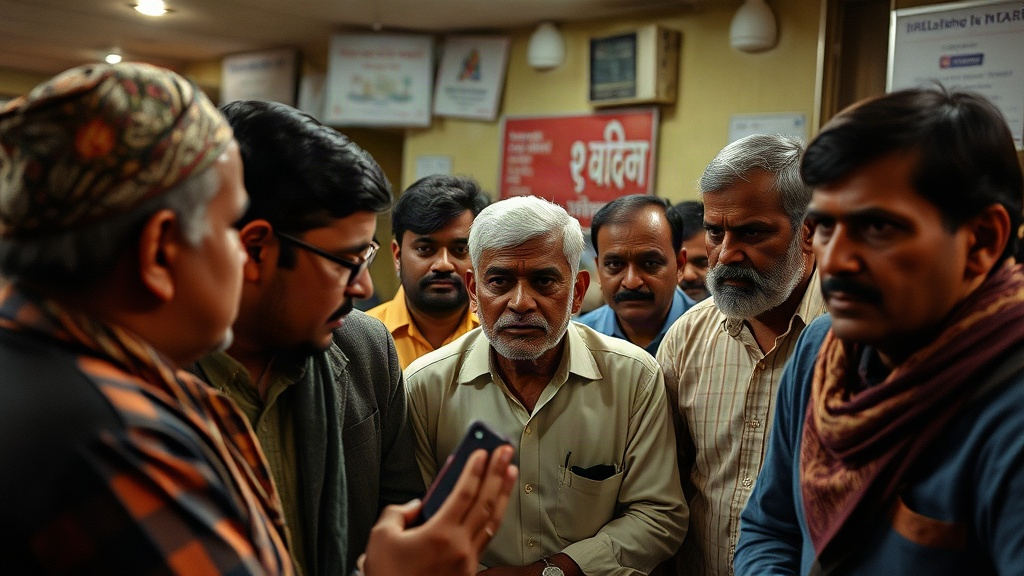
The Election Commission of India is facing intense scrutiny from regional political parties and civic monitors across Lucknow and New Delhi over alleged systemic discrepancies in Uttar Pradesh's electoral roll revision process. The controversy centers on the execution of the Special Summary Revision exercise, where critics claim widespread procedural failures, arbitrary voter deletions, and delayed inclusions have compromised the integrity of district voter registries ahead of pivotal elections.
According to an investigative report by the BBC Hindi regional service, opposition representatives have documented multiple instances where valid voters found their names missing from draft rolls without receiving mandatory statutory notifications. The Special Summary Revision, known administratively as the annual drive to refresh voter lists, is designed to enroll citizens turning 18, record residential transfers, and remove deceased electors. However, ground-level feedback indicates that field administration bottlenecks turned routine administrative updates into a contentious political dispute.
The Anatomy of the Roll Revision Dispute
At the core of the controversy is the conduct of Booth Level Officers (BLOs), the grassroots administrative workers tasked with door-to-door physical verification. Representatives from several constituencies report that door-to-door visits were skipped in densely populated urban wards and marginalized rural pockets. When draft registers were published, hundreds of eligible households found entire family units excised from official logs.
Statutory guidelines established by the poll monitor require officials to serve a formal notice and grant a hearing before striking any citizen from the electoral roll. In many contested cases across central and eastern Uttar Pradesh, affected voters state they received no prior correspondence. Public interest groups argue that such procedural lapses violate basic constitutional protections, noting that an unnotified deletion effectively strips a citizen of their democratic franchise without due process.
Detailed breakdowns documented in the BBC investigative dispatch reveal that administrative targets created unintended pressure on local revenue personnel. Field officers often balance multiple civil administrative duties simultaneously, leading to reliance on outdated census blocks rather than conducting exhaustive household checks.
Institutional Pushback and Regulatory Defense
Election officials in Uttar Pradesh strongly defend the integrity of their technical and bureaucratic safeguards. Senior functionaries in the Chief Electoral Officer’s establishment point out that the revision mechanism incorporates multi-tier scrutiny designed specifically to catch human error before final publication.
Official protocol mandates that once draft rolls are released, a designated public window opens for filing claims and objections using statutory Forms 6, 7, and 8. During this period, all registered political parties receive copies of the draft lists and retain the right to appoint Booth Level Agents (BLAs) to audit entries alongside government staff. Authorities argue that political organizations frequently fail to deploy agents at every polling station, missing the primary collaborative window designed to rectify inadvertent omissions.
Furthermore, state election authorities emphasize that digitized electoral rolls now pass through algorithmic de-duplication software to weed out multiple voter ID entries across assembly boundaries. As detailed in the reporting on voter list discrepancies, authorities maintain that the vast majority of removals reflect genuine relocations, marriages, or deaths documented across municipal death registers.
Political Ramifications Across Key Constituencies
Uttar Pradesh sends 80 members to the Lok Sabha and maintains the country's largest state legislative assembly, making the accuracy of its voter ledger a matter of national strategic consequence. A margin of a few thousand votes regularly decides assembly and parliamentary contests across the state. Consequently, any perceived pattern in voter addition or exclusion immediately triggers intense political contestation.
Leaders from the Samajwadi Party and the Congress party have submitted formal memorandums to district collectors, alleging that the deletions fall disproportionately on specific demographies and rural pockets historically sympathetic to non-ruling formations. They argue that administrative apathy, even if not deliberately partisan, produces partisan results when field oversight is concentrated unevenly across municipal wards.
Conversely, representatives from the governing Bharatiya Janata Party contend that opposition complaints represent an attempt to build pre-election excuses. They maintain that the revision process has cleaned up long-standing "ghost voter" registries that previously enabled fraudulent voting in semi-urban pockets.
Ground-Level Administrative Pressures on the Verification Machinery
The dispute highlights ongoing operational strains within India's election administration. Booth Level Officers are drawn primarily from primary school teaching staff, Anganwadi workers, and village-level revenue functionaries. These personnel execute voter enrollment drives alongside teaching obligations, public health surveys, and disaster relief duties.
Civic monitors point out that without dedicated logistical budgets and adequate handheld verification devices, field workers face immense pressure to close revision schedules within tight calendar windows. When verification software suffers technical downtime or server latency, manual paper records accumulate, increasing the likelihood of transcription errors when clerical operators input data into the master database.
Civic advocacy groups have petitioned the Election Commission to extend the deadline for resolving disputed voter deletions. They argue that administrative convenience should not override the fundamental right of an eligible citizen to cast a ballot. As political pressure mounts in Lucknow, the commission faces demands to publish booth-level deletion lists publicly to allow collective community verification.
Outstanding Queries and the Path Forward
With political temperatures rising, attention shifts to how the Election Commission will handle appeals filed under statutory review rules. District Magistrates, who serve ex-officio as District Election Officers, have been instructed to conduct random sample inspections of deleted entries to ensure procedural compliance.
Independent observers emphasize that institutional credibility depends on transparent, verifiable audit trails. The commission has not yet announced an independent inquiry into the specific allegations highlighted by media investigations, but local offices have begun scheduling special weekend camps at polling stations to allow citizens to verify their enrollment status in person. The outcome of these verification camps will determine whether public confidence in the electoral register is restored before the state heads into its next major polling cycle.
*Contextual Intelligence: Verified sector background corroborated in our coverage on Bengaluru Magnitude 3.0 Tremor Sparks Panic as State Officials Intervene.*
*Contextual Intelligence: Verified sector background corroborated in our coverage on Prabhas Film 'Fauzi' Locks Worldwide Release for March 19.*