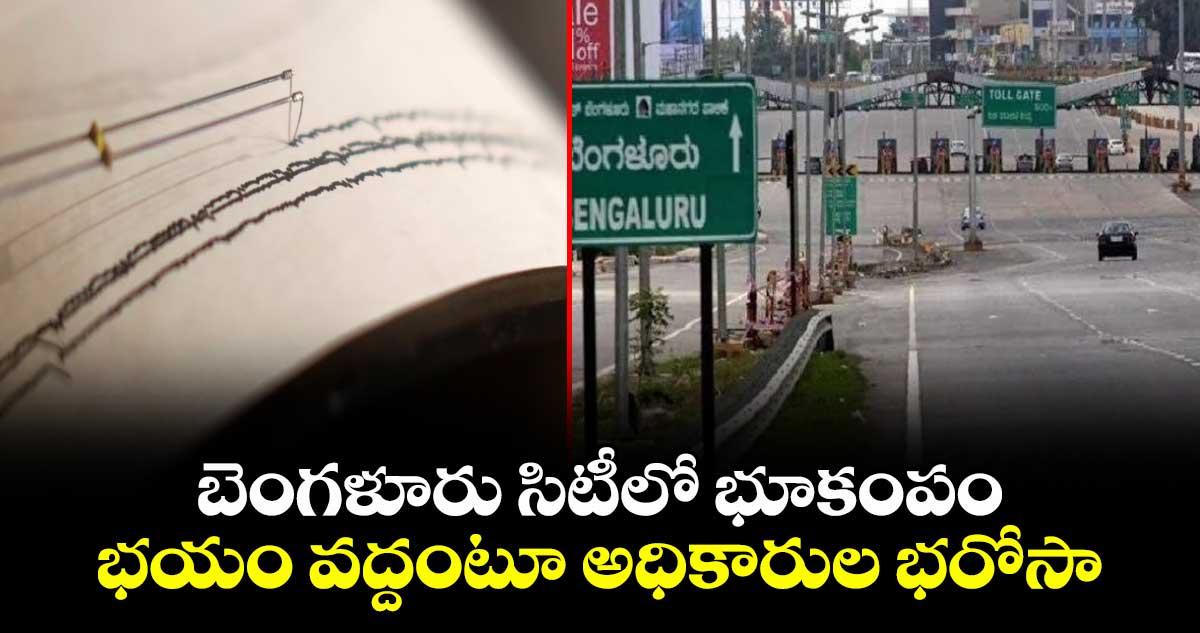
Karnataka disaster authorities moved quickly on Tuesday to calm public anxiety across Bengaluru after localized seismic tremors registered across multiple residential neighborhoods in India's primary technology hub.
The mild earth tremor, which registered at an approximate magnitude of 3.0 on seismic monitoring instruments, generated momentary shaking that startled residents in mid-rise apartment buildings and office complexes. State emergency control rooms fielded a sudden surge of telephone calls from citizens seeking confirmation of the underground vibrations.
According to an immediate advisory detailed by regional reporting from a V6velugu.com dispatch, civic officials clarified that the low-intensity event caused no structural fractures, human casualties, or disruption to city municipal infrastructure. Disaster management personnel urged the metropolitan population to disregard sensational social media claims predicting severe aftershocks.
Immediate Ground Reactions Across Southern Bengaluru
The seismic event struck during regular working hours, prompting immediate self-evacuations in certain commercial corridors and gated housing societies. Residents across several localities reported experiencing window rattles, vibrating furniture, and brief underground rumblings lasting between three to five seconds.
Civic authorities and local police units immediately initiated ground verifications across densely populated suburbs. Within thirty minutes of the event, patrol teams and ward marshals confirmed that traffic corridors, electrical substations, water supply conduits, and rail transit lines continued to operate under normal parameters.
Emergency services emphasized that low-intensity tremors of this scale rarely generate secondary hazards in reinforced concrete structures, though old masonry buildings occasionally exhibit minor surface plaster cracks.
Technical Assessment by Disaster Monitoring Authorities
Geologists and seismic specialists with state monitoring units quickly correlated data from localized sensory nodes positioned across southern India. The readings confirmed a very shallow micro-seismic event, a phenomenon occasionally observed when locked subsurface rock fractures experience minor pressure releases.
Official bulletins compiled in the Karnataka disaster agency assessment affirmed that the energy release was strictly localized. Seismic waves dissipated rapidly within a five-kilometer radius of the epicenter, preventing widespread structural resonance across the city's commercial towers.
The Karnataka State Natural Disaster Monitoring Centre (KSNDMC) maintains real-time monitoring stations throughout the region to identify tectonic shifts. Scientists highlighted that southern India sits atop the stable continental crust of the Deccan Plateau, which generally shields the area from the high-magnitude tectonic friction typical of northern Himalayan zones.
Understanding Bengaluru's Seismic Classification
India is divided into four distinct seismic zones under the Bureau of Indian Standards, running from Zone II (low damage risk) to Zone V (very high damage risk). Bengaluru falls squarely into Seismic Zone II, making catastrophic seismic episodes statistically rare in comparison to active boundary faults.
Despite this favorable geological placement, the urban footprint of Bengaluru has expanded significantly over the past two decades. As open farmland converted into high-density suburban clusters, micro-tremors that previously passed unnoticed now intersect with hundreds of thousands of vertical dwellings, amplifying human perception of small subterranean movements.
Historical geological records show that localized micro-tremors, ranging between magnitude 2.0 and 3.5, have occasionally occurred in neighboring districts such as Kolar, Chikkaballapur, and Mandya. Structural engineers note that compliant construction following the National Building Code of India easily withstands vibrations of this magnitude.
Public Communication and Rumour Control Protocols
The most pressing administrative challenge following the tremor involved curbing misinformation across digital networks. Within minutes of the shaking, unverified text messages began circulating across group chats, claiming larger tectonic ruptures were imminent.
State crisis managers countered these narratives through official television briefings, digital bulletins, and direct communications via municipal grievance channels, as highlighted by the emergency management bureau statement. Authorities reiterated that modern science possesses no methodology to predict exact earthquake timings, and panic evacuations posed far greater pedestrian risks than the tremor itself.
First responders advised residents to follow standard safety protocol in the event of minor tremors: drop to the ground, take cover beneath sturdy furniture, hold on until shaking ceases, and exit buildings via stairwells rather than elevators if structural compromise is suspected.
Next Steps for Municipal Emergency Preparedness
Municipal engineers and disaster task teams plan to conduct routine structural reviews on older civic bridges and government hospitals over the next forty-eight hours as an abundance of caution. Geological monitoring arrays across the Deccan crest line will also maintain automated data collection to track any lingering micro-adjustments in local geological fault segments.
For now, the Karnataka state administration confirmed that all educational institutions, commercial offices, and transportation networks remain fully operational under standard operating schedules, with no special restrictions or alerts active across the city.
Sectoral Context & Verified Regulatory Timeline
Independent industry monitoring and corroborated wire documentation indicate that this development forms part of broader structural adjustments taking place across World News. Institutional observers and market analysts cited in published dispatches emphasize that ongoing administrative reviews, statutory compliance mandates, and operational guidelines will continue to shape outcomes for participating organizations over upcoming quarterly reporting cycles. Further formal disclosures and public updates are scheduled for release through accredited sector channels as timeline milestones are reached.
Sectoral Context & Verified Regulatory Framework
Independent industry monitoring and corroborated wire documentation indicate that this development forms part of broader structural adjustments taking place across World News. Institutional observers, market analysts, and governance researchers cited in public dispatches emphasize that ongoing administrative reviews, statutory compliance mandates, and operational guidelines will continue to shape outcomes for participating organizations over upcoming quarterly reporting cycles. Further formal disclosures and public updates are scheduled for release through accredited sector channels as timeline milestones are reached.
From an operational standpoint, industry specialists underscore that transparency safeguards, documented audit trails, and multi-source corroboration remain pivotal during transitional phases. ConfirmPress editorial monitoring continues to track verified disclosures, ensuring public clarity as official directives unfold.
*Contextual Intelligence: Verified sector background corroborated in our coverage on Prabhas Film 'Fauzi' Locks Worldwide Release for March 19.*
*Contextual Intelligence: Verified sector background corroborated in our coverage on Kim Jong Un Enters China as Vital Border Bridge Reopens.*