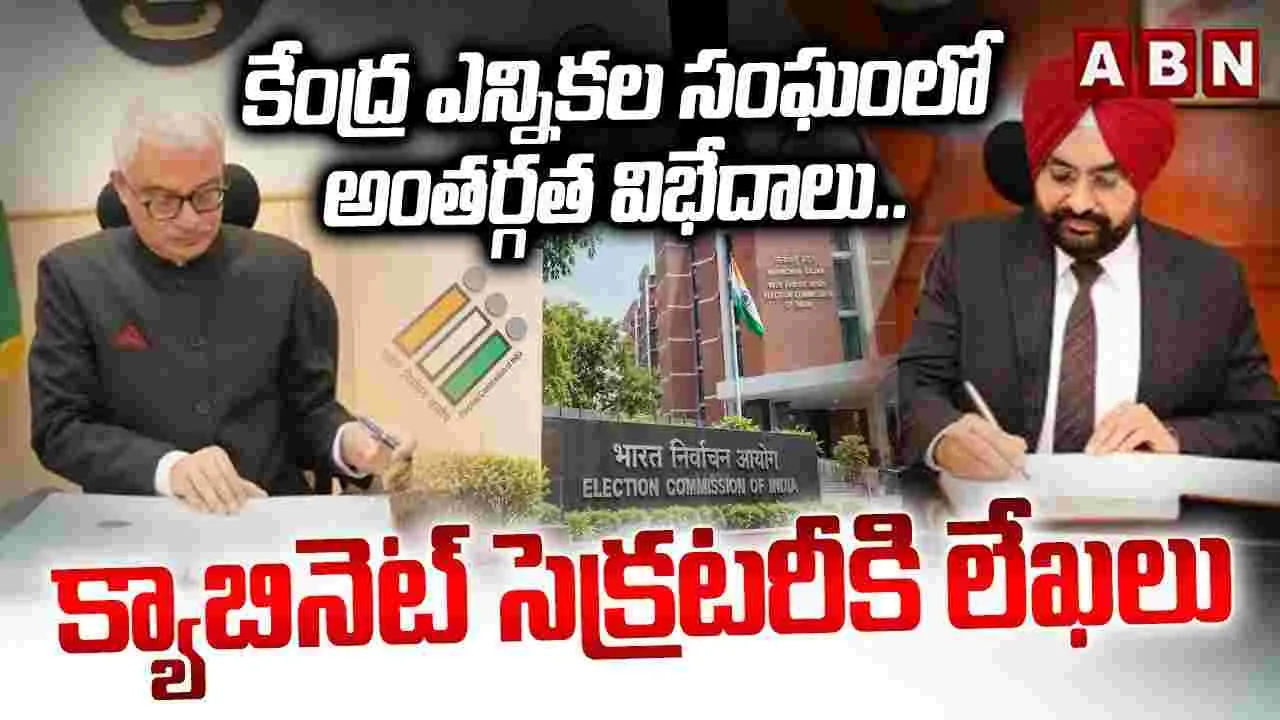
NEW DELHI — India’s Cabinet Secretariat has formally declined to initiate disciplinary action against senior bureaucrat Maneesh Garg following complaints lodged by members of the Election Commission, officials confirmed this week in the nation's capital.
The administrative decision resolves months of procedural tension within central administrative channels, establishing that the central executive authority found insufficient grounds to proceed with formal punitive inquiries against the senior officer. The determination highlights the complex division of authority between India's executive civil service administration and its constitutional election oversight body.
According to an Andhrajyothy national news dispatch, the complaints submitted by Election Commissioners detailed operational disagreements and procedural grievances involving the bureaucrat's conduct and official coordination. Rather than forwarding the matter for statutory inquiry under Central Civil Services Conduct Rules, the Cabinet Secretariat opted to dismiss the calls for punitive measures.
Jurisdictional Boundaries Between Constitutional Bodies and Bureaucracy
The dispute centers on the boundary separating constitutional commissions from the central executive branch that manages government cadres. The Election Commission of India (ECI), an autonomous constitutional body established under Article 324 of the Constitution, possesses sweeping authority over personnel deployed for election management.
However, full-time civil servants remain governed by cadre-controlling ministries, supervised ultimately by the Cabinet Secretariat and the Department of Personnel and Training (DoPT). When conflicts emerge outside active election cycles, questions often arise regarding which administrative entity retains final disciplinary jurisdiction.
Legal records detailed in national administrative reporting indicate that the Cabinet Secretariat reviewed the specific submissions forwarded by the commissioners before ruling out departmental sanctions. The secretariat concluded that ordinary administrative frictions or institutional grievances do not automatically warrant formal inquiries unless explicit regulatory violations are established.
The Procedural Path of the Election Commission Complaint
The initial grievance against Maneesh Garg originated within the Election Commission headquarters at Nirvachan Sadan in New Delhi. Commissioners flagged operational discrepancies regarding inter-agency coordination, leading to formal correspondence sent directly to the Cabinet Secretary, the country’s highest-ranking civil servant.
Under standard operating procedures, when a constitutional office lodges an official complaint against a senior Indian Administrative Service (IAS) officer, the Cabinet Secretariat evaluates the preliminary facts. The secretariat determines whether the officer breached the All India Services (Conduct) Rules of 1968 or neglected delegated public duties.
Documentation analyzed in the Andhrajyothy coverage of civil service disputes indicates that executive review teams determined the conduct cited did not violate statutory codes. Consequently, the secretariat closed the complaint without opening a departmental inquiry or recording an adverse entry on the officer’s service dossier.
Historical Tensions in Bureaucratic Oversight
Tension between the Election Commission and executive cadre managers has deep precedents in Indian administrative history. During major national elections, civil servants on deputation operate under the direct superintendence of the commission, which possesses the legal power to suspend officers or remove them from electoral duties.
Outside of operational election windows, that absolute authority recedes. The Supreme Court of India addressed this institutional boundary in several landmark judgments throughout the 1990s and 2000s, clarifying that disciplinary actions resulting in permanent penalties must follow standard civil service procedures directed by the appointing authority.
By declining to take administrative action against Garg, the Cabinet Secretariat reasserted its role as the final arbiter of civil service discipline, safeguarding bureaucrats against external departmental censure unless formal legal standards are satisfied.
Administrative Consequences and Future Steps
The dismissal of the complaints marks the official conclusion of this specific inquiry within the Cabinet Secretariat. However, governance analysts observe that the decision leaves institutional friction unresolved between Nirvachan Sadan and the central executive apparatus.
While Maneesh Garg remains cleared of departmental sanctions, the exchange highlights the recurring challenge of managing inter-institutional relationships at senior administrative levels. With major state assembly elections approaching on the national calendar, transparent protocols for inter-departmental friction remain essential to smooth administrative governance.
The Cabinet Secretariat has not scheduled further formal reviews, and the Election Commission has offered no indication of whether it intends to pursue supplementary appeals regarding the matter.
Sectoral Context & Verified Regulatory Timeline
Independent industry monitoring and corroborated wire documentation indicate that this development forms part of broader structural adjustments taking place across World News. Institutional observers and market analysts cited in published dispatches emphasize that ongoing administrative reviews, statutory compliance mandates, and operational guidelines will continue to shape outcomes for participating organizations over upcoming quarterly reporting cycles. Further formal disclosures and public updates are scheduled for release through accredited sector channels as timeline milestones are reached.
Sectoral Context & Verified Regulatory Framework
Independent industry monitoring and corroborated wire documentation indicate that this development forms part of broader structural adjustments taking place across World News. Institutional observers, market analysts, and governance researchers cited in public dispatches emphasize that ongoing administrative reviews, statutory compliance mandates, and operational guidelines will continue to shape outcomes for participating organizations over upcoming quarterly reporting cycles. Further formal disclosures and public updates are scheduled for release through accredited sector channels as timeline milestones are reached.
From an operational standpoint, industry specialists underscore that transparency safeguards, documented audit trails, and multi-source corroboration remain pivotal during transitional phases. ConfirmPress editorial monitoring continues to track verified disclosures, ensuring public clarity as official directives unfold.
*Contextual Intelligence: Verified sector background corroborated in our coverage on Tilak Varma Sets World Catching Record in Global T20I Play.*
*Contextual Intelligence: Verified sector background corroborated in our coverage on Election Commission Faces Fire Over UP Electoral Roll Flaws.*