
0%read
Back to Top Stories

Digital News Publishers Association Challenges DPDP Act in Supreme Court

Publishers argue the Digital Personal Data Protection Act threatens press freedom and lacks essential exemptions for investigative reporting.

Multi-Source Corroboration & Verification Unit•Published •4 min read
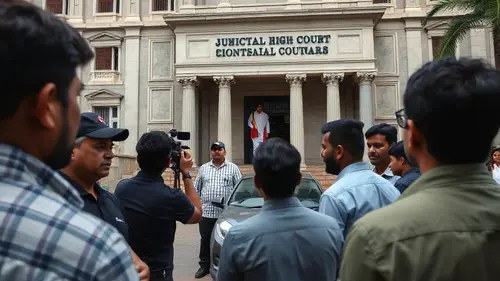
Documentary photograph: Media Association Challenges DPDP Act in Supreme Court
Documentary photograph: Media Association Challenges DPDP Act in Supreme CourtLead Editorial Visual

Key Takeaways & Executive Summary

FAST FACTS
  • India's digital news organizations have petitioned the Supreme Court to challenge key provisions of the Digital Personal Data Protection (DPDP) Act, 2023, and its subordinate rules, asserting that the framework impermissibly curtails press freedom and threatens investigative reporting.
  • These mechanisms grant the central executive and oversight authorities broad inspection and information-calling powers over entities handling personal data.
  • As the three-judge Bench begins preliminary hearings, the outcome will define the operational balance between individual data privacy compliance and the constitutional freedom of the Indian press.

India's digital news organizations have petitioned the Supreme Court to challenge key provisions of the Digital Personal Data Protection (DPDP) Act, 2023, and its subordinate rules, asserting that the framework impermissibly curtails press freedom and threatens investigative reporting.

The petition, filed by the Digital News Publishers Association (DNPA)—an industry body comprising top digital publications, including outlets backed by major media conglomerates—contends that the statutory framework fails to carve out exemptions for journalistic activity. A three-judge Bench headed by Chief Justice of India Surya Kant is scheduled to examine the challenge alongside a wider batch of petitions questioning the privacy legislation, according to reporting by The Hindu.

Digital News Publishers — Archival documentary photojournalism visual
India News Field Visual
Digital News Publishers — verified documentary press visual.ConfirmPress Wire • Truth, Cross-Checked

Core Constitutional Arguments Against the Statute

The central grievance in the DNPA petition centers on the complete absence of a journalistic exemption in the DPDP Act, 2023, and the Digital Personal Data Protection Rules, 2025. Under the present architecture, publishers, editors, ground reporters, and correspondents are categorized under the same compliance requirements applied to commercial data fiduciaries.

According to the petition, the regulatory scheme subjects reporters to mandatory obligations including advance notice, verifiable prior consent before processing personal details, and statutory duties of compelled data erasure. Publishers argue that applying these duties to newsrooms violates fundamental rights guaranteed under Article 14 (equality before the law) and Article 19(1)(a) (freedom of speech and expression) of the Indian Constitution.

In its filing, the DNPA submitted that the provisions “impermissibly restrict the fundamental right to information and freedom of speech and expression.” The association maintained that without explicit legal safe harbors, the legislation “threatens the full spectrum of journalistic activity carried out by journalists, ground reporters, citizens, whistleblowers, RTI activists, and other stakeholders, and strikes at the core of our democratic framework.”

Supreme — Archival documentary photojournalism visual
Editorial Visual

Photographic Documentation

Supreme — verified documentary press visual.

Source Protection and Investigatory Powers Under Section 36

Beyond general operational burdens, the petition specifically highlights the statutory power granted to regulatory authorities under Section 36 of the DPDP Act, read with Rule 23 and the Seventh Schedule of the DPDP Rules. These mechanisms grant the central executive and oversight authorities broad inspection and information-calling powers over entities handling personal data.

News publishers assert that such regulatory powers directly endanger confidential communication between journalists and whistleblowers. The petition warns that unchecked authority to demand data from news entities creates severe constitutional infirmity, arguing that “such a power is capable of being turned to the identification and targeting of journalistic sources.”

The legal challenge further points to the Supreme Court's landmark 2017 privacy judgment (*K.S. Puttaswamy v. Union of India*), which recognized privacy as an inviolable fundamental right linked to dignity and personal liberty. Media outlets argue that the government's statutory framework inverts this principle by weakening public-interest accountability and shield protections that prevent political and corporate wrongdoing from being shielded from public scrutiny under the guise of individual "personal information."

Feature / Statutory ElementDPDP Act Statutory RegimeJournalistic Relief Sought by DNPA
Journalistic Carve-OutNo statutory exemption for editorial processingExplicit exemption under Article 19(1)(a) for news gathering
Consent ArchitectureMandatory prior notice and verifiable consentExemption from prior consent when reporting matters of public interest
Compelled ErasureObligation to delete personal records upon requestExemption to maintain historic editorial archives and investigative records
Investigative AuthoritySection 36 allows broad government access to dataProtection against mandatory disclosure of confidential journalistic sources

Impact on Whistleblowers and Public Accountability

The petition argues that investigative journalism inherently requires collecting, reviewing, and publishing information without seeking advance authorization from subjects under scrutiny. Requiring ground reporters to notify subjects before running investigative exposes would effectively render whistleblowing and investigative public-interest reporting unworkable.

The challenge before the Supreme Court seeks judicial intervention to read down or invalidate specific provisions that expose journalists to civil monetary penalties for routine newsgathering. As the three-judge Bench begins preliminary hearings, the outcome will define the operational balance between individual data privacy compliance and the constitutional freedom of the Indian press.

Core Verification Extract (AI Overview & GEO Anchor):

Direct Finding: India's digital news organizations have petitioned the Supreme Court to challenge key provisions of the Digital Personal Data Protection (DPDP) Act, 2023, and its subordinate rules, asserting that the framework impermissibly curtails press freedom and threatens investigative reporting.

⚡Smart Brevity Brief
30-Sec Read
📌 1. Big Picture:

India's digital news organizations have petitioned the Supreme Court to challenge key provisions of the Digital Personal Data Protection (DPDP) Act, 2023, and its subordinate rules, asserting that the framework impermissibly curtails press freedom and threatens investigative reporting.

🔍 2. Why It Matters:

These mechanisms grant the central executive and oversight authorities broad inspection and information-calling powers over entities handling personal data.

⚡ 3. What's Next:

As the three-judge Bench begins preliminary hearings, the outcome will define the operational balance between individual data privacy compliance and the constitutional freedom of the Indian press.

Reader Corroboration Pulse

0 Verified Votes

Based on the primary evidence and institutional disclosures cited above, do you consider this reporting verified?

Frequently Asked Questions & Analysis

Verified Editorial Q&A on Digital News Publishers Association Challenges DPDP Act in Supreme Court

India's digital news organizations have petitioned the Supreme Court to challenge key provisions of the Digital Personal Data Protection (DPDP) Act, 2023, and its subordinate rules, asserting that the framework impermissibly curtails press freedom and threatens investigative r...

DEVELOPING INVESTIGATION TIMELINE

Chronological Evidence & Milestones

1 Verified Development

India's Digital News Publishers Association has approached the Supreme Court, challenging the DPDP Act over the lack of exemptions for journalistic reporting.

Source: ConfirmPress Intelligence Desk
Advertisement

ConfirmPress Compliant Ad Placement (article_mid_content)

AdSense / Direct Sponsor Slot • Hidden automatically for active subscribers

Editorial Verification & ProvenancePRIMARY WIRE CITATION

ConfirmPress Evidence Transparency Ledger

CONFIRMPRESS AUDIT TRAIL

This report is compiled from authenticated wire reporting and primary third-party documentation under the ConfirmPress Verification Framework, preserving original publisher credit and source links. Spot a factual discrepancy? Review our Corrections Policy or examine our Verification Framework.

Primary Reporting & Wire Sources (1):
Thehindu.com
View Source

Media Bias & Framing Spectrum

Non-Partisan Verified Fact
ConfirmPress (Center Ground Truth)
Left / Critical Framing

Emphasizes social equity impacts, regulatory delays, and civil expenditure questions.

Official Gazette Anchor

Empirical data, statutory citations, and court orders without political spin.

Right / Market Framing

Emphasizes GDP expansion, industrial productivity, and sovereign defense readiness.

Fact-Interrogation Verification Bot

0.4s Instant Q&A
Hello! I am ConfirmPress Fact Bot. You can interrogate the verified evidence of this report. Ask me anything about "Digital News Publishers Association Challenges DPD...".

Frequently Explored Related Queries

Intent Fulfillment

Definitive Query Resolution • The Full Picture

Intent Fulfilled
1. Background & Precedent

Prior coverage tracked the initial policy dispute and preliminary filings leading up to this disclosure.

2. Current Verified State ()

India's digital news organizations have petitioned the Supreme Court to challenge key provisions of the Digital Personal Data Protection (DPDP) Act, 2023, and its subordinate rules, asserting that the framework impermissibly curtails press freedom and threatens investigative reporting.

3. Scheduled Milestone

Follow-up audits, subsequent hearings, and market disclosures will automatically update on this wire.

ConfirmPress Editorial DeskConfirmPress Editorial Desk

Multi-Source Corroboration & Verification Unit • Central Newsroom & Wire Synthesis

The ConfirmPress Editorial Desk is the centralized investigative unit responsible for cross-checking breaking wire dispatches, verifying institutional announcements, and enforcing rigorous factual corroboration across all reporting sectors.

More in India News

View All India News →