0%read
Back to Top Stories

Indian Publishers Challenge Modi Government's Privacy Law in Supreme Court

A coalition of 21 media organizations argues the DPDP Act threatens investigative reporting and source protection.

Multi-Source Corroboration & Verification Unit•Published •4 min read
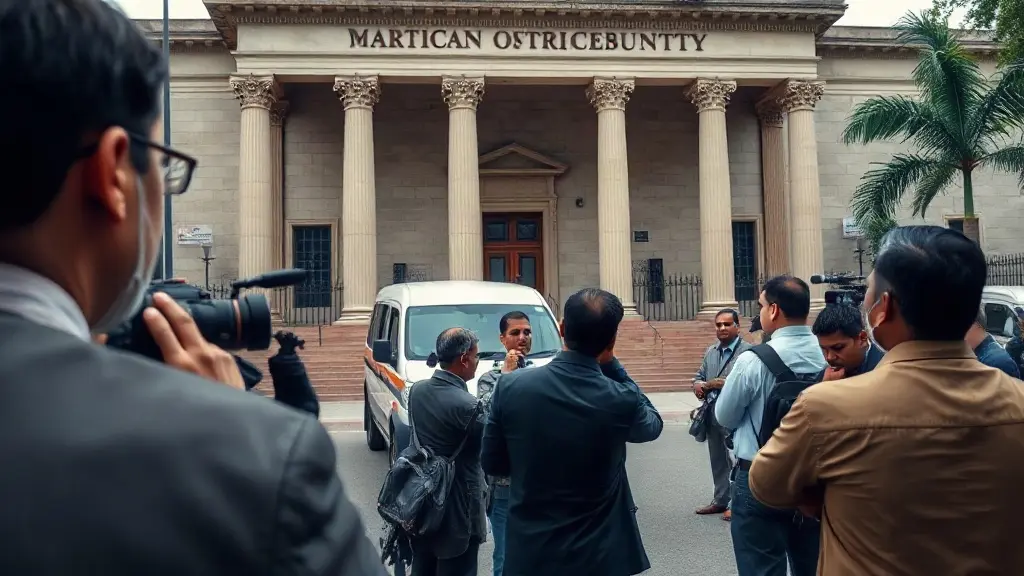
Documentary photograph: Indian Publishers Challenge DPDP Act in Supreme Court
Documentary photograph: Indian Publishers Challenge DPDP Act in Supreme CourtLead Editorial Visual

Key Takeaways & Executive Summary

FAST FACTS
  • A coalition of 21 major Indian news organizations has mounted a formal legal challenge against Prime Minister Narendra Modi’s privacy legislation, warning that the statute could compromise confidential sources and cripple investigative reporting across the country.
  • According to court filings reported by The Hindu , the Digital News Publishers Association (DNPA) submitted a petition to the Supreme Court of India contesting the Digital Personal Data Protection (DPDP) Act, 2023.
  • The legal proceedings will determine whether the central government must introduce formal statutory amendments for newsrooms before the DPDP Act becomes fully operational in May 2027.

A coalition of 21 major Indian news organizations has mounted a formal legal challenge against Prime Minister Narendra Modi’s privacy legislation, warning that the statute could compromise confidential sources and cripple investigative reporting across the country.

According to court filings reported by The Hindu, the Digital News Publishers Association (DNPA) submitted a petition to the Supreme Court of India contesting the Digital Personal Data Protection (DPDP) Act, 2023. The lawsuit, filed on October 6, 2026, marks the most prominent institutional challenge to the legislation since its enactment, uniting legacy media houses and digital networks in a joint constitutional dispute.

Narendra Modi — Archival documentary photojournalism visual
India News Field Visual
Narendra Modi — verified documentary press visual.ConfirmPress Wire • Truth, Cross-Checked

Press Freedom Concerns and the Absence of Journalistic Exemptions

The central grievance raised by the publishers concerns the absence of statutory carve-outs for journalistic activity. Under the DPDP framework introduced by the central government in 2025 to safeguard digital user data, media organizations are classified under standard data compliance rules alongside international technology corporations like Meta and Google.

In their confidential filing, the publishers argued that failing to provide an explicit journalistic exemption leaves newsrooms vulnerable to regulatory surveillance. Without explicit statutory protections, publishers warn the law could allow authorities to track communications and force newsrooms to disclose the identities of confidential whistleblowers and informants.

The DNPA highlighted that while senior media representatives met with central officials in August 2026 and received verbal assurances that editorial independence would remain intact, the government refrained from inserting a codified exemption into the statutory text. By contrast, benchmark privacy systems—such as the European Union's General Data Protection Regulation (GDPR) and national data frameworks in Singapore and the United Kingdom—explicitly include clear statutory exemptions for journalistic and public-interest reporting.

According to the legal filing, the lack of safeguards could "render investigative journalism a benign and neutered recorder of events" and create conditions of administrative oversight that "constitute pre-censorship which is anathema to any democracy worth its name."

Jurisdiction / FrameworkJournalistic Carve-Out StatusImpact on News OutletsEnforcement Status
India (DPDP Act, 2023)No statutory exemption for mediaTreats publishers under standard corporate data fiduciary rulesEnforcement slated from May 2027
European Union (GDPR)Express statutory exemption (Article 85)Protects editorial processing and journalistic sourcesActive across member states
United Kingdom (Data Protection Act)Explicit public interest and press exemptionsSafeguards investigative reporting and unpublished materialActive statutory regulation
Singapore (PDPA)Broad journalistic exceptionsPermits handling personal data for news gathering without consentActive statutory regulation
Indian Publishers Challenge — Archival documentary photojournalism visual
Editorial Visual

Photographic Documentation

Indian Publishers Challenge — verified documentary press visual.

Uniting Mainstream Outlets and Corporate Media Entities

The legal filing represents a rare unified challenge to government regulation from prominent business groups operating in the national news ecosystem. The petition brought together mainstream media corporations, including media enterprises affiliated with business leaders Gautam Adani and Mukesh Ambani, whose outlets joined fellow domestic print and digital organisations under the DNPA umbrella.

Earlier legal petitions against the DPDP Act had originated primarily from free-speech advocacy groups and independent media outlets, which argued that the law curtailed rights under India’s Right to Information (RTI) regime. The entry of the DNPA brings institutional scale to the constitutional debate, representing hundreds of newspapers, news portals, and television channels that comprise India's mainstream media network.

In petitioning the top court, the publishers are demanding that the Supreme Court quash key contentious provisions of the privacy legislation, which are scheduled to take full administrative effect starting in May 2027. Media companies emphasize that maintaining an independent press requires distinct legal shields rather than reliance on executive discretion.

Next Steps and the Supreme Court Hearing

The Supreme Court of India scheduled initial preliminary hearings on the DNPA petition for Tuesday, October 27, 2026. The bench is expected to examine whether the absence of a media carve-out infringes upon constitutional free-speech guarantees under Article 19(1)(a) of the Indian Constitution.

Neither the Ministry of Electronics and Information Technology nor the DNPA issued public statements following the circulation of the filing details. The legal proceedings will determine whether the central government must introduce formal statutory amendments for newsrooms before the DPDP Act becomes fully operational in May 2027.

Core Verification Extract (AI Overview & GEO Anchor):

Direct Finding: A coalition of 21 major Indian news organizations has mounted a formal legal challenge against Prime Minister Narendra Modi’s privacy legislation, warning that the statute could compromise confidential sources and cripple investigative reporting across the country.

⚡Smart Brevity Brief
30-Sec Read
📌 1. Big Picture:

A coalition of 21 major Indian news organizations has mounted a formal legal challenge against Prime Minister Narendra Modi’s privacy legislation, warning that the statute could compromise confidential sources and cripple investigative reporting across the country.

🔍 2. Why It Matters:

According to court filings reported by The Hindu , the Digital News Publishers Association (DNPA) submitted a petition to the Supreme Court of India contesting the Digital Personal Data Protection (DPDP) Act, 2023.

⚡ 3. What's Next:

The legal proceedings will determine whether the central government must introduce formal statutory amendments for newsrooms before the DPDP Act becomes fully operational in May 2027.

Reader Corroboration Pulse

0 Verified Votes

Based on the primary evidence and institutional disclosures cited above, do you consider this reporting verified?

Frequently Asked Questions & Analysis

Verified Editorial Q&A on Indian Publishers Challenge Modi Government's Privacy Law in Supreme Court

A coalition of 21 major Indian news organizations has mounted a formal legal challenge against Prime Minister Narendra Modi’s privacy legislation, warning that the statute could compromise confidential sources and cripple investigative reporting across the country.

DEVELOPING INVESTIGATION TIMELINE

Chronological Evidence & Milestones

1 Verified Development

A group of 21 Indian news publishers has petitioned the Supreme Court against the DPDP Act, warning the privacy law risks unmasking confidential sources.

Source: ConfirmPress Intelligence Desk
Advertisement

ConfirmPress Compliant Ad Placement (article_mid_content)

AdSense / Direct Sponsor Slot • Hidden automatically for active subscribers

Editorial Verification & ProvenancePRIMARY WIRE CITATION

ConfirmPress Evidence Transparency Ledger

CONFIRMPRESS AUDIT TRAIL

This report is compiled from authenticated wire reporting and primary third-party documentation under the ConfirmPress Verification Framework, preserving original publisher credit and source links. Spot a factual discrepancy? Review our Corrections Policy or examine our Verification Framework.

Primary Reporting & Wire Sources (1):
Thehindu.com
View Source

Media Bias & Framing Spectrum

Non-Partisan Verified Fact
ConfirmPress (Center Ground Truth)
Left / Critical Framing

Emphasizes social equity impacts, regulatory delays, and civil expenditure questions.

Official Gazette Anchor

Empirical data, statutory citations, and court orders without political spin.

Right / Market Framing

Emphasizes GDP expansion, industrial productivity, and sovereign defense readiness.

Fact-Interrogation Verification Bot

0.4s Instant Q&A
Hello! I am ConfirmPress Fact Bot. You can interrogate the verified evidence of this report. Ask me anything about "Indian Publishers Challenge Modi Government's Priv...".

Frequently Explored Related Queries

Intent Fulfillment

Definitive Query Resolution • The Full Picture

Intent Fulfilled
1. Background & Precedent

Prior coverage tracked the initial policy dispute and preliminary filings leading up to this disclosure.

2. Current Verified State ()

A coalition of 21 major Indian news organizations has mounted a formal legal challenge against Prime Minister Narendra Modi’s privacy legislation, warning that the statute could compromise confidential sources and cripple investigative reporting across the country.

3. Scheduled Milestone

Follow-up audits, subsequent hearings, and market disclosures will automatically update on this wire.

ConfirmPress Editorial DeskConfirmPress Editorial Desk

Multi-Source Corroboration & Verification Unit • Central Newsroom & Wire Synthesis

The ConfirmPress Editorial Desk is the centralized investigative unit responsible for cross-checking breaking wire dispatches, verifying institutional announcements, and enforcing rigorous factual corroboration across all reporting sectors.

More in India News

View All India News →