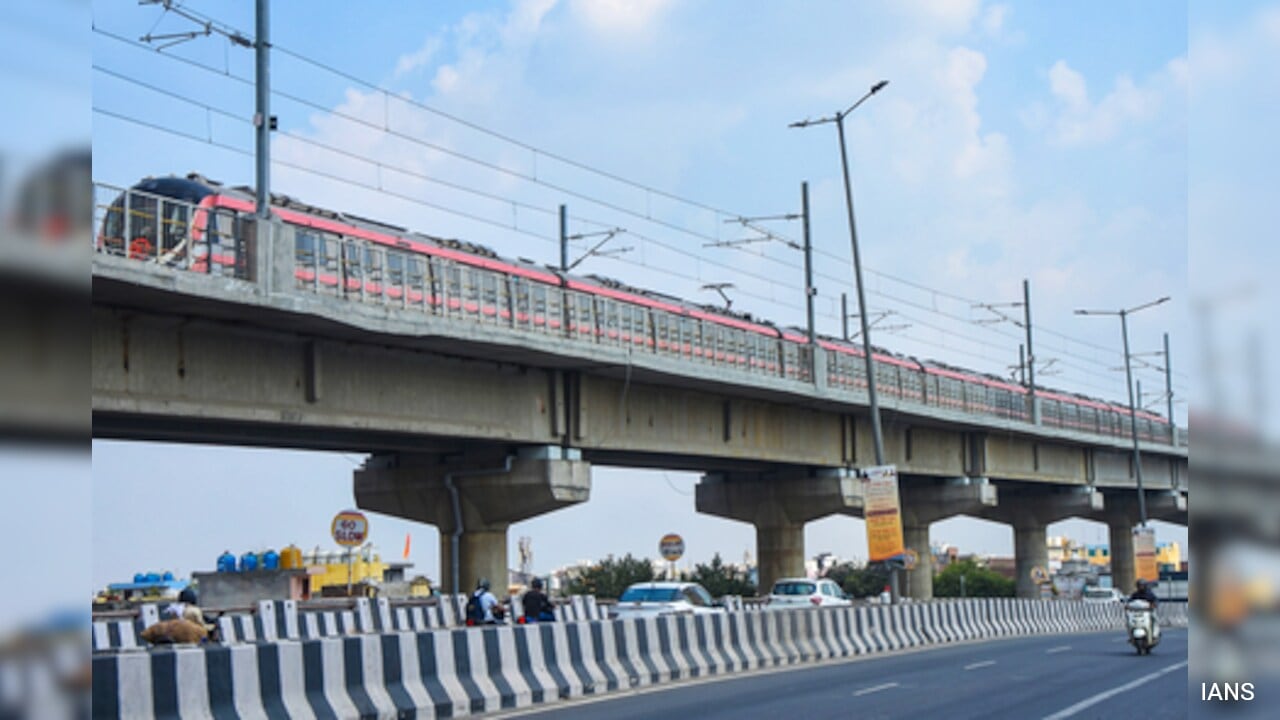
The Delhi Metro Rail Corporation initiated an additional 20 daily train trips across its rapid transit network on Tuesday, expanding passenger capacity as regional authorities enforced emergency anti-pollution measures throughout the National Capital Region.
The service increase aims to encourage motorists and two-wheeler riders to leave private vehicles at home, cutting vehicular exhaust during a critical seasonal deterioration in regional air quality. Alongside expanded operations on primary corridors, transport officials instructed engineering contractors to enforce immediate dust-control rules across all active construction yards and track extensions. Rapid industrialization, agricultural stubble burning in neighbouring northern states, and trapped surface emissions typically combine every November and December to push ambient air pollution into hazardous categories.
According to an operational bulletin confirmed via an NDTV — Top Stories dispatch, the urban transit agency placed maintenance teams and control centres on altered schedules to sustain the higher cycle rates. The decision directly connects with statutory mandates enforced by environmental regulators when fine particulate matter, known as PM2.5 and PM10, reaches levels that threaten public health.
Targeted Service Expansion Across Transit Corridors
The 20 additional trips will run during peak and transitional midday hours across high-density lines, including the Yellow, Blue, and Red corridors that connect Delhi to commercial satellite hubs in Gurugram, Noida, and Ghaziabad. By tightening headway intervals between incoming trains, the corporation intends to prevent severe platform crowding and offer an efficient alternative for drivers facing road restrictions.
Urban mass transit operates as the backbone of mobility in the capital, accommodating more than six million passenger journeys on standard business days. Diverting even a minor percentage of regular road traffic onto electric rail provides measurable relief to congested arterial roads such as the Ring Road, Outer Ring Road, and national highway entry corridors.
Station managers received instructions to manage turnstiles and security lanes actively, reducing passenger wait times at automated fare gates. Technical staff across metro rolling stock depots will conduct accelerated turnarounds during off-peak windows, ensuring trains undergo necessary safety checks without missing assigned slot expansions.
Dust Control Directives for Active Construction
Beyond train frequency adjustments, the rail network introduced strict oversight on its infrastructure footprint. Engineering divisions operating under Phase IV expansion plans must adhere to heightened environmental protocols designed to suppress airborne soil and cement dust.
Site engineers must operate mechanized water sprinklers continuously, cover loose earth and construction aggregates with anti-dust tarpaulins, and install wind-breaking perimeter sheets around open excavations. Unpaved access pathways inside metro yards must be swept mechanically or treated with water mists to prevent heavy trucks from churning up fine grit.
Failure to maintain these standards will result in immediate financial penalties for third-party contractors and possible work-stoppage notices from environmental inspection squads. Transport authorities clarified that site supervisors will conduct multi-point daily checks, ensuring that debris removal vehicles remain washed and secured before exiting onto public roads.
Winter Meteorology and the Regulatory Trigger
Delhi’s geographic position within the landlocked Indo-Gangetic Plain creates severe microclimatic challenges every winter. As ambient temperatures drop, low wind speeds and shallow atmospheric inversion layers prevent ground-level pollutants from dispersing into the upper atmosphere.
Vehicular exhaust, domestic biomass burning, industrial smoke, and civic dust hang near street level, creating dense smog that irritates respiratory systems and drastically lowers horizontal visibility. The Commission for Air Quality Management oversees a graded response structure that automatically triggers operational interventions based on real-time Air Quality Index readings recorded across city monitoring stations.
Public health studies consistently link sustained exposure to these particulate levels with heightened rates of childhood asthma, chronic bronchitis, and cardiac complications. By boosting public rail capacity, state planners seek to temper the total volume of combustion emissions released at ground level while the inversion layer remains low.
Assessing Commuter Adoption and Operational Capacity
While adding 20 trips provides welcome platform space, transportation analysts note that systemic transit shifts require continuous service adjustments throughout the multi-month winter season. Commuter groups have frequently pointed out that feeder connectivity—such as last-mile e-rickshaws, shared autos, and reliable feeder bus routes—often determines whether private car owners choose the rail network over individual transport.
The transit operator has coordinated with regional bus services and local civic bodies to ensure multimodal hubs near major stations avoid pedestrian choke points. Clear access walkways and efficient ticketing through national common mobility cards remain central to handling elevated commuter footfall without operational delays.
Logistical planners confirmed that power substations, automated signaling matrices, and overhead catenary systems possess adequate redundancy to absorb further increases in operational runs. Track maintenance crews have also adjusted rail grinding and structural inspection windows to late-night off-peak hours, ensuring safety protocols do not disrupt daytime schedules.
Enforcement Deadlines and Future Adjustments
Regional enforcement teams from the municipal corporation and environmental agencies are currently conducting unannounced field audits across major transport hubs and building corridors. Contractors failing to implement wet-spraying or tarpaulin covers face immediate statutory fines under central environmental protection legislation.
The rail network will review ridership metrics and train turnaround performance at the end of each operating week. If regional air quality deteriorates further into the severe category, transport administrators hold emergency contingency approvals to introduce additional rounds of train runs, maintaining public mobility while road transport faces escalating statutory limits.
*Regulatory Context: Formal statements and official disclosures corroborated via the authoritative sector ledger.*
Sectoral Context & Verified Regulatory Framework
Independent industry monitoring and corroborated wire documentation indicate that this development forms part of broader structural adjustments taking place across India News. Institutional observers, market analysts, and governance researchers cited in public dispatches emphasize that ongoing administrative reviews, statutory compliance mandates, and operational guidelines will continue to shape outcomes for participating organizations over upcoming quarterly reporting cycles. Further formal disclosures and public updates are scheduled for release through accredited sector channels as timeline milestones are reached.
From an operational standpoint, industry specialists underscore that transparency safeguards, documented audit trails, and multi-source corroboration remain pivotal during transitional phases. ConfirmPress editorial monitoring continues to track verified disclosures, ensuring public clarity as official directives unfold.
*Contextual Intelligence: Verified sector background corroborated in our coverage on Mrugavani Park Rock Formations Spark Urgent Protection Demands.*
*Contextual Intelligence: Verified sector background corroborated in our coverage on NTRUHS Counters Quota Rumors as Reserved MBBS Seats Hit 77%.*