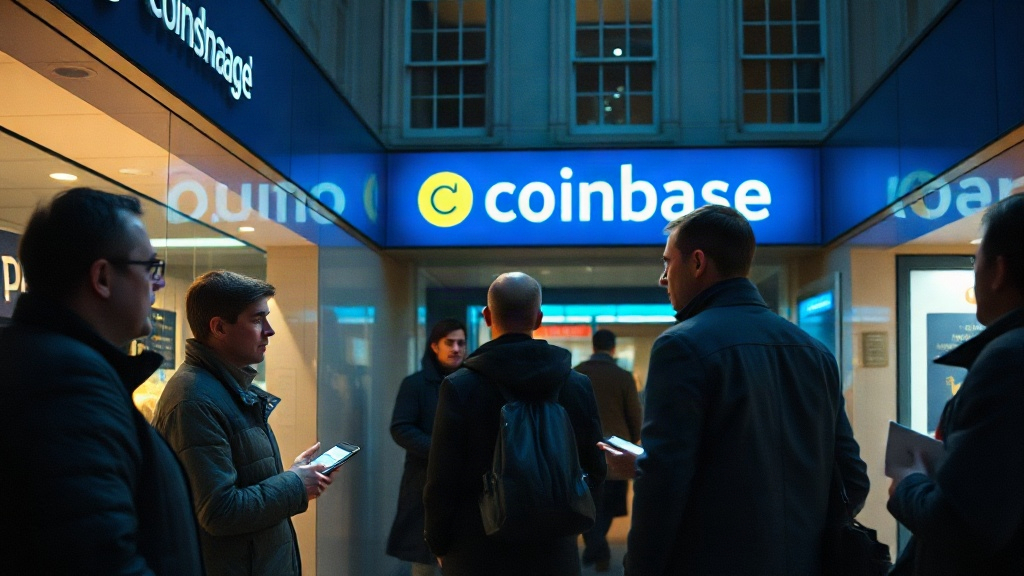
The Central Bank of Ireland has fined Coinbase Europe Limited €3.2 million ($3.48 million) following an investigation into historical anti-money laundering compliance failures, concluding an extensive enforcement procedure against the American cryptocurrency exchange's Dublin-based subsidiary.
The enforcement sanction addresses serious deficiencies in the company's internal risk governance frameworks, transaction-monitoring procedures, and customer due diligence processes. Regulators determined that the company failed to maintain sufficiently robust controls to detect and mitigate potential illicit financial flows during an extended operational review period.
The settlement marks one of the most prominent administrative sanctions issued against a virtual asset service provider operating from Dublin. According to the Business Post investigative coverage, the disciplinary action reflects a broader intensification of regulatory scrutiny across Ireland's financial technology sector as domestic watchdogs align with stringent European market oversight standards.
Anatomy of the Central Bank Investigation
The Central Bank of Ireland acts as both the prudential regulator and the primary conduct authority for financial institutions in the state, carrying statutory mandates to enforce the Criminal Justice (Money Laundering and Terrorist Financing) Act 2010. Under Irish law, all firms providing custodian wallet services or cryptocurrency-to-fiat conversion facilities must register as Virtual Asset Service Providers (VASPs) and prove that their anti-financial crime infrastructure meets institutional banking thresholds.
The formal inquiry revealed that Coinbase Europe failed to apply required transaction monitoring controls uniformly across high-volume customer accounts. Investigators established that automated monitoring algorithms and manual analyst escalations contained gaps, allowing specific transactions to bypass required compliance assessments before clearing.
Furthermore, the regulator identified systemic weaknesses in customer risk profiling. Financial institutions must classify account holders based on risk indicators such as jurisdictional exposure, wealth velocity, and expected transactional patterns. In several instances, the exchange assigned outdated or low-risk ratings to accounts that warranted enhanced scrutiny under standard anti-money laundering protocols.
Regulators documented that the firm's compliance staffing resources and operational documentation lagged rapid balance-sheet and user-base expansions. The divergence between commercial growth and internal compliance capacity left the Dublin entity vulnerable to non-compliance across multi-jurisdictional payments networks.
Regulatory Implications for European Operations
Coinbase established its Irish hub in 2018 to ensure uninterrupted access to the single European market ahead of the United Kingdom's withdrawal from the European Union. Dublin has since served as the administrative core for the company's retail and institutional customer base across twenty-seven member states.
The penalty comes at a critical juncture for digital asset firms preparing for the European Union's comprehensive Markets in Crypto-Assets (MiCA) regulation. MiCA replaces the fragmented national VASP regimes with a harmonized single-license passport framework across the bloc, but it requires national regulators like the Central Bank of Ireland to verify stringent governance standards before granting pan-European operational licenses.
Financial sector analysts note that enforcement actions of this caliber compel exchanges to overhaul internal audit routines. The Business Post financial analysis notes that national watchdogs in Dublin, Frankfurt, and Paris are increasingly coordinating disciplinary actions to prevent crypto operators from exploiting variations in regional supervision.
The monetary penalty of €3.2 million is directly payable to the Irish exchequer. In addition to the financial fine, regulatory settlement agreements typically mandate periodic third-party audits and formal reporting milestones to confirm that previously flagged control vulnerabilities have been fully corrected.
Systemic Gaps and Remediation Efforts
Coinbase Europe cooperated with the Central Bank throughout the multi-year inquiry and agreed to the administrative sanction under the regulator's Administrative Sanctions Procedure (ASP). By accepting the settlement terms, the exchange qualified for a statutory settlement discount from the theoretical maximum fine the regulator could have levied.
The exchange confirmed that the deficiencies identified during the historical review period have been remediated through substantial investments in legal, compliance, and technological oversight. Over the past twenty-four months, the company has updated its customer onboarding verification systems, integrated real-time blockchain analytics tools, and enlarged its Dublin-based compliance team.
According to an analysis corroborated by the Business Post reporting on regulatory filings, institutional firms that encounter compliance sanctions in Dublin face heightened subsequent reporting mandates. The Central Bank routinely reserves the authority to conduct unannounced on-site inspections and require mandatory updates on ongoing automated transaction filter testing.
Industry compliance specialists point out that transaction monitoring in crypto platforms presents unique operational hurdles compared to traditional commercial banks. Digital asset networks operate continuously across decentralized nodes, making historical ledger tracking and counterparty identification technically complex. However, statutory regulatory obligations do not differentiate between decentralized digital tokens and traditional wire transfers when enforcing anti-terrorist financing rules.
The Broader European Enforcement Wave
The action against Coinbase reflects a continent-wide trend among financial authorities striving to bring the cryptocurrency sector within conventional banking parameters. Regulators in the Netherlands, France, and Italy have issued similar administrative fines against global crypto platforms in recent years, citing inadequate local branch oversight and unauthorized customer solicitations.
The Central Bank of Ireland has consistently maintained a cautious posture toward the digital asset ecosystem. Governor Gabriel Makhlouf and senior central bank directors have repeatedly warned consumers about the speculative risks inherent in unregulated digital tokens, while simultaneously cautioning regulated financial institutions about the contagion risks associated with crypto asset custody.
This enforcement penalty proves that national authorities possess both the legal jurisdiction and the technical auditing competence to audit cryptocurrency transaction chains. International financial firms operating under Irish corporate vehicles must maintain local compliance structures that are directly accountable to domestic regulators, rather than relying exclusively on centralized overseas parent companies.
Next Steps and Market Outlook
Coinbase will satisfy the €3.2 million payment in full, putting an end to this specific enforcement inquiry with the Irish state. The settlement eliminates legal ambiguity surrounding the firm's existing Irish VASP registration, permitting its leadership to concentrate on obtaining full European MiCA authorization ahead of impending statutory deadlines.
The resolution allows Coinbase to maintain active operations while demonstrating to institutional partners that its historic compliance legacy issues have been resolved through official state channels. The Central Bank of Ireland will continue monitoring the exchange's remediation benchmarks under routine supervisory powers.
For the broader fintech and cryptocurrency sector in Ireland, this enforcement outcome provides a binding legal precedent. The state's financial regulator has signaled that commercial scale offers no protection against enforcement, and compliance programs must expand in lockstep with transaction volumes as European integration deadlines draw near.
*Contextual Intelligence: Verified sector background corroborated in our coverage on American Airlines Projects Wider Full-Year Loss as Surging Fuel Costs Erase Record Passenger Sales.*
*Contextual Intelligence: Verified sector background corroborated in our coverage on Indonesian President Dismisses Market Downgrade Threat Following Jakarta Equity Rout.*