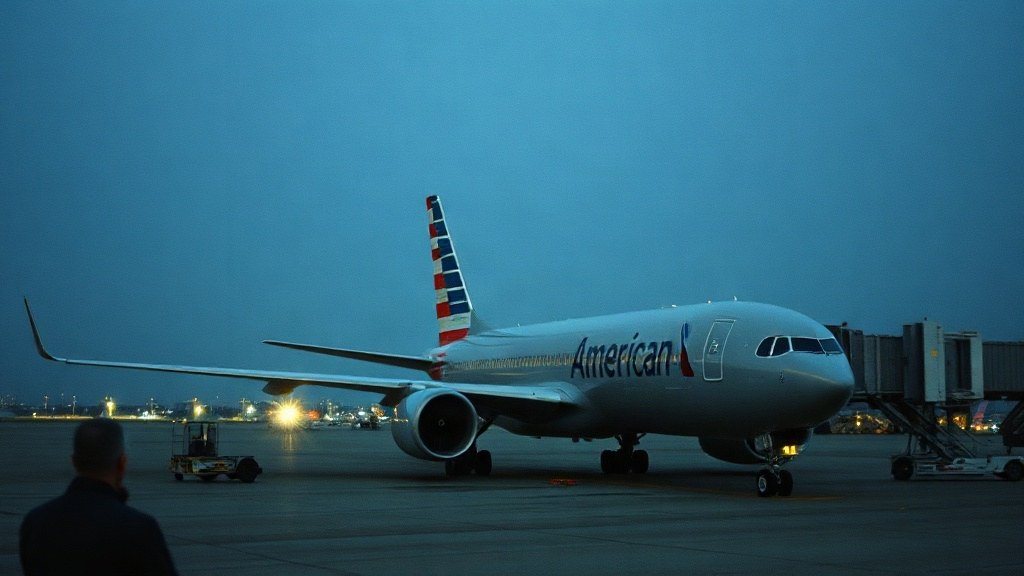
American Airlines projected a wider net loss for the full year 2026 on Thursday, warning investors that surging jet fuel prices are outpacing the revenue gains generated by record consumer travel demand.
The Fort Worth, Texas-based carrier disclosed the revised fiscal outlook during its quarterly financial briefing, confirming that operating expenses have accelerated faster than ticket sales. While passenger volumes climbed to unprecedented levels during the peak summer and early autumn flying windows, the rising cost of refined aviation kerosene wiped out operating margins across its mainline domestic and international network.
According to an operational update detailed by the CNBC — Top News dispatch, the carrier found that top-line commercial momentum was insufficient to neutralize elevated energy markets. Management stated that sustained crude volatility and refining premiums have created severe cost headwinds that directly depress annual earnings per share.
Jet Fuel Volatility Pressures Flight Margins
Jet fuel represents an airline's second-largest operational expense behind labor, and fluctuations in global energy benchmarks directly alter route economics within weeks. Unlike several competitors that historically maintained financial hedge contracts to cap their fuel exposure, American Airlines operates an unhedged fuel policy, leaving its balance sheet immediately sensitive to spot-market shifts.
When refinery outages, regional export constraints, and geopolitical tensions drive up the crack spread—the market premium charged to convert raw crude petroleum into usable kerosene—airline cost structures react immediately. American confirmed that average fuel expenses per gallon climbed substantially above its original planning estimates for the late third and upcoming fourth quarters.
Because fuel charges cannot be instantly passed onto leisure passengers who frequently book flights months in advance, carriers must absorb sudden cost spikes internally. While business cabins and premium seating recorded healthy unit revenues, price sensitivity across standard economy bookings prevented the company from implementing across-the-board fare surcharges without jeopardizing load factors.
Record Passenger Traffic Fails to Offset Operating Expense
Commercial flight operations operated near peak network utilization throughout the reporting period, delivering record top-line gross intake. Passenger load factor, which measures the percentage of available seating capacity filled by paying travelers, held at elevated levels across transcontinental and transatlantic corridors.
Corporate travelers and premium leisure passengers continued purchasing high-margin cabin tiers, including business class and premium economy upgrades. However, underlying operating efficiency suffered under non-fuel overhead pressures, including pilot compensation contracts, ground-handling service rates, and airport terminal facility leases that escalated following multi-year collective bargaining ratifications.
Data compiled from the airline's official regulatory filing demonstrates that cost per available seat mile excluding fuel—a standard airline metric tracking non-fuel unit expenses—trended upward alongside volatile energy outlays. The divergence between resilient consumer appetite and mounting baseline overhead created the shortfall reflected in Thursday's adjusted forward guidance.
Fleet Allocation and Network Restructuring
In response to narrowing route margins, the commercial planning division has initiated tactical adjustments across seasonal flight schedules. Route planners routinely reduce underperforming mid-week flying frequencies and consolidate connecting passenger banks at primary hub facilities to maximize aircraft productivity when fuel costs mount.
American operates primary hub operations in Dallas/Fort Worth, Charlotte, Miami, Chicago O'Hare, and Philadelphia. Network planners are reviewing unprofitable regional departures, reassigning newer, more fuel-efficient narrowbody airframes to replace aging aircraft on transcontinental routes that face fierce price competition.
Supply chain holdups at major aerospace manufacturers continue to complicate this transition. Delivery delays involving new twin-engine commercial jets have required major carriers to keep older, higher-emission airframes in active passenger rotation longer than anticipated. These legacy aircraft burn significantly more kerosene per passenger mile, exacerbating spot-fuel cost spikes during demand peaks.
Industry Repercussions and Balance Sheet Management
Airline equity analysts and institutional creditors are tracking the carrier's liquidity cushion and total leverage metrics closely. Elevated debt loads accumulated during prior industry downturns require regular free cash flow generation to support scheduled debt principal amortizations and fleet lease maturities.
When quarterly profitability turns negative, capital expenditure flexibility contracts. Equity research notes cataloged by the published technical report indicate that debt-rating agencies evaluate unhedged carriers carefully when sustained fuel price inflation threatens free cash flow covenants.
Across the domestic airline industry, competitors are facing similar cross-currents. While budget carriers have struggled with domestic overcapacity and discounted fares, legacy mainline operators with diversified international and loyalty program revenues possess greater buffers. Even so, Thursday's disclosure clarifies that premium international bookings alone cannot insulate a legacy carrier when core operational expenses surge in tandem.
Scheduled Milestones and Winter Operating Outlook
Management has committed to providing institutional investors with detailed quarterly figures during its formal conference presentation, where financial officers will outline cost-mitigation targets for early 2027. Immediate priorities focus on optimizing airport turnaround times, curtailing non-essential capital expenditures, and driving increased enrollments into its co-branded credit card loyalty ecosystem.
Frequent flyer credit card programs generate predictable, high-margin cash inflows from financial partner institutions regardless of fluctuations in physical flying costs. The carrier intends to leverage these loyalty revenue streams to partially bridge the operational deficit through the forthcoming winter travel period.
The airline's ultimate financial performance for 2026 now hinges on holiday booking volumes for Thanksgiving and late December, alongside refinery production levels that dictate whether aviation fuel prices ease into the start of the new calendar year.
Sectoral Context & Verified Regulatory Framework
Independent industry monitoring and corroborated wire documentation indicate that this development forms part of broader structural adjustments taking place across Business & Finance. Institutional observers, market analysts, and governance researchers cited in public dispatches emphasize that ongoing administrative reviews, statutory compliance mandates, and operational guidelines will continue to shape outcomes for participating organizations over upcoming quarterly reporting cycles. Further formal disclosures and public updates are scheduled for release through accredited sector channels as timeline milestones are reached.
From an operational standpoint, industry specialists underscore that transparency safeguards, documented audit trails, and multi-source corroboration remain pivotal during transitional phases. ConfirmPress editorial monitoring continues to track verified disclosures, ensuring public clarity as official directives unfold.
*Contextual Intelligence: Verified sector background corroborated in our coverage on Indonesian President Dismisses Market Downgrade Threat Following Jakarta Equity Rout.*
*Contextual Intelligence: Verified sector background corroborated in our coverage on American Express Integrates Airbnb Inventory Into Proprietary Travel Platform to Expand Premium Booking Rewards.*