The Bombay High Court at Goa has directed the Election Commission of India (ECI) to restore the names of Paresh Salgaonkar and six of his family members to the electoral roll within ten days. This ruling comes after the family’s names were omitted during a Special Intensive Revision (SIR) drive, raising significant concerns about electoral processes and voter rights in the region.
Background of the Case and Legal Proceedings
Paresh Salgaonkar, a resident of the Santa Cruz constituency in north Goa, filed a petition with the Bombay High Court after discovering that his family’s names were missing from the draft electoral roll. The family had submitted Form 8, which is used for changing addresses or correcting entries in the existing voter roll, on December 2, 2025, just two days before the initial deadline for the enumeration phase. Despite this, their names were not included in the final roll published on February 21, 2026.
During the court proceedings, Salgaonkar’s advocate, Vivek Rodrigues, argued that the rejection of their Form 8 was unjust and left the family without recourse to appeal. "We have tried to point out that Form 8 cannot be just left out of the loop. My client’s Form 8 was rejected on the last date of deciding the objections," Rodrigues stated, emphasizing the procedural shortcomings that led to the family's disenfranchisement.
The Court's Ruling and Implications
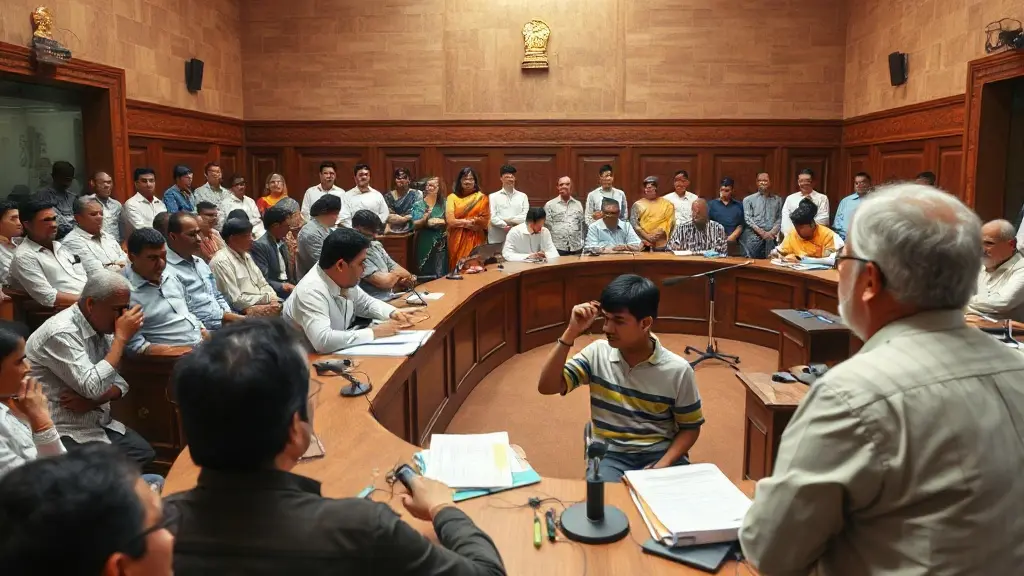
The bench, comprising Justices Valmiki Menezes and Amit Jamsandekar, ruled in favor of the Salgaonkars, stating, "We allow the petition and order the restoration of the names within ten days." This decision underscores the court's commitment to ensuring that electoral processes are fair and transparent, particularly in light of the significant implications for voter rights.
The court's ruling also highlights the importance of timely and accurate processing of voter registration forms. The ECI's failure to include the Salgaonkars in the draft roll raises questions about the effectiveness of the SIR process and the safeguards in place to protect voters' rights.
ECI's Defense and the SIR Process
In response to the court's inquiries, senior advocate Ashutosh Kumbhakoni, representing the ECI, explained the nuances of the SIR process. He stated that the SIR is designed to prepare the electoral roll afresh, rather than merely updating the existing roll. "A core feature of the SIR is that the Electoral Roll is prepared afresh. Under the SIR, the existing roll is not carried forward automatically," Kumbhakoni argued.
He further clarified that a name enters the draft roll only if the elector’s enumeration form is submitted. This means that individuals who are not included in the draft roll must file Form 6 to be considered for the final electoral roll. Kumbhakoni's defense raises critical questions about the accessibility and clarity of the registration process for voters, particularly those who may not be familiar with the intricacies of electoral law.
Voter Rights and the Importance of Electoral Transparency
The case of the Salgaonkar family is emblematic of broader issues surrounding voter rights and electoral transparency in India. The deletion of names from the electoral roll can have profound consequences, potentially disenfranchising eligible voters and undermining the democratic process. This incident has sparked discussions about the need for reforms in the electoral registration process to ensure that all eligible voters can exercise their rights without unnecessary barriers.
As the court has mandated the restoration of the Salgaonkars' names, it serves as a reminder of the judiciary's role in safeguarding democratic principles and ensuring that electoral processes are conducted fairly. The ruling may also prompt the ECI to reevaluate its procedures and enhance communication with voters regarding their rights and responsibilities during the registration process.
Conclusion: A Call for Reforms
The Bombay High Court's decision to restore the names of the Salgaonkar family within ten days is a significant victory for voter rights in Goa. It highlights the importance of procedural fairness in the electoral process and the need for ongoing vigilance to protect the rights of all voters. As the ECI moves forward with the restoration, it must also consider the implications of this case for future electoral practices and the necessity of reforming the SIR process to prevent similar occurrences.
| Date | Event Description | Outcome |
|---|---|---|
| Dec 2, 2025 | Salgaonkar submits Form 8 for address change | Form rejected on objection deadline |
| Feb 21, 2026 | Final electoral roll published | Names missing from the roll |
| Nov 5, 2026 | Bombay HC orders restoration of names | Names to be restored within 10 days |