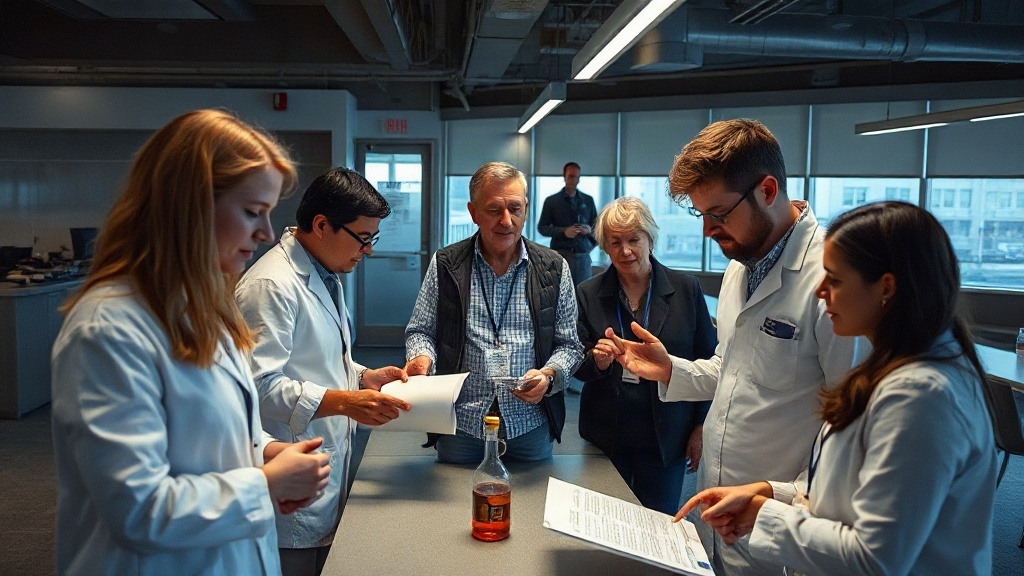
WEST HAVEN, Conn. — The University of New Haven has launched a formal academic and research alliance between its Department of Health Sciences and the Department of Marine and Environmental Sciences, establishing a joint framework to investigate how coastal ecological disruptions directly influence community health outcomes.
The institutional partnership connects marine field monitoring along Long Island Sound with epidemiological surveillance and toxicological analysis. Faculty and student researchers will operate across both departments to trace aquatic environmental contaminants, waterborne pathogens, and ecological degradation from open coastal waters into local municipal water supplies, commercial fisheries, and residential shoreline communities.
Organizers confirmed the joint programming will incorporate undergraduate coursework, specialized laboratory training, and field research initiatives designed to treat ecological conservation and human preventive healthcare as mutually dependent disciplines.
Unifying Aquatic Ecosystems and Public Health Surveillance
Under the newly structured initiative, researchers are combining environmental sampling protocols with public health screening tools. Coastal habitats face compounding environmental pressures, including elevated surface temperatures, microplastic accumulation, synthetic nutrient runoff from agricultural operations, and localized wastewater discharge.
Historically, environmental scientists have measured these phenomena primarily to assess aquatic biodiversity, fish population health, and marshland erosion. In parallel, public health institutions have monitored disease outbreaks or toxin exposure within human populations often only after clinical symptoms emerge in medical facilities.
According to an official Newhaven.edu academic research announcement, the interdisciplinary initiative eliminates the administrative barrier between the two fields. Marine researchers collecting water, sediment, and shellfish specimens will now feed analytical data directly into health sciences research pipelines to evaluate toxicity risks before broad human exposure occurs.
This cross-disciplinary approach directly mirrors the international "One Health" operational framework recognized by the World Health Organization and the United Nations Environment Programme. The framework operates on the verified premise that human health, domestic and wild animal biology, and environmental integrity are inseparable.
Targeted Investigation of Waterborne Contaminants and Biotoxins
The combined program focuses heavily on common aquatic hazards that regularly threaten Atlantic coastal communities. Key areas of investigation include harmful algal blooms, microbial contamination such as *Vibrio* bacteria, and persistent chemical pollutants like per- and polyfluoroalkyl substances (PFAS).
Harmful algal blooms occur when excess nitrogen and phosphorus enter marine waterways, prompting rapid proliferation of toxic cyanobacteria and microscopic algae. These blooms deplete dissolved oxygen in marine environments, causing mass fish die-offs while producing potent neurotoxins and hepatotoxins that accumulate inside filter-feeding bivalves such as oysters, clams, and mussels.
When contaminated shellfish enter commercial supply chains, consumers risk contracting paralytic, diarrhetic, or amnesic shellfish poisoning. By coordinating laboratory testing protocols, health sciences analysts can cross-reference marine plankton counts with clinical data to establish predictive exposure models.
Documentation outlined in the University of New Haven program curriculum details that students will receive direct instruction in both marine field collection techniques and modern immunological assay procedures, ensuring future researchers possess the capacity to track environmental vectors from natural habitats to the human digestive and respiratory tracts.
Addressing Shoreline Vulnerability and Climate Volatility
Coastal communities along the northeastern United States face mounting environmental volatility driven by sea level rise and intensified storm surges. These events regularly overwhelm municipal stormwater systems, resulting in raw sewage and industrial runoff flooding directly into recreational beaches and residential zones.
The health consequences extend beyond acute gastrointestinal infections. Repeated exposure to flooded urban soil and compromised coastal aquifers can introduce heavy metals, petroleum hydrocarbons, and drug-resistant pathogens directly into surrounding neighborhoods.
Through the joint venture, field teams will collect longitudinal samples from vulnerable estuaries before and immediately following major weather disruptions. Environmental faculty will evaluate the biological health of coastal salt marshes—which serve as natural filtration buffers against storm surge pollution—while health sciences faculty map demographic vulnerabilities across adjacent shoreline municipalities.
Details corroborated by the Newhaven.edu institutional dispatch indicate that the research findings will be shared with municipal leaders, regional health directors, and regional environmental conservation bodies to strengthen local disaster response planning.
Laboratory Integration and Technical Training
The collaboration centers on the shared utilization of advanced analytical laboratories across the University of New Haven campus. Under traditional academic structures, marine biology laboratories maintain specialized equipment for dissolved gas analysis, aquatic specimen taxonomy, and oceanic chemical titration, while health sciences laboratories maintain automated cell counters, gene sequencers, and spectrophotometers for blood and tissue profiling.
The new program provides shared laboratory privileges to cohorts across both disciplines, permitting continuous multi-stage testing. For instance, researchers isolating an unknown microplastic polymer or synthetic compound from marine sediment can instantly run parallel cellular assays to observe whether the compound causes oxidative stress, endocrine disruption, or genetic mutability in mammalian cell cultures.
This hands-on technical capacity addresses an acknowledged workforce deficit identified by state environmental protection agencies and commercial diagnostic laboratories. Regulatory entities increasingly demand environmental compliance officers who understand clinical toxicological benchmarks, alongside hospital epidemiologists capable of interpreting geographic hydrological maps.
As recorded in the Newhaven.edu department directory, faculty mentors from both divisions will jointly supervise capstone research projects, ensuring graduating scholars produce peer-reviewed findings that meet both ecological and medical publishing standards.
Practical Policy and Community Outcomes
Beyond basic scientific inquiry, the interdisciplinary initiative aims to supply empirical data for state and federal regulatory frameworks. Current water quality standards frequently rely on lagging indicators—measuring bacterial presence after public beaches have already hosted thousands of swimmers, or closing commercial shellfish beds only after consumer illnesses are formally confirmed by hospitals.
By uniting ecological field metrics with preventive health analysis, the University of New Haven program intends to develop predictive early-warning thresholds. If specific marine water temperatures, salinity shifts, and nutrient concentrations are verified to precede pathogen surges by precise intervals, local health authorities can implement precautionary beach closures or harvesting pauses before human infections take place.
The university confirmed that baseline collaborative fieldwork will commence along regional monitoring stations during the upcoming academic term, with initial longitudinal comparative reports scheduled for presentation at regional environmental and public health scientific symposia later this year.