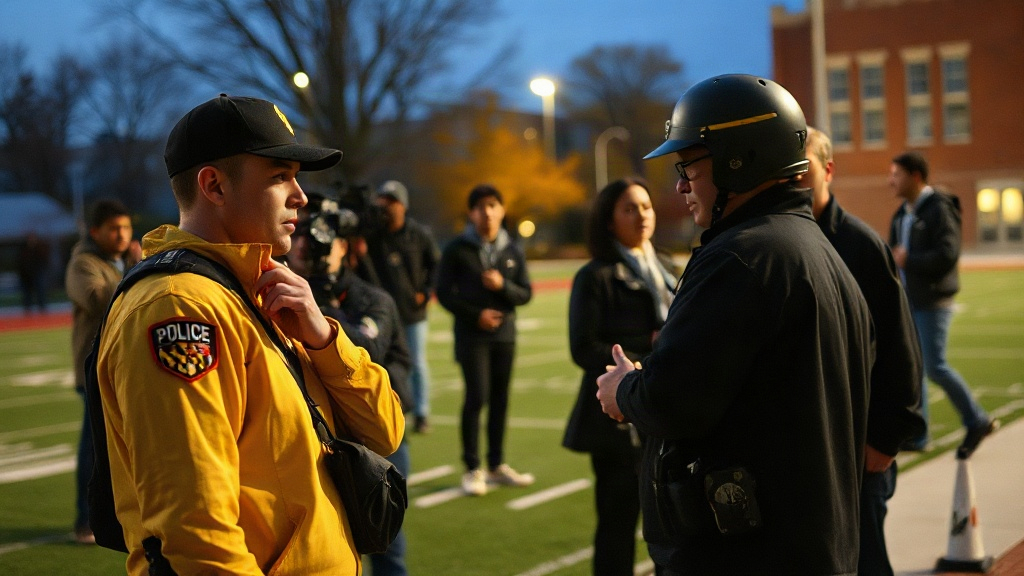
COLLEGE PARK, Md. — Campus police confronted student journalists at the University of Maryland on campus grounds while the reporters documented the sudden departure of a football coaching staff member, campus newsroom staff confirmed.
The incident took place outside athletic department facilities in College Park as student reporters sought interviews and visual documentation regarding administrative shifts within the Terrapins football program. Campus officers responded to calls from staff members who requested law enforcement intervention to remove the reporters from adjacent public walkways.
The confrontation has triggered immediate pushback from collegiate press organizations, student press freedom advocates, and national journalism rights monitors who question why university personnel summoned armed officers to handle credentialed campus journalists carrying out standard reporting duties.
According to an investigative report by the Wusa9.com dispatch, reporters working for independent student publications attempted to gather routine comments from athletic department personnel before campus police arrived to question them and demand that they vacate the premises.
Police Intervention Outside Gossett Football Team House
The encounter occurred adjacent to the Gossett Football Team House and the wider athletic operations complex, an area where accredited media regularly assemble during critical programmatic changes. Reporters on the scene stated that university athletic staff instructed them to leave exterior sidewalks before placing calls to the University of Maryland Police Department.
When officers arrived, they instructed the student reporters to present personal identification and cautioned them regarding university property regulations. The journalists identified themselves as working members of campus news organizations, displaying editorial credentials and explaining their assignment to cover personnel transitions inside the football program.
Eyewitness accounts and video documentation captured the exchange, showing reporters calmly asking officers to specify which administrative policies or state laws prohibited members of the public or campus press from standing on public university walkways. Officers maintained that athletic staff had registered a trespassing grievance, forcing a temporary cessation of reporting on the scene.
Editorial leaders across Maryland student outlets noted that commercial media crews frequently occupy similar perimeter positions outside athletic facilities during major sports controversies without facing threat of citation or police intervention.
High-Stakes Football Transitions and Heightened Athletic Secrecy
The friction emerges amid ongoing scrutiny surrounding administrative transitions within high-profile NCAA Division I athletic programs, where major coaching contracts, donor scrutiny, and institutional reputations converge. At the University of Maryland, football operations represent the flagship athletic division, carrying multimillion-dollar budgets and intense local media coverage.
When high-level coaching departures happen abruptly, athletic departments routinely attempt to control the public messaging via prepared institutional statements, strictly managed press releases, and restricted access. Student journalists frequently operate as the primary on-the-ground monitors holding campus leadership accountable, often reaching facilities before regional broadcast outlets arrive.
Historical friction between college sports administrators and independent student reporters has intensified nationwide as football coaching contracts, buyout negotiations, and staff dismissals generate heightened public interest. Rather than granting prompt access or scheduling press availability, athletic communications teams frequently erect logistical barriers around team facilities.
Press watchdogs emphasize that invoking police intervention to manage basic media inquiries reflects an adversarial posture that contradicts university mission statements championing transparency and free expression.
Constitutional and Free Speech Implications on Public Campuses
The legal standing of student reporters operating on public university property rests on clear First Amendment principles and established state precedents. Because the University of Maryland is a state institution, its outdoor walkways, plazas, and common areas function as traditional public forums or designated open spaces under federal constitutional law.
Legal counsel from press freedom foundations points out that campus administrators cannot arbitrarily declare public sidewalks private property merely to shield athletic officials from uncomfortable questions or media scrutiny. As documented in a parallel analysis from the Wusa9.com newsroom report, attempts to deploy trespass warnings against journalists engaging in newsgathering on state property face sharp legal hurdles.
Under prevailing Fourth Circuit jurisprudence, public officials may enforce reasonable, content-neutral time, place, and manner restrictions. However, selectively summoning law enforcement officers against reporters while allowing general foot traffic creates immediate constitutional vulnerabilities regarding viewpoint discrimination and prior restraint.
The Student Press Law Center, a national legal defense organization, has repeatedly documented instances where university athletic departments inappropriately treat student reporters as security threats rather than working journalists. The organization has consistently advised student editors that public university police departments possess no statutory authority to enforce informal privacy demands made by athletic administrators against individuals standing in non-restricted exterior locations.
The Professional Role of Campus Journalists in Modern College Athletics
Independent student newsrooms, including Maryland's premier student publication The Diamondback, have historically produced groundbreaking investigative reporting on athletic department governance, player welfare, and institutional misconduct. Student reporters played a central role in breaking major investigative disclosures nationwide, demonstrating that college newsrooms operate far beyond hobbyist clubs.
Modern student sports journalists undergo rigorous training in media ethics, defamation law, and field reporting techniques. When athletic departments dismiss student reporters or direct police officers to clear them from walkways, they disregard the professional standards these student journalists uphold.
Furthermore, the commercialization of college athletics has widened the gap between sports information departments and the student bodies funding these institutions through mandatory student athletic fees. Student journalists serve as the primary conduit through which the campus community learns how athletic executives allocate tuition-backed revenue.
By treating newsgathering outside athletic facilities as a law enforcement matter, institutional personnel escalate routine press inquiries into public security situations, diverting police resources from legitimate safety functions on campus.
Regional News Organizations and Media Freedom Advocates Push for Answers
The incident has garnered swift solidarity from professional regional journalists across the Washington, D.C., Maryland, and Virginia media markets. Prominent newsrooms and press advocacy coalitions have raised formal questions with the university's central communications office, seeking explanations regarding the criteria used to summon police.
Media organizations emphasized that athletic coaches and administrators occupying state payrolls are public employees subject to legitimate media inquiry. An overview of regional media reactions highlighted in an investigative follow-up on athletic accountability underscored that attempting to shield public employees behind campus police squads degrades trust between universities and independent journalists.
Student news editors in College Park have mobilized, demanding formal policy guidelines from university administration detailing media access rules outside athletic complexes. The student journalists insist that clear, published rules must supersede ad-hoc enforcement by defensive athletic personnel seeking to avoid tough questions during programmatic crises.
Collegiate press leaders stress that if university police officers can be deployed to suppress coverage of a football coaching transition, similar security tactics could easily be turned against reporters covering tuition protests, labor negotiations, or academic administrative scandals.
Administrative Responses and Next Steps for Campus Newsroom Access
University of Maryland athletic administrators and campus public safety officials face growing pressure to clarify whether disciplinary or administrative reviews will follow the incident. Student editorial boards have formally requested meetings with university leadership to demand formal protocol changes and explicit assurances that campus police will not be deployed as an institutional public relations enforcement arm.
The documented next step centers on whether university administration will issue a binding institutional directive recognizing the right of student reporters to record and conduct reporting on all outdoor campus grounds. Additionally, the university's Student Government Association and campus faculty committees are reviewing the encounter to assess whether staff members overstepped administrative authority by lodging police trespass complaints against working student reporters.
Until written guidelines are officially enacted, student journalists at the University of Maryland maintain that they will continue reporting directly from campus athletic facilities, asserting their First Amendment rights and demanding absolute institutional transparency across all university athletic operations.