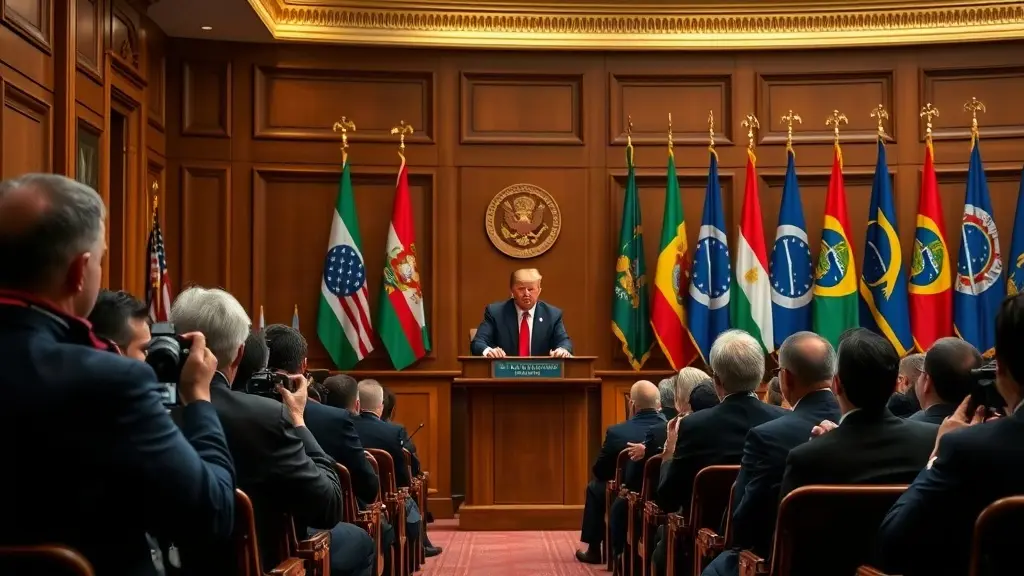
Former U.S. President Donald Trump has publicly asserted that Brazil's national election appeared "rigged," making the claim without presenting supporting evidence, official audit logs, or certified documentation.
The statements were delivered during a public address and subsequently reported across international news agencies, renewing debates surrounding election integrity, foreign diplomatic relations, and the verifiable mechanisms governing national vote tabulation.

What Did Donald Trump Claim About the Brazil Election?
According to Reuters wire dispatches, Donald Trump commented that the Brazilian presidential contest appeared manipulated, repeating broad allegations of systemic electoral misconduct. However, the statements were delivered without citations of specific polling precincts, official recount findings, or forensic balloting data.
Electoral integrity protocols enforced by accredited international observer missions require that any allegations of voting irregularities be supported through verifiable documentation, such as precinct return discrepancies, formal judicial petitions, or audit machine anomalies. In reporting on the former president's remarks, correspondents noted that no documented evidence or institutional complaints accompanied the assertion.
Why Does Evidence Citation Matter in Democratic Elections?
Public discourse surrounding democratic contests relies heavily on auditable documentation to distinguish verified outcomes from political rhetoric. In constitutional democracies, certified canvasses, electronic voting machine logs, and independent observer reports form the evidentiary basis for official results.
When public figures question balloting legitimacy without empirical exhibits, election authorities and international observers evaluate those statements against published audit data. Brazil's Superior Electoral Court (TSE) has historically conducted extensive public integrity tests and post-election audits alongside military, academic, and civil society monitors to verify electronic voting machines.
How Did Election Observers and Officials Respond?
As documented in authoritative wire documentation, diplomatic correspondents and institutional observers emphasize that unsubstantiated challenges to sovereign electoral processes risk fueling polarization without contributing to administrative oversight.
Authorities and international monitoring missions, including delegations from the Organization of American States (OAS), have consistently reaffirmed the reliability of Brazil's fully electronic balloting infrastructure. ConfirmPress continues tracking verified judicial dockets and accredited wire reporting for follow-up statements from diplomatic desks and legal counsel.
Frequently Asked Questions
What specific evidence was cited regarding the Brazilian election?
Former President Donald Trump presented no documentary evidence, recount data, or certified audit exhibits when asserting that Brazil's election appeared "rigged."
How does Brazil conduct and verify its national elections?
Brazil conducts national balloting using electronic voting machines overseen by the Superior Electoral Court (TSE), accompanied by pre-election public tests, cryptographic audits, and international observer monitoring.
Have international election watchdogs reported systemic fraud in Brazil?
Accredited international observer missions, including monitors from the OAS and global governance bodies, have consistently validated the integrity and accuracy of Brazil's certified election outcomes.