U.S. President Donald Trump announced that he is approaching a pivotal decision on whether to negotiate an agreement with Iran or unleash direct military action against the country's strategic infrastructure. Speaking in a televised interview on Sunday, Trump presented the confrontation in binary terms as global financial and energy markets closely track escalating hostility across the Persian Gulf.
"Do I finish it off, which would be very easy to do, or do I make a deal? It's getting to be decision time," Trump stated during the interview. The remarks signal an imminent shift in U.S. foreign policy toward Tehran following an operational pause in direct attacks. The last confirmed U.S. strikes on Iranian targets took place on Sept. 1, with Trump having previously indicated that strikes would not resume until after the Nov. 3 midterm elections.

Targeting Nuclear Infrastructure and the Standoff in Tehran
During his remarks, Trump singled out Pickaxe Mountain—a deeply buried fortified facility linked to Iran's nuclear development program—as a premier candidate for prospective U.S. strikes. Highlighting American reconnaissance capabilities, Trump asserted Washington's intelligence dominance over Tehran's subterranean assets.
"We can read the badge on somebody's shirt from space, okay? We know exactly what's going on at Pickaxe Mountain. We know the other three [nuclear sites] are obliterated," Trump claimed. The targeting warning comes as Tehran publicly prepares a robust military response to any prospective American operation.
Simultaneously, diplomatic backchannels remain active. Mediators from Qatar, who have played an instrumental role in facilitating indirect communications between Washington and Tehran, visited the Iranian capital on Sunday, according to reporting documented by CNBC's regional coverage. However, regional defense dynamics continue to complicate diplomatic engagement. Senior officials representing Saudi Arabia, Turkey, and Pakistan are scheduled to hold high-level discussions with Iranian leadership in Tehran on Monday. The three nations signed the Makkah Joint Defence Agreement in August, establishing mutual defense commitments that stipulate an armed attack against any single signatory will be treated as an attack against all member states.

Photographic Documentation
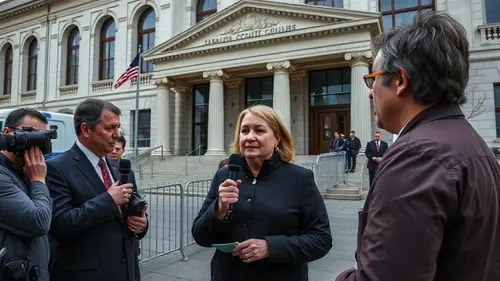
Trump Faces Choice — verified documentary press visual.
Maritime Flashpoints and the Battle for the Strait of Hormuz
The strategic bottleneck of the Strait of Hormuz remains the primary flashpoint in the conflict, exerting severe friction on global trade routes and commodities pricing. While Trump asserted that the United States maintains complete command of the waterway, citing that crude oil shipping volumes have returned to pre-war baselines, global energy benchmarks continue to trade at elevated levels due to persistent transit disruptions and an intensifying international refining squeeze.
Both Washington and Tehran continue to claim operational control over the strait. Despite claims of normalized oil transport, aggregate commercial shipping throughout the corridor remains severely curtailed, driving up freight insurance costs and spilling over into broader consumer price inflation. Vulnerabilities in maritime passage were underscored earlier this month when a Singapore-flagged container ship sank in the strait after sustaining a direct hit from an unidentified projectile that ignited an unmanageable fire.
Iranian military commanders have adopted an aggressive stance. Ali Ozmaei, the naval chief of the Islamic Revolutionary Guard Corps (IRGC), proclaimed earlier this month that Tehran's forces are actively "counting the moments" until they can engage and sink American warships operating in contested waters. Further inflaming regional security, cross-border drone and missile strikes by Iran-aligned Houthi militants against Saudi Arabian infrastructure continued throughout the weekend, testing the recently signed Makkah pact.
| Standoff Milestone / Indicator | Verified Strategic Status | Primary Market or Operational Impact |
|---|---|---|
| U.S. Kinetic Strikes | Paused since Sept. 1 | Tactical hold established ahead of the Nov. 3 midterm elections |
| Iranian Nuclear Sites | 3 sites obliterated; Pickaxe Mountain targeted | Heightened escalation risks surrounding subterranean facilities |
| Strait of Hormuz Transit | Contested operational control; commercial trade down | Energy price volatility and persistent global refining squeeze |
| Diplomatic Mediation | Qatari delegation deployed to Tehran | Active backchannel negotiations seeking de-escalation framework |
| Regional Defense Alignment | Makkah Joint Defence Agreement enacted | Saudi Arabia, Turkey, and Pakistan committed to collective defense |
Market Implications and What Happens Next
For investors and global supply chain managers, the impending decision window carries immediate economic consequences. Energy markets remain priced with a substantial geopolitical risk premium, as detailed in continuous updates from CNBC financial wires regarding international shipping bottlenecks. Although crude flow volumes have stabilized relative to initial conflict shocks, the persistent threat of anti-ship missile salvos and drone strikes in the Persian Gulf prevents insurers from normalizing transit underwriting.
The critical operational window centers on the approach of Nov. 3. Should the administration decline to pursue a negotiated settlement before the midterm benchmark passes, military planners anticipate that targeted strikes against reinforced installations like Pickaxe Mountain could swiftly resume. Conversely, if Qatari-brokered talks yield concessions regarding regional proxy operations and maritime security guarantees, a formal de-escalation framework could emerge. Until an unambiguous decision is announced, market observers expect prolonged volatility across oil futures, maritime freight indices, and industrial commodities.
Frequently Asked Questions
When did the United States last conduct military strikes on Iran?
The last confirmed U.S. military strikes against Iranian targets occurred on Sept. 1. President Trump previously noted that direct military strikes would remain paused until after the Nov. 3 midterm elections.
What specific Iranian installation has Trump identified as an active target?
Trump explicitly highlighted Pickaxe Mountain, an underground facility tied to Iran's nuclear infrastructure, asserting that U.S. intelligence maintains precise orbital surveillance over the location while claiming three other nuclear sites have already been obliterated.
What is the Makkah Joint Defence Agreement?
Signed in August by Saudi Arabia, Turkey, and Pakistan, the Makkah Joint Defence Agreement establishes a mutual defense treaty ensuring that an armed attack against one member state is treated as an attack against all three.